Skip to content

Where are you from?

Choose your province and we will tell you how the deputies and senators you elected vote, one by one.


We remember it in this browser. If you create an account, we keep it there.

Type a law, a topic, a person or a province.

History

The Cortes, through the years

From a meeting in León in 1188 to today's Congreso and Senate: 35 moments that explain how Spain has come to decide who makes the laws and who gets to vote. For those discovering it for the first time and for those who lived through it.

Each moment links to its official source: the BOE, the Diarios de Sesiones, the Congreso, the Senate, UNESCO or the Royal Academy of History.

From 1188 to 1976

1188

1188

The Cortes of León

In 1188, King Alfonso IX of León called to his court not only bishops and nobles but also elected representatives of the towns. That meeting produced the Decreta, which protected people's homes, property and access to justice against abuse. UNESCO recognizes them as the oldest documentary evidence of the European parliamentary system.

Why it matters today. The idea that a ruler should not decide alone, but listen to the people's representatives, is more than eight centuries old in Spain.

Show sources (1)Hide sources (1)
1810

September 24, 1810

The Cortes of Cádiz open

With much of the peninsula occupied by Napoleon's troops, a parliament met on the Isla de León with deputies from Spain, the Americas and the Philippines. One of its first decisions was to declare that sovereignty belonged to the nation and to separate the powers of the state. It was the birth of the modern parliament in Spain.

Why it matters today. The principle that power comes from the nation, not the king, underpins today's Constitution.

Show sources (1)Hide sources (1)
1812

March 19, 1812

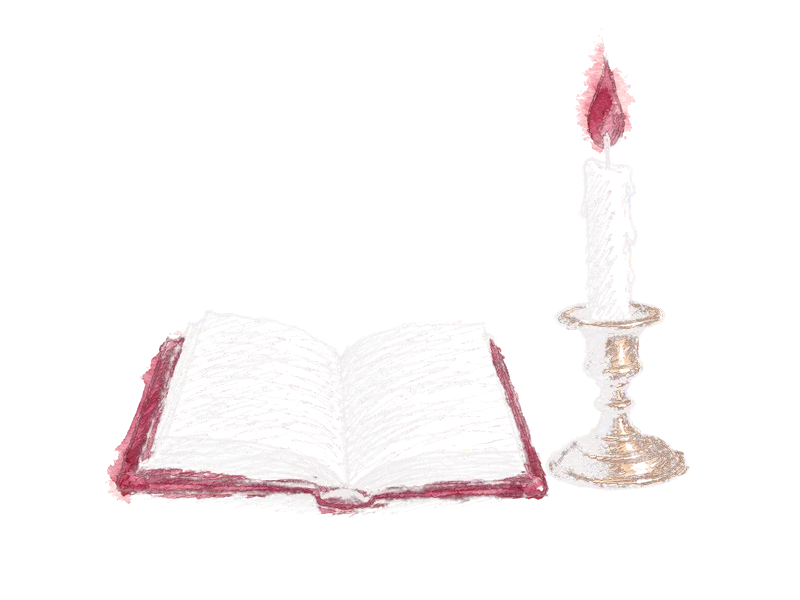
La Pepa, Spain's first Constitution

The Cortes of Cádiz enacted Spain's first Constitution, nicknamed La Pepa because it was proclaimed on Saint Joseph's Day. It recognized national sovereignty, the separation of powers and freedom of the press. Ferdinand VII repealed it in 1814; it was back in force from 1820 to 1823.

Why it matters today. It was one of Europe's earliest constitutions and served as a model for others in Europe and the Americas.

Show sources (1)Hide sources (1)
1837

1834 and 1837

The Senate is born

The Royal Statute of 1834 created, for the first time, a parliament with two chambers. The 1837 Constitution named them the Senado and the Congreso de los Diputados, names still in use today. Throughout the 19th century the Senate was mostly appointed by the Crown or held by right, with little electoral basis.

Why it matters today. Spain has had a two-chamber parliament for almost two centuries, and both names date from 1837.

Show sources (2)Hide sources (2)
1850

October 31, 1850

The Palace of the Congreso

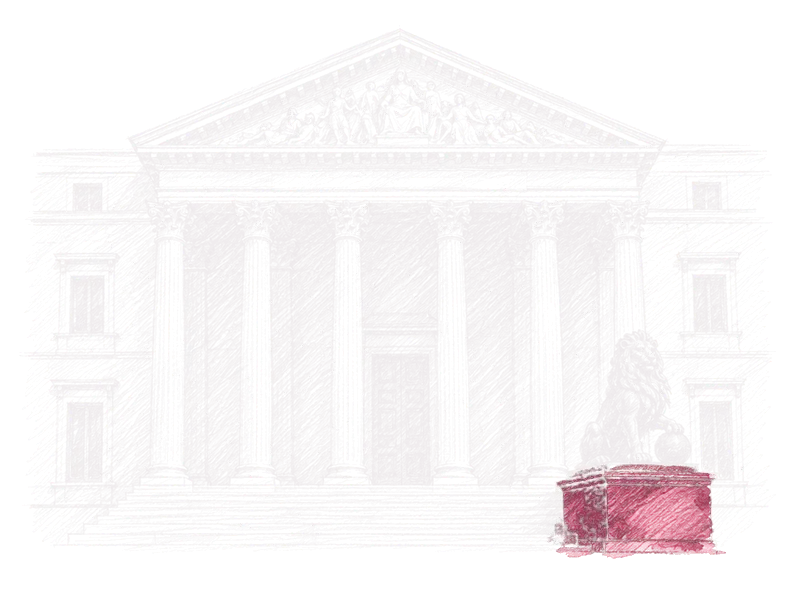
Until then, deputies met in borrowed buildings such as former convents and theaters. Queen Isabella II laid the first stone of the palace on Madrid's Carrera de San Jerónimo in 1843 and opened it in 1850. It was designed by the architect Narciso Pascual y Colomer, and the two bronze lions on the steps are by Ponzano.

Why it matters today. The Congreso still meets in the same building, and its semicircular chamber is the image most people associate with Spanish politics.

Show sources (1)Hide sources (1)
1869

January 15, 1869

All men get the vote

After the 1868 revolution, a parliament was elected for the first time by universal male suffrage: adult men could vote without having to meet a wealth requirement. That parliament approved the 1869 Constitution, with a broad bill of rights. Women still could not vote.

Why it matters today. It was the first step toward the universal vote we now take for granted.

Show sources (2)Hide sources (2)
1873

February 11, 1873

The Cortes and the First Republic

On February 11, 1873, King Amadeo of Savoy gave up the crown and the First Republic began. It was a short and unstable period: in eleven months four presidents followed one another, Figueras, Pi y Margall, Salmerón and Castelar.

Why it matters today. It shows the Cortes themselves deciding the form of the state at a moment of crisis.

Show sources (1)Hide sources (1)
1876

1876 and 1890

The longest-lived constitution before today's

With the return of the monarchy under Alfonso XII, a short, 89-article Constitution was approved that stayed in force for almost half a century, until 1923. In 1890 a law gave the vote back to all men over 25. Conservatives and Liberals took turns in power for decades, in elections often shaped by local political bosses (caciquismo).

Why it matters today. Until the 1978 Constitution overtook it, it was the longest-lasting Spanish constitution.

Show sources (1)Hide sources (1)
1931

June 28, 1931

The first three women deputies

After the Second Republic was proclaimed, women could be elected for the first time, although they still could not vote. Clara Campoamor, Victoria Kent and Margarita Nelken, from three different parties, took their seats.

Why it matters today. Today nearly half of the Congreso are women; the path started with these three.

Show sources (1)Hide sources (1)
1931

October 1 and December 9, 1931

Women win the vote

During the constitutional debate, the Cortes voted on whether women should have the right to vote. Clara Campoamor argued for it; Victoria Kent asked to postpone it. The yes side won, and the 1931 Constitution gave men and women the same voting rights from age 23.

Why it matters today. Women's suffrage in Spain came out of a debate and a vote in the Congreso, with arguments on both sides.

Show sources (2)Hide sources (2)
1933

November 19, 1933

Women vote for the first time

In the 1933 election, women voted in a parliamentary election for the first time. Center and right-wing lists won; left-wing lists won in 1936. Those were the last free elections before the Civil War, which began in July 1936 and ended in 1939 with the end of the Republic.

Why it matters today. Since then, no Spanish election has been imaginable without men and women voting equally.

Show sources (1)Hide sources (1)
1942

July 17, 1942

The Cortes under Franco

Under General Franco's dictatorship there was a parliament, but it was not elected by universal suffrage. Its members, the procuradores, sat by virtue of their office, by appointment of the head of state, or by election within trade unions, town councils and other corporations. The head of state had the final say.

Why it matters today. It explains why, in 1977, a democratic parliament had to be built starting from these same Cortes.

Show sources (2)Hide sources (2)
1976

November 18, 1976

The Cortes vote themselves out

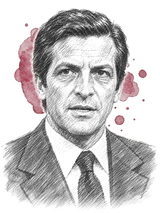
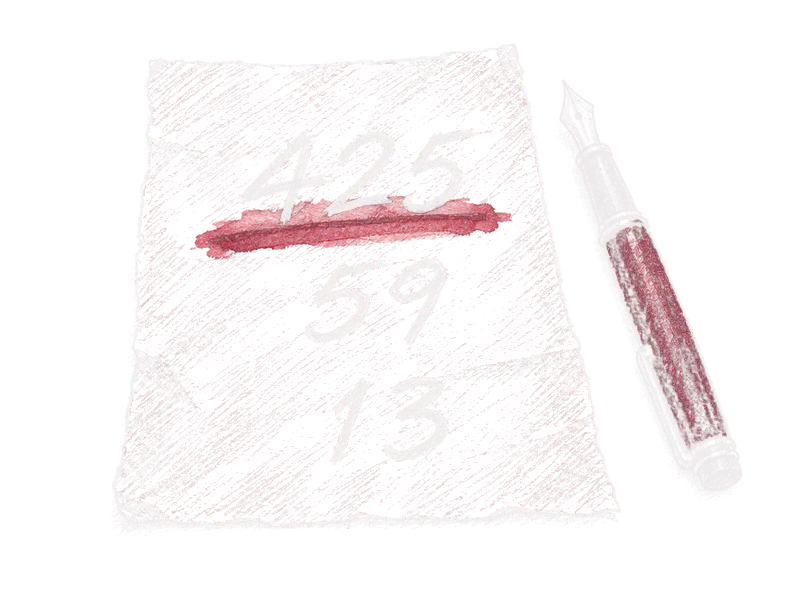
After Franco's death, Adolfo Suárez's government introduced the Political Reform Act, which provided for a two-chamber parliament elected by universal suffrage. The Cortes themselves passed it by 425 votes to 59, with 13 abstentions, and it was then put to a referendum.

Why it matters today. The move to democracy happened through the existing legal procedures rather than a break with them, and that shaped the whole Transition.

Show sources (2)Hide sources (2)
  • Drawn portrait of Adolfo Suárez
    Adolfo Suárez
And today, how does it work? The Congreso, the Senate, the Government and the King, explained How a law is made, how the prime minister is chosen and who does what, with the Constitution in hand. How it works

How we chose these moments

We tell facts that can be checked and link the source of each one. The laws that changed everyday life came from governments of every color: UCD (divorce), PSOE (health care, Europe, same-sex marriage), PP (the end of compulsory military service, the euro, transparency), and amendments to the Constitution agreed between the PSOE and the PP. We left out subjects that cannot be summed up fairly in a few lines; we will explain them with more room.

Something missing, or a mistake?

Write to us from the corrections page with a source that backs it up. The drawings are by El Pleno; the portraits are drawn from photographs by the Congreso, the Senate and Wikimedia Commons, credited below.

Suggest a correction

Portraits

The portraits are pencil drawings made for El Pleno. This is the reference photograph for each.