11 July 2013, in the Senate
Government bill incorporating into the Spanish legal system Directives 2010/84/EU of the European Parliament and of the Council, of December 15, 2010, on pharmacovigilance, and 2011/62/EU of the European Parliament and of the Council, of June 8, 2011, on the prevention of the entry of falsified medicines into the legal supply chain, and amending Law 29/2006, of July 26, on guarantees and rational use of medicines and medical devices.
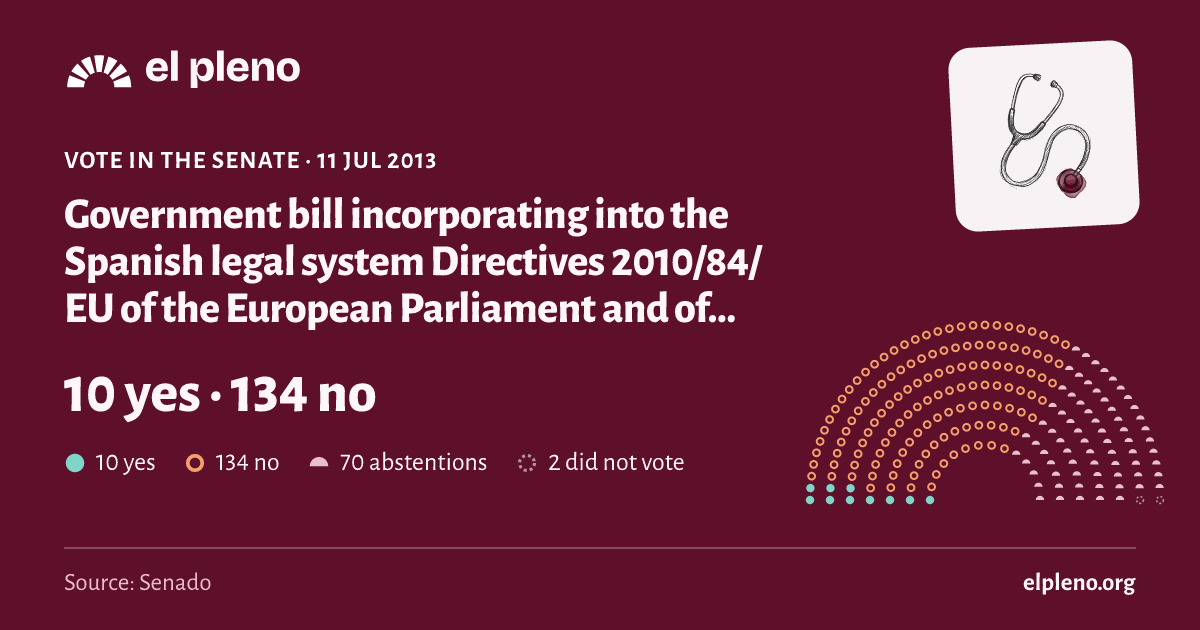
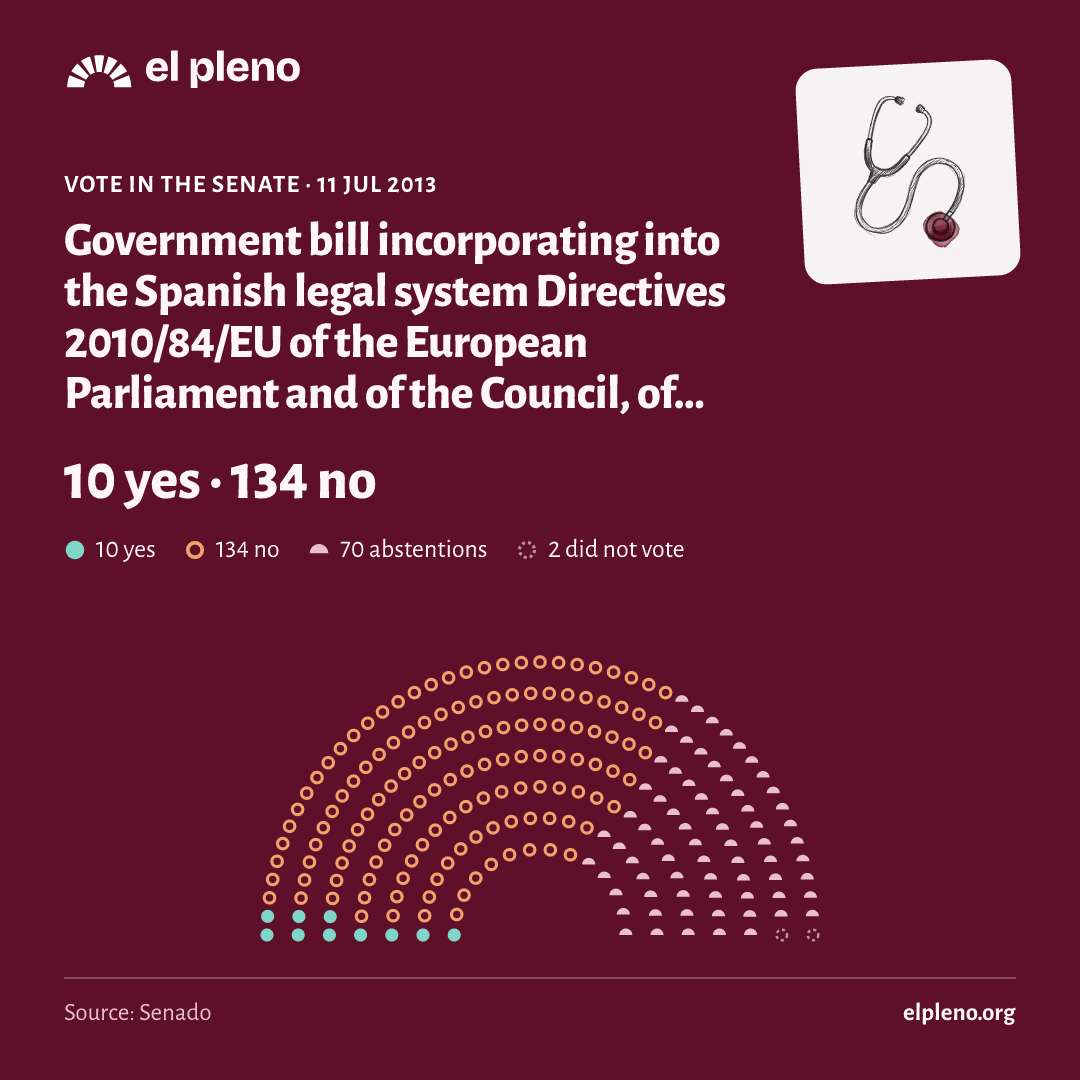
More votes against 10 yes · 134 no · 70 abst.More votes against: 134 no and 10 yes, a margin of 124. 70 abstentions and 2 did not vote.
When we cannot be sure which majority was needed, we do not say whether this means it “passed”: the official file does not say.
Source: Senate, vote 1092 of sitting 36· updated 10 Nov
The chamber
Who voted how?
10 in favour, 134 against. 70 abstentions and 2 did not vote.
This vote does not publish each seat’s vote: the chart is drawn from the totals.
This vote does not publish each seat’s vote: the dots are drawn from the totals.
Your province
How did the senators from your province vote?
This vote did not publish each senator’s vote, so we cannot tell you how yours voted.
Only senators elected in a province or island appear. Senators appointed by regional parliaments have no province.
Sources
Where does all this come from?
Official wording of what was voted on: Proyecto de Ley por la que se incorporan al ordenamiento jurídico español las Directivas 2010/84/UE del Parlamento Europeo y del Consejo, de 15 de diciembre de 2010, sobre farmacovigilancia, y 2011/62/UE del Parlamento Europeo y del Consejo, de 8 de junio de 2011, sobre prevención de la entrada de medicamentos falsificados en la cadena de suministro legal, y se modifica la Ley 29/2006, de 26 de julio, de garantías y uso racional de los medicamentos y productos sanitarios.
- Senate, vote 1092 of sitting 36
The count and every seat’s vote.
Retrieved 10 November 2026
- The data comes from the open files of the Congreso, the Senate and the BOE, unaltered.
- Each deputy’s province is the one of their seat on the day of the vote.
- We only say “passed” or “rejected” when the majority needed is certain; otherwise we say which side had more votes.