What it is
Bill proposes fines and penalties for glorifying terrorism
It is a members’ bill. Introduced by parliamentary groups, the Senate, regional governments or citizens. It was introduced on 10 April 2026. Introduced by: Senado.
Official title: Private member's bill to amend Law 29/2011, of September 22, on the Comprehensive Recognition and Protection of Terrorism Victims.
Source: Congreso de los Diputados, file 124/000043· updated 11 Nov
Automatic summary, not yet reviewed
- The bill would add a new title to Law 29/2011 covering the prevention and punishment of acts in public spaces that glorify terrorism or humiliate victims of terrorism and their relatives.
- It would ban conduct such as organizing tributes to people convicted of terrorism, publicly displaying symbols or messages glorifying terrorism (including on social media), lending public spaces for such acts, granting public subsidies for them, and public officials taking part in them.
- Offenses would be classified as minor, serious or very serious, with fines from €200 to €150,000 depending on severity. Additional penalties could include being barred from public office, from receiving public subsidies or from contracting with the public sector for one to five years.
- The Government's regional and provincial offices would handle the proceedings, with the Ministry of the Interior handling the most serious cases. If the acts could be a crime, the case would be referred to the Public Prosecutor and the administrative proceedings suspended until a final court ruling.
Who it affects
- People and organizations that organize tributes or acts glorifying terrorism: They could face fines from €200 to €150,000 and additional penalties.
- Public officials and public administration staff: Their participation or tolerance of these acts would be an offense and would increase the penalty.
- Organizations receiving subsidies or using public spaces: They could lose the ability to receive aid or contract with the public sector if they use resources for these acts.
- Victims of terrorism and their relatives: The bill aims to protect their dignity and memory from humiliating acts.
Words worth knowing
- Infracción administrativa
- A prohibited act punished with a fine or other measures by the administration, without being a criminal offense.
- Infracciones leves, graves y muy graves
- Categories ranking offenses by severity, which set the size of the fine.
- Sanciones accesorias
- Penalties in addition to the fine, such as being barred from public office or from receiving public aid.
- Ministerio Fiscal
- The Spanish public prosecutor's office.
- Sentencia firme
- A final court ruling that can no longer be appealed and must be enforced.
It summarizes the text as it was introduced. It is written by artificial intelligence and may contain mistakes: the official text is what counts. Read the official text · How we make summaries
Where it stands
How far did it get?
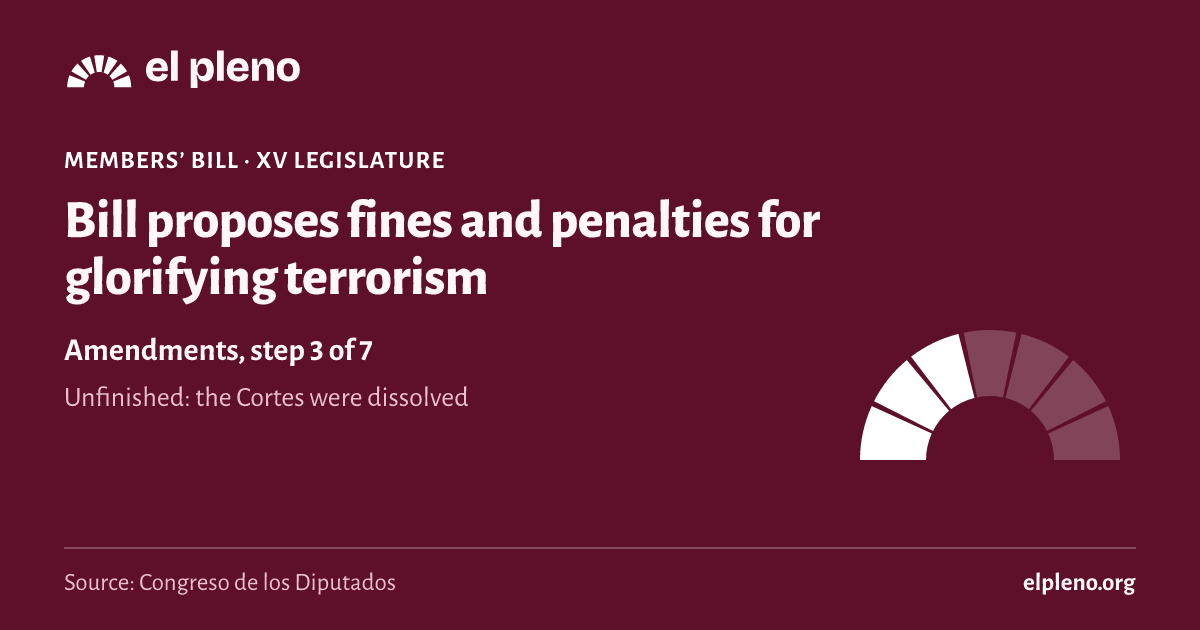
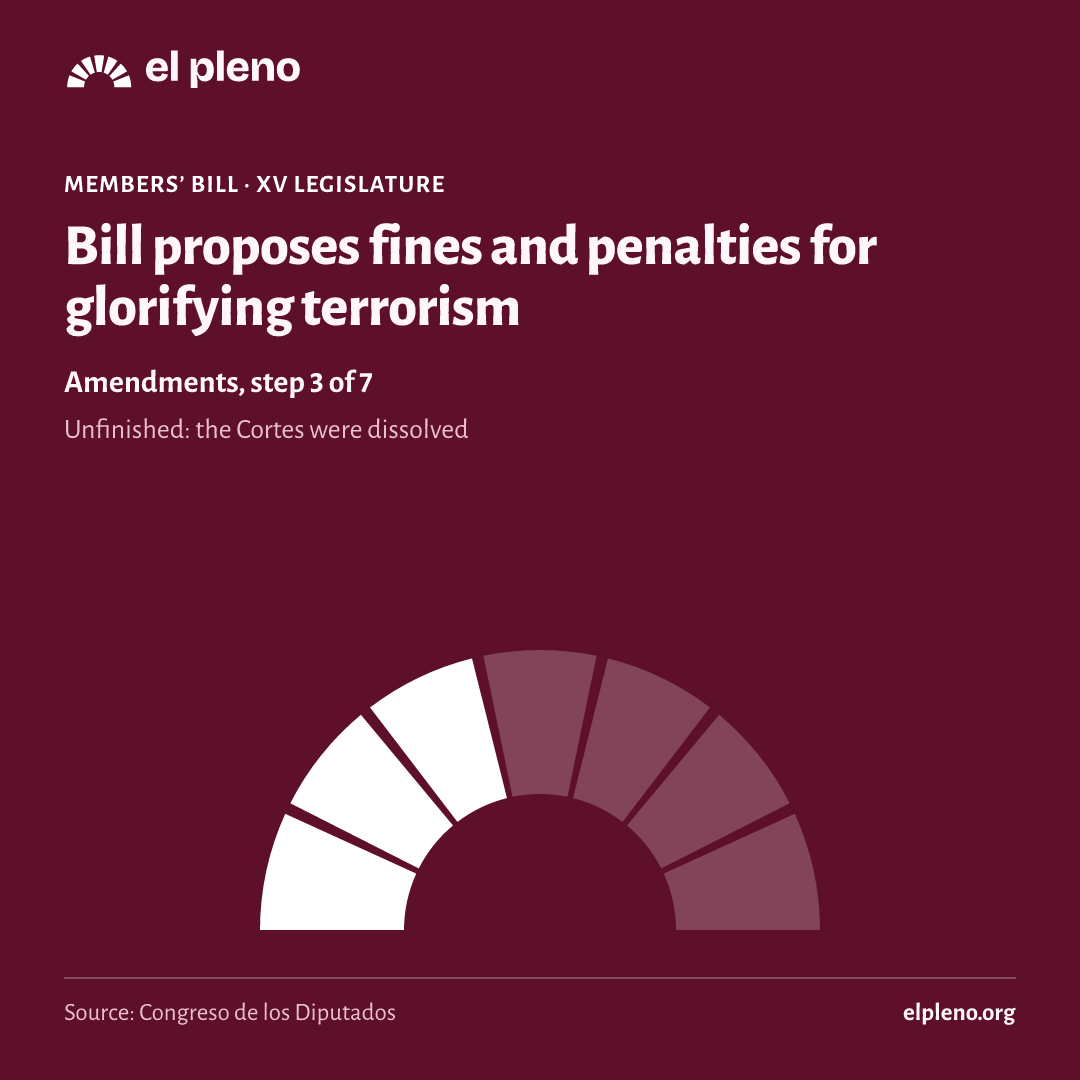
It took 3 of 7 steps. It reached Amendments, and today it is unfinished.
- Introduced10 April 2026Someone registers the text in the Congreso.
- Admitted14 April 2026The Bureau of the Congreso accepts it and, for a members’ bill, the plenary decides whether to consider it.
- Amendments17 April 2026Groups propose changes.
- Committeenot reachedA committee goes through the text in detail.
- Plenarynot reachedAll 350 deputies vote.
- Senatenot reachedThe Senate can pass it, amend it or veto it.
- BOEnot reachedIt is published in the Official State Gazette (BOE) and comes into force.
See the 5 official steps on a timeline
Was there a plenary vote?
We have no plenary vote linked to this law in the Congreso’s data.
What happens next
What happens now?
The legislature ended before it finished. To go on, someone would have to introduce it again in the new Cortes.
It has not been presented again yet.
The same initiative in the other chamber:
- XV Legislature, Senate Private member's bill to amend Law 29/2011, of September 22, on the Comprehensive Recognition and Protection of Terrorism Victims.
- XV Legislature, Senate Private member's bill to amend Law 29/2011, of September 22, on the Comprehensive Recognition and Protection of Terrorism Victims.
Presented before in:
- XII Legislature, Congreso de los Diputados· Unfinished Bill would fine glorifying terrorism up to €250,000
Sources
Where does all this come from?
- Congreso de los Diputados, file 124/000043
Official title, type, author, dates and stage.
Retrieved 11 November 2026
- Congreso de los Diputados, procedure
The date of each step, with its official wording.
Retrieved 12 November 2026
- The data comes from the open files of the Congreso, the Senate and the BOE, unaltered.
- Each deputy’s province is the one of their seat on the day of the vote.
- We only say “passed” or “rejected” when the majority needed is certain; otherwise we say which side had more votes.