What it is
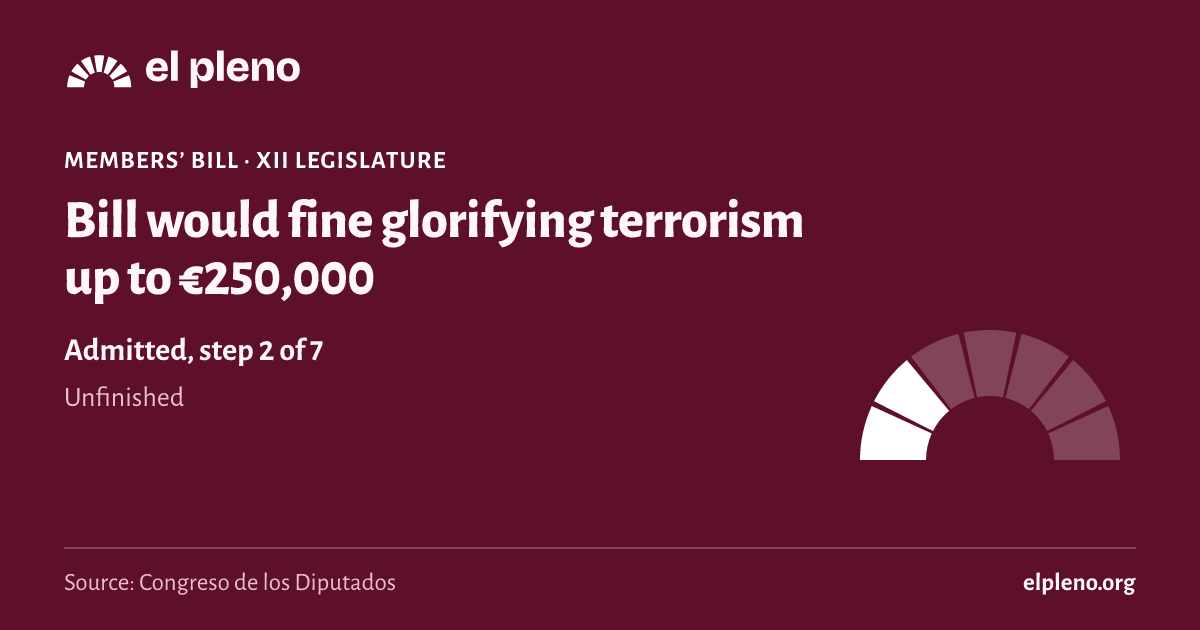
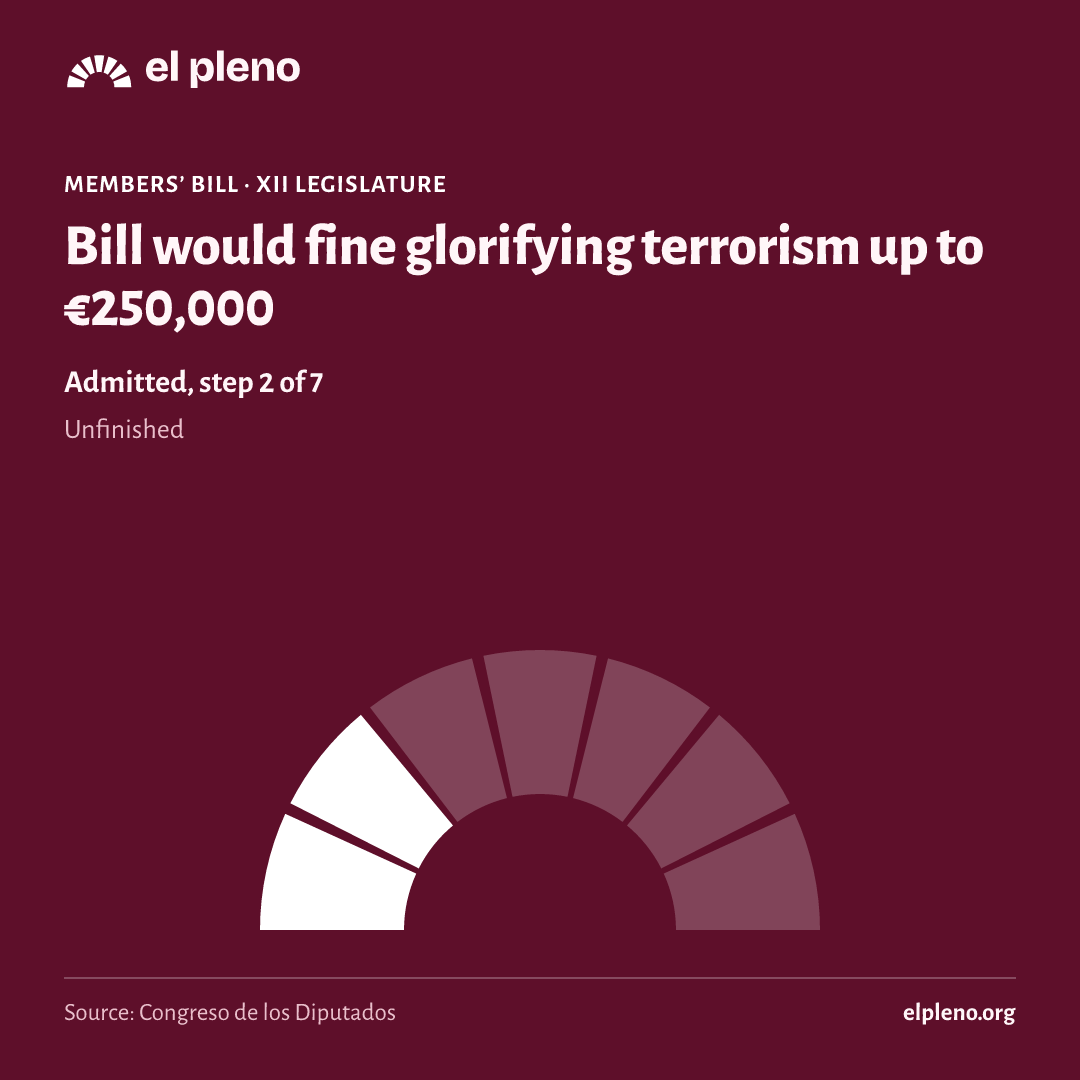
Bill would fine glorifying terrorism up to €250,000
It is a members’ bill. Introduced by parliamentary groups, the Senate, regional governments or citizens. It was introduced on 7 March 2018. Introduced by: Grupo Parlamentario Ciudadanos.
Official title: Private member's bill to amend Law 29/2011, of September 22, on the Comprehensive Recognition and Protection of Terrorism Victims.
Source: Congreso de los Diputados, file 122/000204· updated 11 Nov
Automatic summary, not yet reviewed
- The bill aims to fill a gap: the 2011 law banned glorifying terrorism and humiliating victims, but set no penalty for breaking those bans. It would punish such conduct as administrative offenses, when they are not crimes.
- Offenses would include making monuments, plaques or mentions glorifying terrorism, and organizing or taking part in public acts that humiliate victims or honor terrorists. The proposed fine ranges from €50,000 to €250,000, depending on culpability, intent to harm victims, the means used and repeat behavior.
- Offenses would expire after one year and penalties after two. Besides the fine, the offender could be ordered to pay damages and be barred for up to three years from government contracts and subsidies. Public officials would pay from their own assets, never with public money.
- Government Delegates in the Autonomous Communities would handle penalty proceedings, with possible cooperation from the regions. The procedure would follow the Common Administrative Procedure Law and the Citizen Security Law, and the Government could issue rules to develop the law.
Who it affects
- People or entities that glorify terrorism or humiliate victims in public acts or places: Could face fines from €50,000 to €250,000 and other consequences, such as paying damages.
- Sanctioned public officials: Would have to pay fines and damages from their own assets, not public money.
- Government Delegates in the Autonomous Communities: Would be in charge of conducting and deciding penalty proceedings.
- Victims of terrorism and their relatives: Would see stronger protection of their honor and dignity against tributes or humiliation.
Words worth knowing
- Enaltecimiento del terrorismo (glorification of terrorism)
- Publicly praising, honoring or justifying terrorists or their acts.
- Infracción administrativa (administrative offense)
- Prohibited conduct punished by the administration (such as fines), without a criminal trial.
- Prescripción (statute of limitations)
- The deadline after which an offense can no longer be punished or a penalty enforced.
- Consecuencia accesoria (accessory consequence)
- An additional measure beyond the fine, such as a ban on government contracts or subsidies.
- Proposición de ley (bill)
- A text a parliamentary group submits to become law; while pending, it is not in force.
It summarizes the text as it was introduced. It is written by artificial intelligence and may contain mistakes: the official text is what counts. Read the official text · How we make summaries
Where it stands
How far did it get?
It took 2 of 7 steps. It reached Admitted, and today it is unfinished.
- Introduced7 March 2018Someone registers the text in the Congreso.
- Admitted13 March 2018The Bureau of the Congreso accepts it and, for a members’ bill, the plenary decides whether to consider it.
- Amendmentsnot reachedGroups propose changes.
- Committeenot reachedA committee goes through the text in detail.
- Plenarynot reachedAll 350 deputies vote.
- Senatenot reachedThe Senate can pass it, amend it or veto it.
- BOEnot reachedIt is published in the Official State Gazette (BOE) and comes into force.
See the 6 official steps on a timeline
Was there a plenary vote?
We have no plenary vote linked to this law in the Congreso’s data.
What happens next
What happens now?
The legislature ended before it finished. To go on, someone would have to introduce it again in the new Cortes.
It was presented again:
- XV Legislature, Congreso de los Diputados· Unfinished Bill to solve unresolved ETA murders and protect victims
- XV Legislature, Congreso de los Diputados· Unfinished Bill proposes fines and penalties for glorifying terrorism
- XV Legislature, Senate Private member's bill to amend Law 29/2011, of September 22, on the Comprehensive Recognition and Protection of Terrorism Victims.
- XV Legislature, Senate Private member's bill to amend Law 29/2011, of September 22, on the Comprehensive Recognition and Protection of Terrorism Victims.
Sources
Where does all this come from?
- Congreso de los Diputados, file 122/000204
Official title, type, author, dates and stage.
Retrieved 11 November 2026
- The data comes from the open files of the Congreso, the Senate and the BOE, unaltered.
- Each deputy’s province is the one of their seat on the day of the vote.
- We only say “passed” or “rejected” when the majority needed is certain; otherwise we say which side had more votes.