What it is
Full union rights and collective bargaining for the National Police
It is a members’ bill. Introduced by parliamentary groups, the Senate, regional governments or citizens. It was introduced on 30 June 2026. Introduced by: Grupo Parlamentario Plurinacional SUMAR.
Official title: Private member's Organic Bill for the recognition and improvement of the rights of unionization and collective bargaining of public employees of the National Police.
Source: Congreso de los Diputados, file 122/000295· updated 11 Nov
Automatic summary, not yet reviewed
- The bill would let members of the National Police Corps freely join interprofessional or class unions, not only corporate unions, with the limits set by the Freedom of Association Law. It would also recognize their right to collective bargaining and collective disputes, but would ban strikes and substitute actions.
- Police officers holding union positions could not face forced transfers, promotion delays or other measures harming their working conditions because of their union activity.
- The bill would create a sectoral bargaining table for the National Police as a permanent collective bargaining body, and the Police Council would submit proposals and review its agreements.
- The bill would adjust the police disciplinary rules: non-uniformed protest actions that do not disrupt services would not be punishable, and blocking subordinates' freedom of association would be a serious offense.
- Members of the security forces would still be unable to strike, but could take protest labor actions that do not disrupt services and are carried out without a uniform.
- The bill would give Civil Guard professional associations more time off, full-time releases and an annual credit tied to membership. The law would take effect the day after its publication in the Official State Gazette.
Words worth knowing
- Libertad sindical (freedom of association)
- The right to form unions, join them and leave them freely.
- Negociación colectiva (collective bargaining)
- Negotiations between worker representatives and the administration to agree on working conditions.
- Mesa sectorial (sectoral bargaining table)
- A permanent body where unions negotiate conditions for a specific group of public employees.
- Ley orgánica (organic law)
- A Spanish law requiring an absolute majority in Congress, reserved for major matters such as fundamental rights.
- Acciones sustitutivas de la huelga (substitute strike actions)
- Stoppages or protests not called strikes but aimed at the same effect of disrupting services.
It summarizes the text as it was introduced. It is written by artificial intelligence and may contain mistakes: the official text is what counts. Read the official text · How we make summaries
Where it stands
How far did it get?
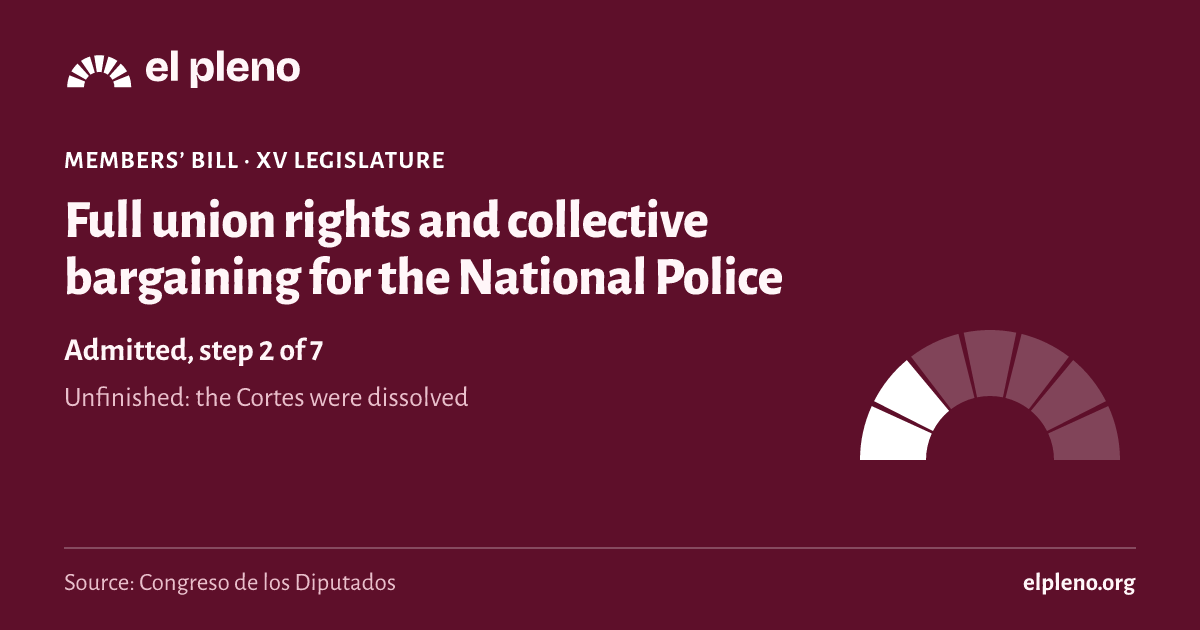
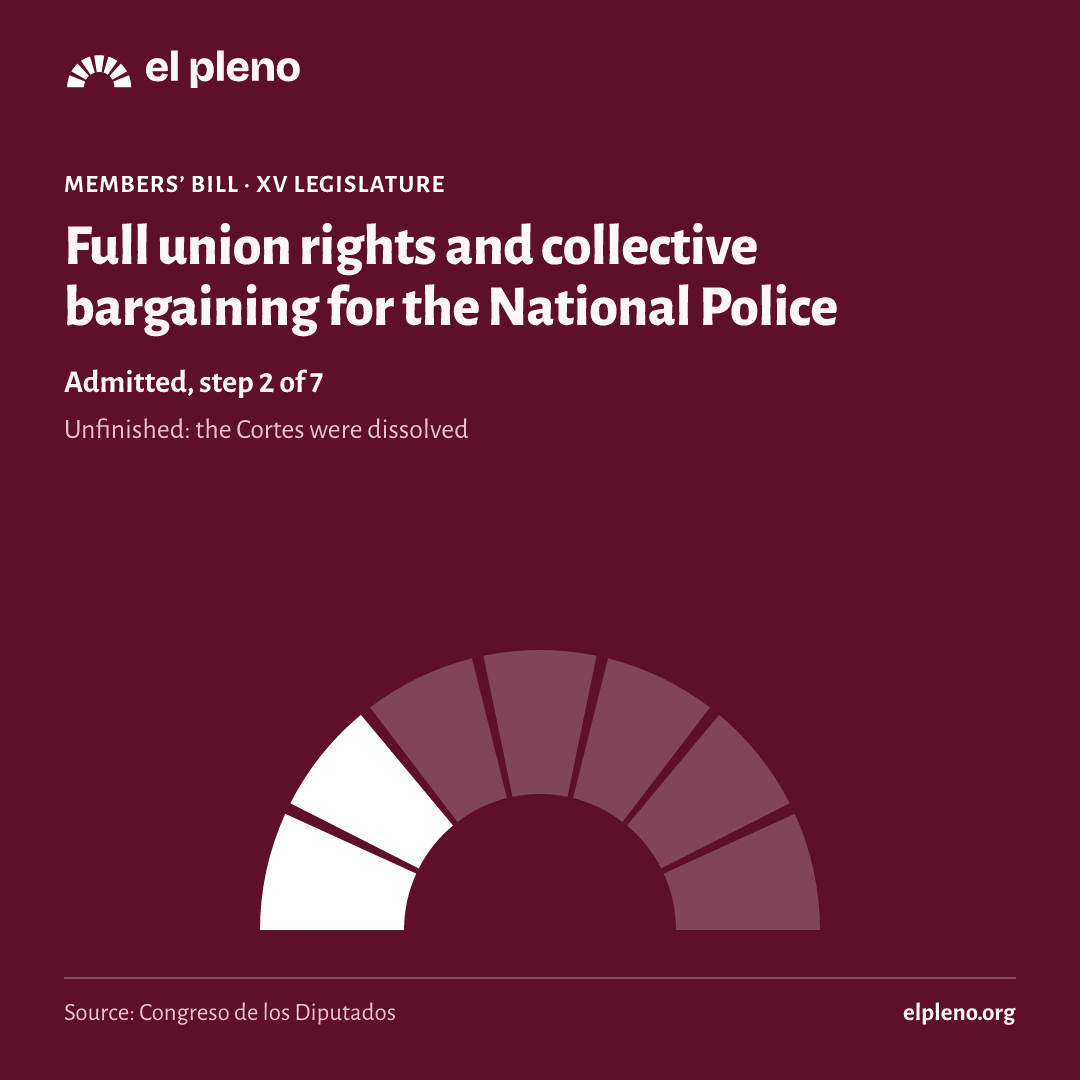
It took 2 of 7 steps. It reached Admitted, and today it is unfinished.
- Introduced30 June 2026Someone registers the text in the Congreso.
- Admitted14 July 2026The Bureau of the Congreso accepts it and, for a members’ bill, the plenary decides whether to consider it.
- Amendmentsnot reachedGroups propose changes.
- Committeenot reachedA committee goes through the text in detail.
- Plenarynot reachedAll 350 deputies vote.
- Senatenot reachedThe Senate can pass it, amend it or veto it.
- BOEnot reachedIt is published in the Official State Gazette (BOE) and comes into force.
See the 6 official steps on a timeline
Was there a plenary vote?
We have no plenary vote linked to this law in the Congreso’s data.
What happens next
What happens now?
The legislature ended before it finished. To go on, someone would have to introduce it again in the new Cortes.
It has not been presented again yet.
Sources
Where does all this come from?
- Congreso de los Diputados, file 122/000295
Official title, type, author, dates and stage.
Retrieved 11 November 2026
- Congreso de los Diputados, procedure
The date of each step, with its official wording.
Retrieved 12 November 2026
- The data comes from the open files of the Congreso, the Senate and the BOE, unaltered.
- Each deputy’s province is the one of their seat on the day of the vote.
- We only say “passed” or “rejected” when the majority needed is certain; otherwise we say which side had more votes.