What it is
A single, nationwide university entrance exam
It is a members’ bill. Introduced by parliamentary groups, the Senate, regional governments or citizens. It was introduced on 26 June 2026. Introduced by: Grupo Parlamentario VOX.
Official title: Private member's Organic Bill for the implementation of a single access test to the university and a common admission procedure to the Spanish university system.
Source: Congreso de los Diputados, file 122/000293· updated 11 Nov
Automatic summary, not yet reviewed
- The bill would create a university entrance exam with the same content, structure and grading criteria across Spain. Today each region organizes its own exam, which the text says creates inequality and barriers to student mobility.
- It would amend the Education Law to require a national exam with the same demands and grading criteria everywhere. Students holding the Bachiller diploma could take it, and the exam would be held simultaneously nationwide.
- It would strengthen the role of the Government, which would set the basic rules and a common admission procedure for university access across the country by royal decree.
- It would amend the royal decree governing university access so the Government directly organizes the exam and sets common criteria for exercises, grading and scoring. The current organizing committees would be replaced by a single state-level organizing committee.
- The exam would have two sittings a year, one ordinary and one extraordinary, with single nationwide deadlines. Students who want a better grade could retake the full exam, and the highest score would count.
- Only Articles 1 and 2 would have the status of an organic law A law on fundamental rights, the electoral system or other matters the Constitution reserves. It needs an absolute majority in the Congreso: 176 votes.. The law would take effect on the first day of the budget year after its publication in the Official State Gazette.
Who it affects
- Students seeking to enter university: They would take a single, nationwide exam with two sittings a year and common admission deadlines.
- Students with special educational needs or disabilities: The exam and admission procedure would have to guarantee non-discrimination and accessibility, with specific grading criteria.
- Public universities: They would have to apply a common admission procedure, publish their seat offers and not leave requested seats vacant within the deadlines.
- Autonomous communities and education authorities: They would lose the ability to organize the exam separately, though they would still take part in its organization and coordination.
- The central Government: It would set the exam's features, the common admission procedure, and directly organize the exams.
Words worth knowing
- Proposición de Ley Orgánica
- A bill proposing a change in the law, introduced by a parliamentary group rather than the Government. As an organic law, passing it requires an absolute majority in the Congress of Deputies.
- Ley Orgánica (Organic Law)
- A type of Spanish law reserved for major matters, such as fundamental rights, that needs more votes to pass than an ordinary law.
- Real decreto (royal decree)
- A rule issued by the Government to develop or specify what a law says.
- Conferencia General de Política Universitaria
- A body where the central State and the autonomous regions meet to coordinate university matters.
- Ejercicio presupuestario (budget year)
- The State's financial year, which matches the calendar year: January 1 to December 31.
- organic law
- A law on fundamental rights, the electoral system or other matters the Constitution reserves. It needs an absolute majority in the Congreso: 176 votes.
It summarizes the text as it was introduced. It is written by artificial intelligence and may contain mistakes: the official text is what counts. Read the official text · How we make summaries
Where it stands
How far did it get?
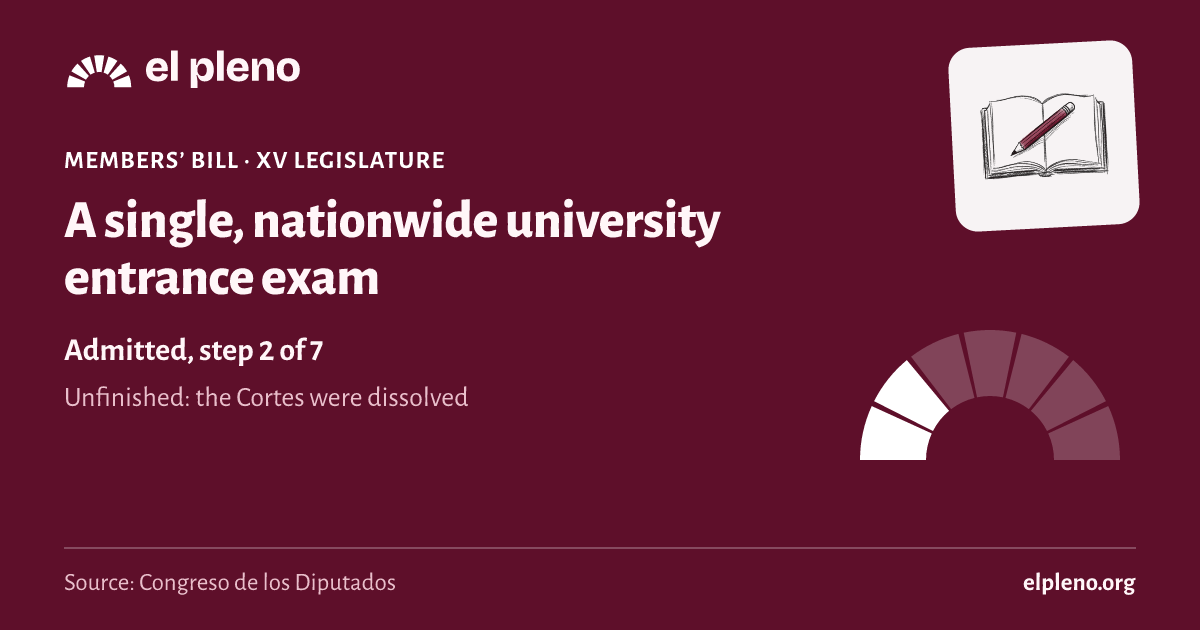
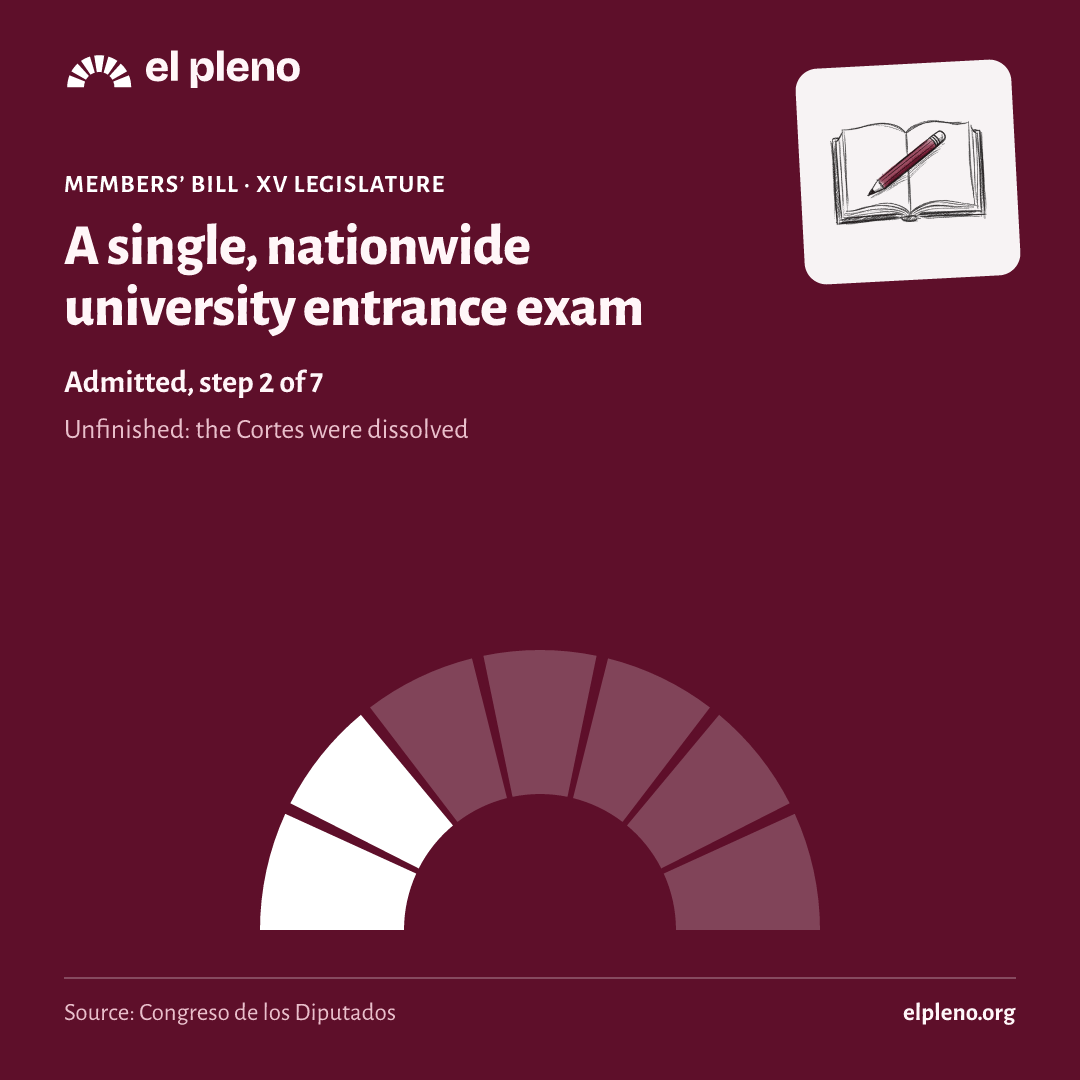
It took 2 of 7 steps. It reached Admitted, and today it is unfinished.
- Introduced26 June 2026Someone registers the text in the Congreso.
- Admitted30 June 2026The Bureau of the Congreso accepts it and, for a members’ bill, the plenary decides whether to consider it.
- Amendmentsnot reachedGroups propose changes.
- Committeenot reachedA committee goes through the text in detail.
- Plenarynot reachedAll 350 deputies vote.
- Senatenot reachedThe Senate can pass it, amend it or veto it.
- BOEnot reachedIt is published in the Official State Gazette (BOE) and comes into force.
See the 6 official steps on a timeline
Was there a plenary vote?
We have no plenary vote linked to this law in the Congreso’s data.
What happens next
What happens now?
The legislature ended before it finished. To go on, someone would have to introduce it again in the new Cortes.
It has not been presented again yet.
The same initiative in the other chamber:
Sources
Where does all this come from?
- Congreso de los Diputados, file 122/000293
Official title, type, author, dates and stage.
Retrieved 11 November 2026
- Congreso de los Diputados, procedure
The date of each step, with its official wording.
Retrieved 12 November 2026
- The data comes from the open files of the Congreso, the Senate and the BOE, unaltered.
- Each deputy’s province is the one of their seat on the day of the vote.
- We only say “passed” or “rejected” when the majority needed is certain; otherwise we say which side had more votes.