What it is
Bill proposes new taxes to curb housing speculation
It is a members’ bill. Introduced by parliamentary groups, the Senate, regional governments or citizens. It was introduced on 16 May 2025. Introduced by: Grupo Parlamentario Republicano.
Official title: Private member's bill on fiscal measures to combat real estate speculation.
Source: Congreso de los Diputados, file 122/000190· updated 11 Nov
Automatic summary, not yet reviewed
- The bill would remove the tax benefits of SOCIMI A Spanish real estate investment company listed on the stock market; it had a tax regime with advantages., companies that invest in real estate. Their homes would have to be rented for at least seven years, at reference prices, with no tourist or seasonal rentals and with contracts for regular residential use.
- The bill would remove the VAT exemption for renting out furnished apartments with hotel-like services or stays of under 30 nights in municipalities with 10,000 or more residents, effective October 1, 2025.
- The bill would apply a reduced VAT rate to homes bought by individuals under 35 and to special-regime officially protected or public-promotion housing, when sold by their developer.
- The bill would create a new tax, complementary to VAT, for anyone buying a home who already owns two or more. The rate rises with the number of properties: 4% for the third, 8% for the fourth, 12% for the fifth, and 12% plus 5% for each additional property. The revenue would go to the autonomous communities under the common regime.
- The bill would let city councils in stressed residential market areas apply differentiated property tax (IBI The yearly property tax paid to the local council.) rates to at most 30% of the municipality's properties. They could charge a surcharge of up to 50% of the tax bill to large landlords and tourist accommodations, and up to 100% if the owner cannot prove five consecutive years of residence in Spain.
- The Government could issue the rules needed to implement the law, which would take effect the day after its publication in the Official State Gazette (Boletín Oficial del Estado). Rules that conflict with it would be repealed.
Who it affects
- SOCIMI and large real estate investors: They would lose their tax advantages and have to rent their homes at capped prices and conditions.
- People under 35: They would buy their first home at a reduced VAT rate.
- People who own two or more homes: They would pay an extra tax when buying another one, with rates that grow with the number of properties.
- City councils in stressed areas: They could apply differentiated property tax rates and surcharges to large landlords and tourist accommodations.
- Owners of tourist or seasonal apartments: They would lose the VAT exemption and could face property tax surcharges.
Words worth knowing
- SOCIMI
- A Spanish real estate investment company listed on the stock market; it had a tax regime with advantages.
- Gran tenedor (large landlord)
- A person or company that owns many homes.
- IBI
- The yearly property tax paid to the local council.
- Zona de mercado residencial tensionado (stressed residential market area)
- An area where rents have risen sharply, declared under Law 12/2023, of May 24, on the right to housing.
- Cuota líquida (net tax liability)
- The final amount of tax due, after deductions.
It summarizes the text as it was introduced. It is written by artificial intelligence and may contain mistakes: the official text is what counts. Read the official text · How we make summaries
Where it stands
How far did it get?
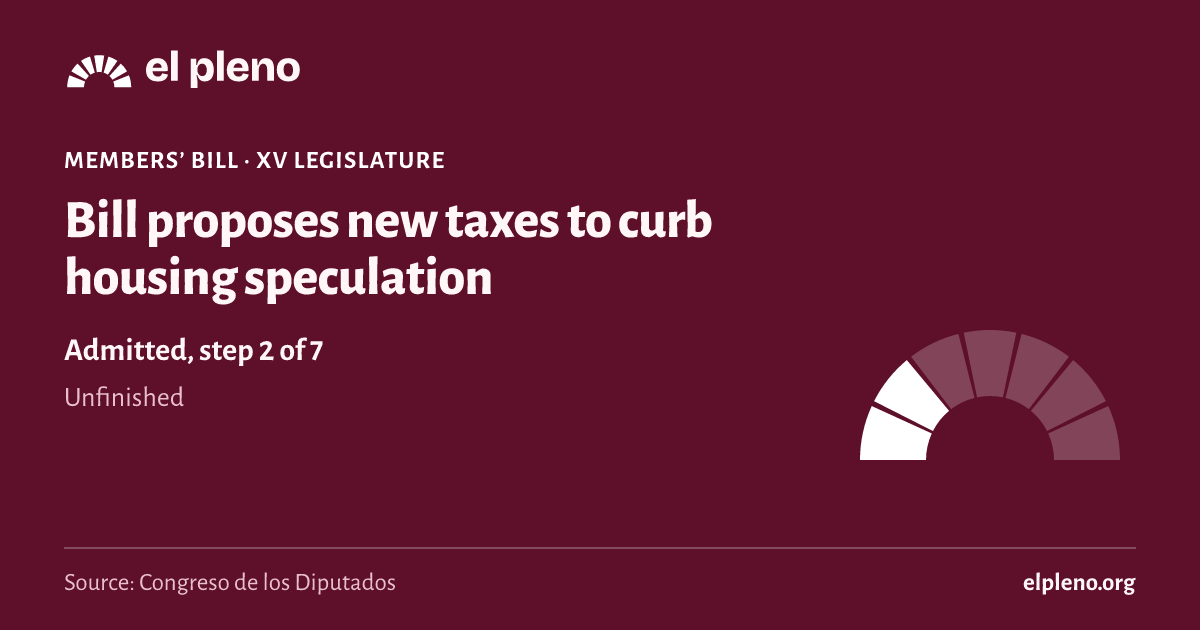
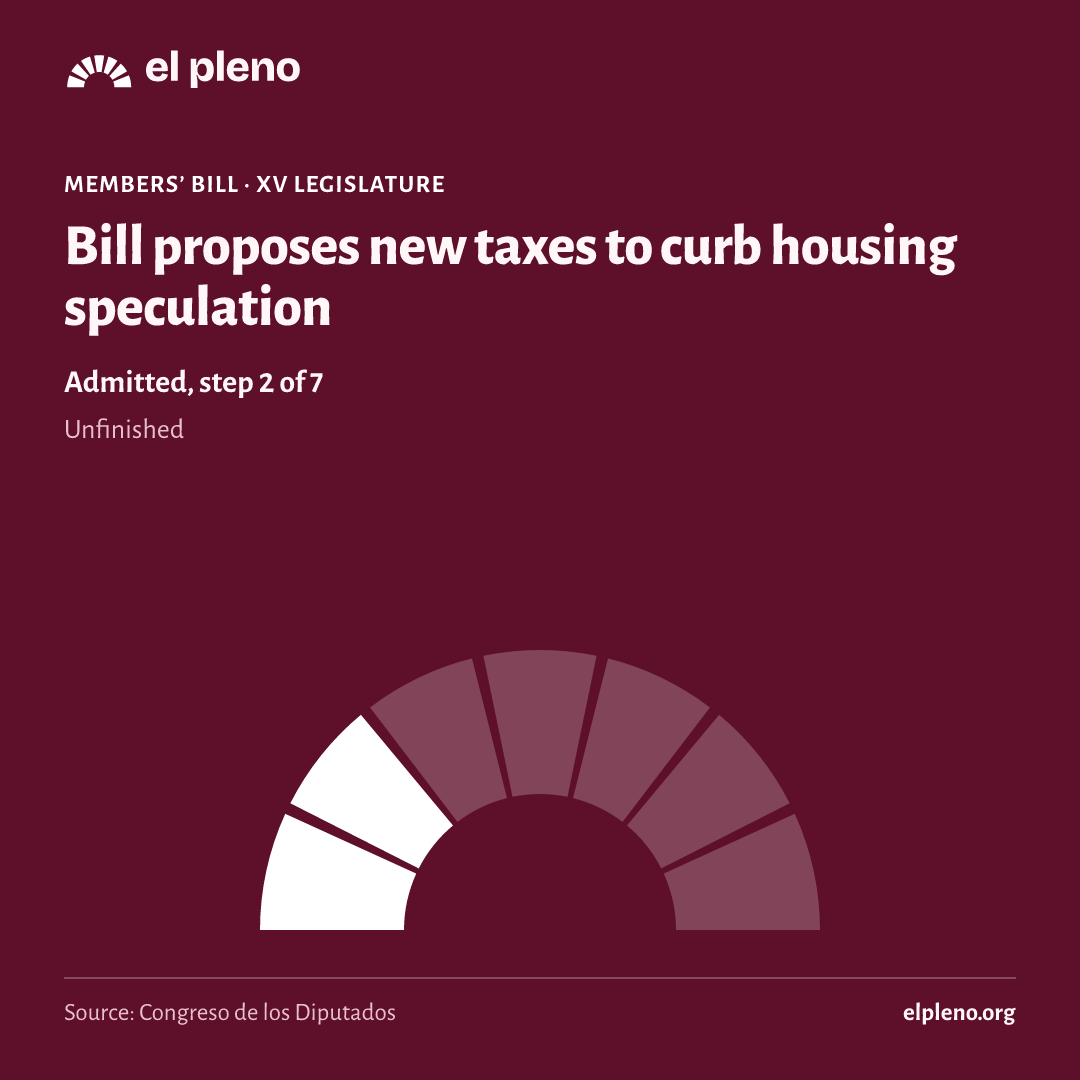
It took 2 of 7 steps. It reached Admitted, and today it is unfinished.
- Introduced16 May 2025Someone registers the text in the Congreso.
- Admitted20 May 2025The Bureau of the Congreso accepts it and, for a members’ bill, the plenary decides whether to consider it.
- Amendmentsnot reachedGroups propose changes.
- Committeenot reachedA committee goes through the text in detail.
- Plenarynot reachedAll 350 deputies vote.
- Senatenot reachedThe Senate can pass it, amend it or veto it.
- BOEnot reachedIt is published in the Official State Gazette (BOE) and comes into force.
See the 5 official steps on a timeline
Was there a plenary vote?
We have no plenary vote linked to this law in the Congreso’s data.
What happens next
What happens now?
The legislature ended before it finished. To go on, someone would have to introduce it again in the new Cortes.
It has not been presented again yet.
Sources
Where does all this come from?
- Congreso de los Diputados, file 122/000190
Official title, type, author, dates and stage.
Retrieved 11 November 2026
- Congreso de los Diputados, procedure
The date of each step, with its official wording.
Retrieved 13 November 2026
- The data comes from the open files of the Congreso, the Senate and the BOE, unaltered.
- Each deputy’s province is the one of their seat on the day of the vote.
- We only say “passed” or “rejected” when the majority needed is certain; otherwise we say which side had more votes.