What it is
Bill proposing more parental leave and family work-life balance support
It is a members’ bill. Introduced by parliamentary groups, the Senate, regional governments or citizens. It was introduced on 1 October 2024. Introduced by: Grupo Parlamentario Popular en el Congreso.
Official title: Private member's bill on Work-Life Balance and Family Co-Responsibility.
Source: Congreso de los Diputados, file 122/000129· updated 11 Nov
Automatic summary, not yet reviewed
- The bill would recognize work-life balance rights such as paid and unpaid leave, flexible work arrangements, and public aid, to equalize opportunities between women and men at work.
- It would remove the mandatory six-week period immediately after birth, though at least six weeks of birth leave would still be mandatory for each parent within the child's first year.
- It would require companies to support flexible schedules and a time bank system to accumulate and use time as vacation, days off, or reduced hours. Companies with more than 50 workers would need a work-life balance manager.
- It includes specific support for single-parent, large, foster, disability, vulnerable, and rural families, such as a 45 % Social Security rebate when hiring caregivers or mobility aid.
- It would extend free early childhood education for ages 0 to 3, co-funded 50 % by the State and the autonomous communities, and would extend maternity and paternity leave to 20 weeks, or 26 for single-parent families.
- It would improve income tax The personal income tax (IRPF in Spain): what people pay on what they earn from work, business or savings. deductions, such as a maternity deduction of up to €1,800 per year, and would allow municipalities to grant property tax rebates of up to 90 % for large or single-parent families.
Who it affects
- Working parents and caregivers: They would get more leave, flexible schedules, and a time bank to balance work and family.
- Companies with more than 50 workers: They would need a work-life balance manager and to support flexible schedules.
- Single-parent and large families: Priority access to aid, tax benefits, and caregiver hiring rebates.
- Families with children aged 0 to 3: The bill would extend free early childhood education.
- Women returning after leave: Companies would get hiring incentives, and self-employed women a zero Social Security fee for 24 months.
Words worth knowing
- Excedencia
- A temporary leave from work in which the worker keeps the right to return to their job.
- Banco de horas (time bank)
- A system to accumulate extra work hours or unused leave and exchange them later for vacation, days off, or reduced hours.
- IRPF
- Spanish personal income tax, the tax paid on income and earnings from work.
- RETA
- The special Social Security scheme for self-employed workers in Spain.
- Cuota diferencial
- The remaining income tax amount due after withholdings and advance payments.
- income tax
- The personal income tax (IRPF in Spain): what people pay on what they earn from work, business or savings.
It summarizes the text as it was introduced. It is written by artificial intelligence and may contain mistakes: the official text is what counts. Read the official text · How we make summaries
Where it stands
How far did it get?
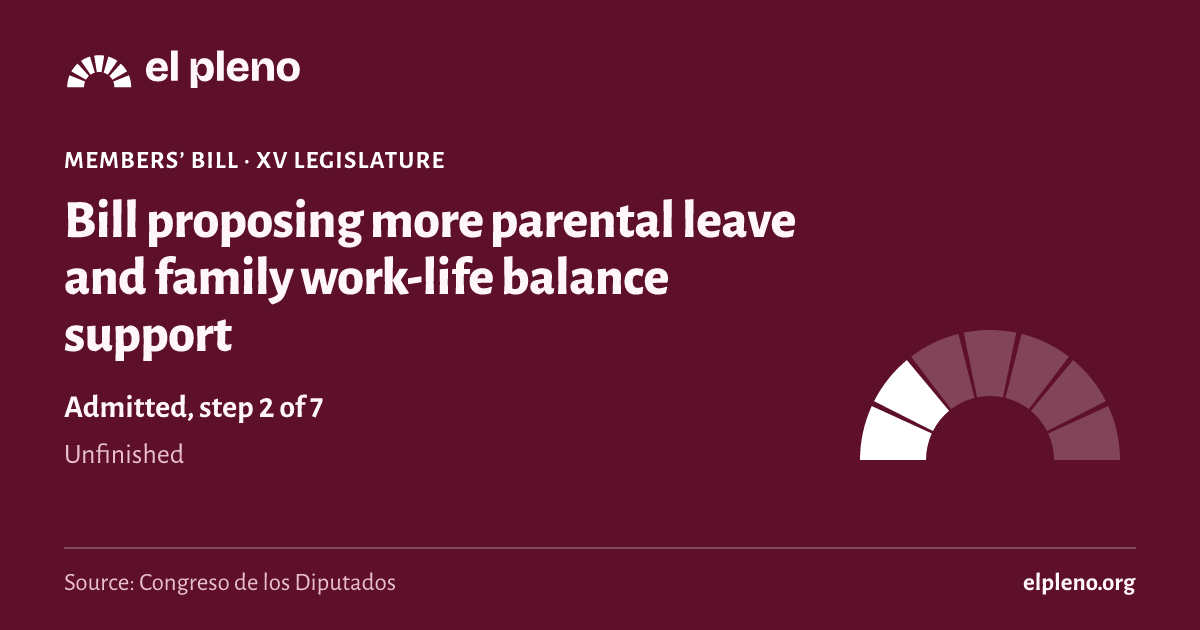
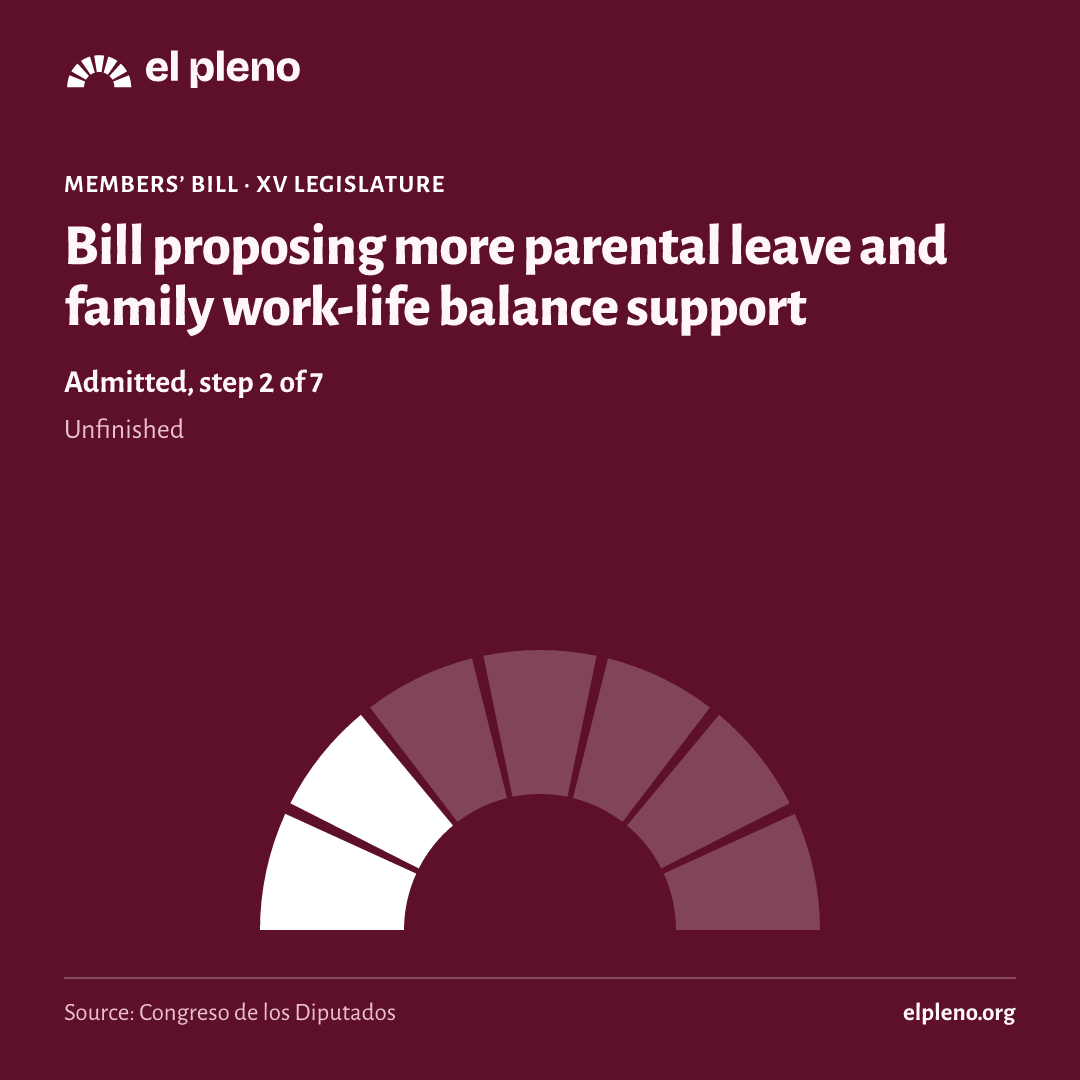
It took 2 of 7 steps. It reached Admitted, and today it is unfinished.
- Introduced1 October 2024Someone registers the text in the Congreso.
- Admitted8 October 2024The Bureau of the Congreso accepts it and, for a members’ bill, the plenary decides whether to consider it.
- Amendmentsnot reachedGroups propose changes.
- Committeenot reachedA committee goes through the text in detail.
- Plenarynot reachedAll 350 deputies vote.
- Senatenot reachedThe Senate can pass it, amend it or veto it.
- BOEnot reachedIt is published in the Official State Gazette (BOE) and comes into force.
See the 5 official steps on a timeline
Was there a plenary vote?
We have no plenary vote linked to this law in the Congreso’s data.
What happens next
What happens now?
The legislature ended before it finished. To go on, someone would have to introduce it again in the new Cortes.
It has not been presented again yet.
The same initiative in the other chamber:
- XV Legislature, Senate Private member's bill on Work-Life Balance and Family Co-Responsibility.
Sources
Where does all this come from?
- Congreso de los Diputados, file 122/000129
Official title, type, author, dates and stage.
Retrieved 11 November 2026
- Congreso de los Diputados, procedure
The date of each step, with its official wording.
Retrieved 12 November 2026
- The data comes from the open files of the Congreso, the Senate and the BOE, unaltered.
- Each deputy’s province is the one of their seat on the day of the vote.
- We only say “passed” or “rejected” when the majority needed is certain; otherwise we say which side had more votes.