What it is
Bill to restore dismissal protection for work-life balance rights
Admitted step 2 of 7· LapsedIt is a members’ bill. Introduced by parliamentary groups, the Senate, regional governments or citizens. It was introduced on 10 September 2024. Introduced by: Grupo Parlamentario Popular en el Congreso.
Official title: Private member's Organic Bill to address the urgent recovery by workers of the work-life balance rights eliminated by Organic Law 2/2024, of 1 August, on equal representation and balanced presence of women and men.
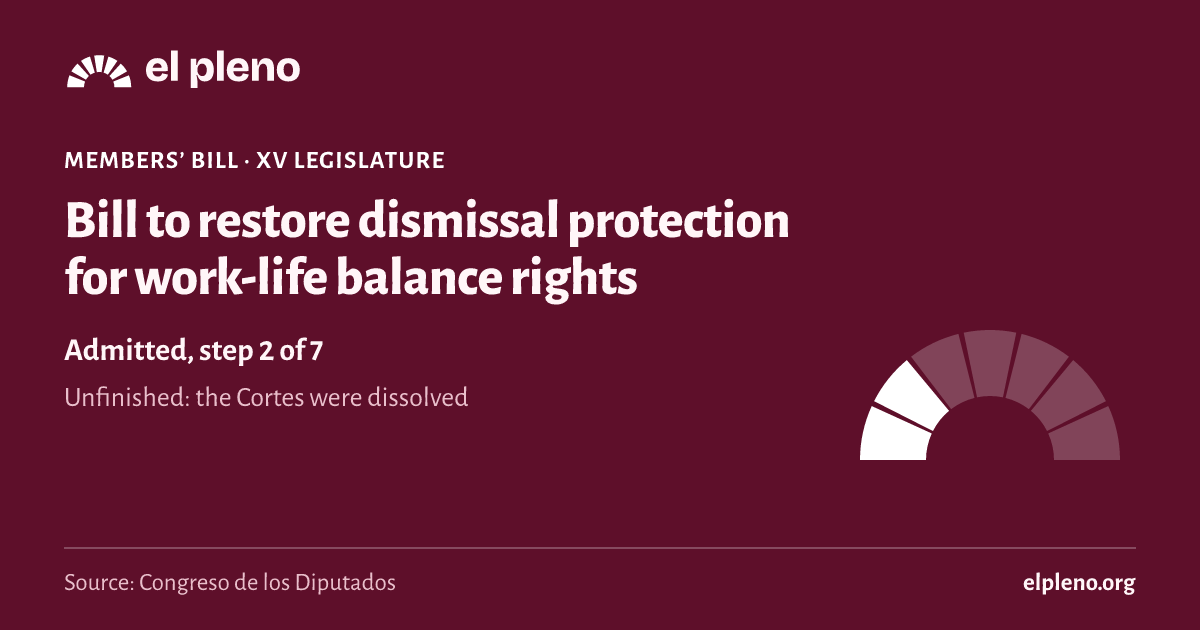
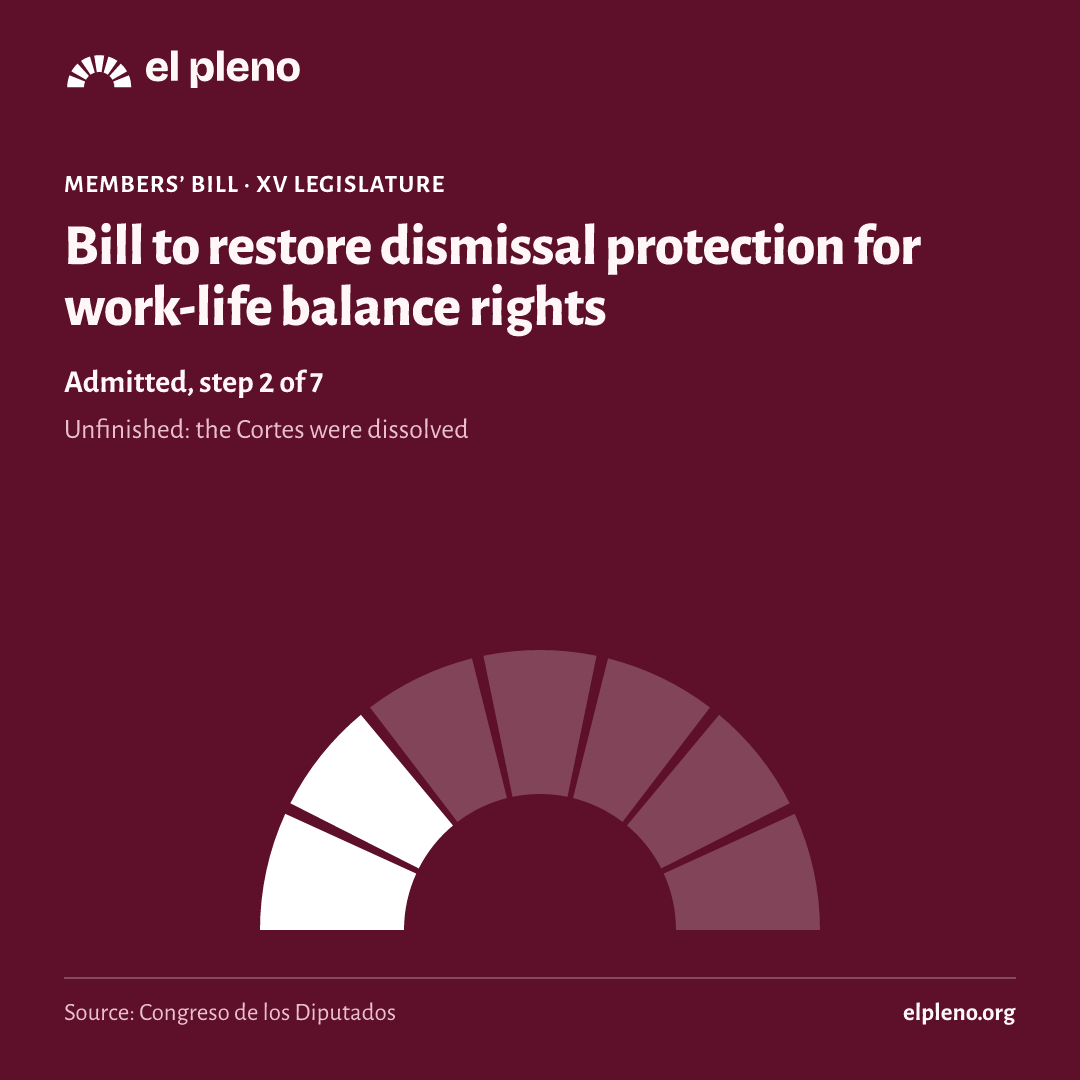
Source: Congreso de los Diputados, file 122/000127· updated 11 Nov
Automatic summary, not yet reviewed
- The bill's explanatory statement says the 2024 Parity Law unintentionally removed dismissal protection from workers who request or use work-life balance measures, such as the five-day paid leave for a serious accident or illness or schedule adjustments.
- According to the text, that mistake came from amendments by the Socialist and SUMAR groups meant to fix errors in earlier laws, and it left these workers without the extra protection they had since June 2023.
- The bill would amend Organic Law 2/2024 so that dismissals of workers who have requested or are using certain leaves, schedule adjustments, or unpaid leave are null again, and so are dismissals of victims of gender-based or sexual violence.
Who it affects
- Workers who request or use work-life balance measures: They would again be protected from dismissal if they request or use work-life balance leaves, schedule adjustments, or unpaid leave.
- Workers who are victims of gender-based or sexual violence: The bill would restore their protection from dismissal for exercising their rights.
- Popular Party Group in the Congress of Deputies (Grupo Parlamentario Popular en el Congreso): It is the group sponsoring the bill and the body processing it.
Words worth knowing
- Despido nulo (null dismissal)
- A dismissal the law declares void, for example because it discriminates or punishes someone for exercising a right.
- Conciliación (work-life balance)
- Labor rights that help people combine work and family life, such as leaves or schedule changes.
- Adaptaciones de jornada (schedule adjustments)
- Changes to working hours or schedule to help balance work and family.
- Excedencia (unpaid leave)
- A situation where a worker temporarily stops working but keeps the right to return to the job.
- Proposición de ley (bill)
- A text by which a parliamentary group proposes a law; it is not approved until the legislative process ends.
It summarizes the text as it was introduced. It is written by artificial intelligence and may contain mistakes: the official text is what counts. Read the official text · How we make summaries
Where it stands
How far did it get?
It took 2 of 7 steps. It reached Admitted, and today it is lapsed.
- Introduced10 September 2024Someone registers the text in the Congreso.
- Admitted17 September 2024The Bureau of the Congreso accepts it and, for a members’ bill, the plenary decides whether to consider it.
- Amendmentsnot reachedGroups propose changes.
- Committeenot reachedA committee goes through the text in detail.
- Plenarynot reachedAll 350 deputies vote.
- Senatenot reachedThe Senate can pass it, amend it or veto it.
- BOEnot reachedIt is published in the Official State Gazette (BOE) and comes into force.
See the 6 official steps on a timeline
Was there a plenary vote?
We have no plenary vote linked to this law in the Congreso’s data.
What happens next
What happens now?
The legislature ended before it finished. To go on, someone would have to introduce it again in the new Cortes.
It has not been presented again yet.
Sources
Where does all this come from?
- Congreso de los Diputados, file 122/000127
Official title, type, author, dates and stage.
Retrieved 11 November 2026
- Congreso de los Diputados, procedure
The date of each step, with its official wording.
Retrieved 12 November 2026
- The data comes from the open files of the Congreso, the Senate and the BOE, unaltered.
- Each deputy’s province is the one of their seat on the day of the vote.
- We never say “passed” because of a vote: the files do not say which majority was needed.