What it is
Bill to fight corruption and protect whistleblowers
It is a members’ bill. Introduced by parliamentary groups, the Senate, regional governments or citizens. It was introduced on 18 December 2020. Introduced by: Grupo Parlamentario Ciudadanos.
Official title: Organic Private member's bill on measures to combat corruption and for the protection of whistleblowers.
Source: Congreso de los Diputados, file 122/000116· updated 11 Nov
Automatic summary, not yet reviewed
- The bill would grant rights to people who report corruption: confidentiality, free legal advice, psychological assistance, job protection and safeguards against retaliation such as dismissal or pay cuts.
- Private companies with 50 or more workers, public sector entities and entities covered by anti-money laundering rules would have to set up internal reporting channels. Reports must be acknowledged within seven days and answered within three months at most.
- It would create the Independent Public Integrity Authority (Autoridad Independiente de Integridad Pública), an independent body that would protect whistleblowers, oversee senior officials, manage conflicts of interest and investigate and impose sanctions. It would replace the Office of Conflicts of Interests.
- The text defines minor, serious and very serious offenses, with fines from 200 to 400,000 euros, and disciplinary sanctions for senior officials, such as immediate removal from office or a ban from similar positions for five to ten years.
- Pardons for corruption crimes would be banned, a new crime of illicit enrichment would apply to officials with unexplained wealth, and political parties, unions and business organizations would bear subsidiary civil liability for crimes by their officials and employees.
- The Authority's president would be elected by the Congress of Deputies (Congreso de los Diputados) by a three-fifths majority, would serve a single six-year term, and could not have been a senior official, political appointee or party or union executive in the previous ten years.
Who it affects
- Workers and civil servants who report corruption: They would receive protection, confidentiality, legal advice and safeguards against retaliation.
- Private companies with 50 or more workers: They would have to create internal reporting channels.
- Senior officials and public authorities: They would be subject to oversight by the new Authority and tougher sanctions, including the crime of illicit enrichment.
- Political parties, unions and business organizations: They would bear subsidiary civil liability for crimes by their officials and employees, and corruption pardons would be banned.
Words worth knowing
- Alertador
- A person who reports wrongdoing or corruption they learned about through their work.
- Indemnidad laboral
- The right not to suffer retaliation at work for having reported wrongdoing.
- Indulto
- A pardon: a government decision that fully or partially waives a sentence imposed by a court.
- Enriquecimiento ilícito
- A crime an official would commit if their wealth grows and they cannot explain its origin.
- Alto cargo
- A person holding a senior management or executive position in the Spanish public administration.
It summarizes the text as it was introduced. It is written by artificial intelligence and may contain mistakes: the official text is what counts. Read the official text · How we make summaries
Where it stands
How far did it get?
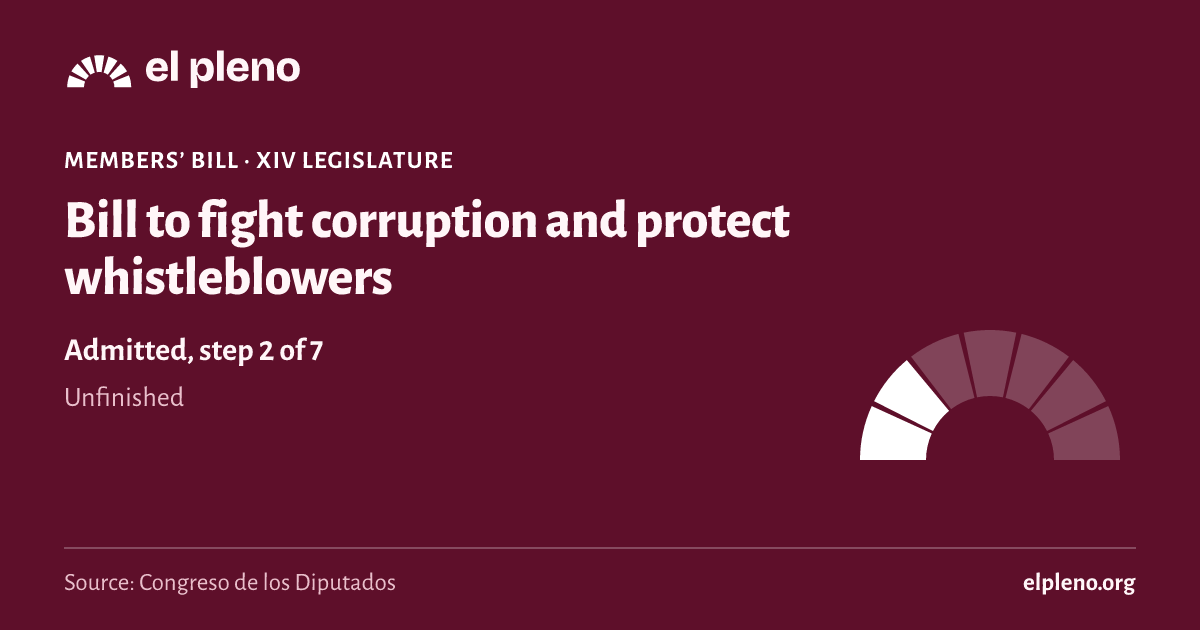
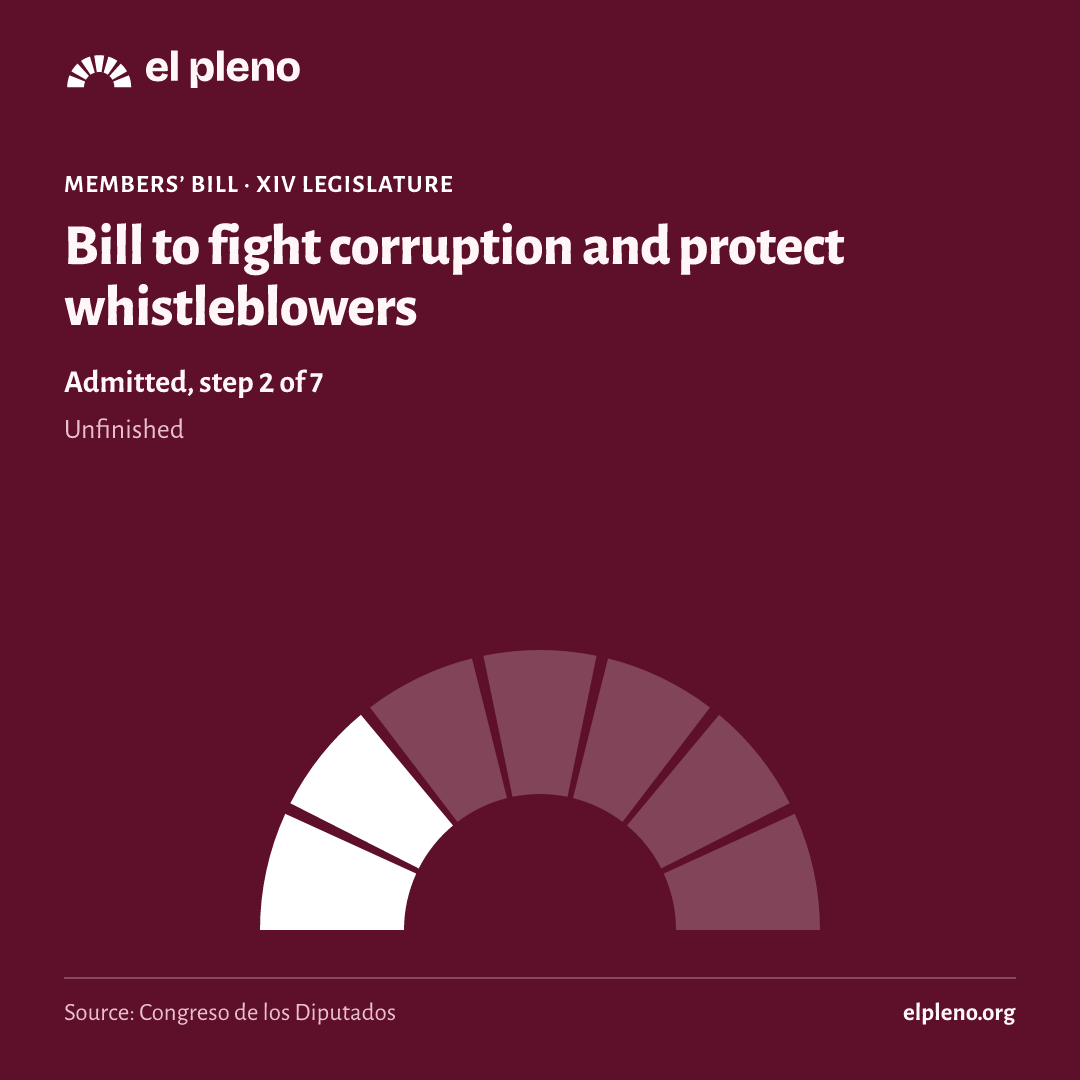
It took 2 of 7 steps. It reached Admitted, and today it is unfinished.
- Introduced18 December 2020Someone registers the text in the Congreso.
- Admitted13 January 2021The Bureau of the Congreso accepts it and, for a members’ bill, the plenary decides whether to consider it.
- Amendmentsnot reachedGroups propose changes.
- Committeenot reachedA committee goes through the text in detail.
- Plenarynot reachedAll 350 deputies vote.
- Senatenot reachedThe Senate can pass it, amend it or veto it.
- BOEnot reachedIt is published in the Official State Gazette (BOE) and comes into force.
See the 6 official steps on a timeline
Was there a plenary vote?
We have no plenary vote linked to this law in the Congreso’s data.
What happens next
What happens now?
The legislature ended before it finished. To go on, someone would have to introduce it again in the new Cortes.
It has not been presented again yet.
Sources
Where does all this come from?
- Congreso de los Diputados, file 122/000116
Official title, type, author, dates and stage.
Retrieved 11 November 2026
- The data comes from the open files of the Congreso, the Senate and the BOE, unaltered.
- Each deputy’s province is the one of their seat on the day of the vote.
- We only say “passed” or “rejected” when the majority needed is certain; otherwise we say which side had more votes.