What it is
Bill to guarantee a dignified death and respect patient wishes
It is a members’ bill. Introduced by parliamentary groups, the Senate, regional governments or citizens. It was introduced on 10 February 2020. Introduced by: Grupo Parlamentario Ciudadanos.
Official title: Private member's bill on the rights and guarantees of the dignity of the person in the final process of their life.
Source: Congreso de los Diputados, file 122/000029· updated 11 Nov
Automatic summary, not yet reviewed
- The bill would recognize the rights of people at the end of their lives, the duties of the health professionals who care for them, and the guarantees that health and social institutions must provide.
- It would apply throughout Spain, in both public and private health and social settings, and also to insurance entities offering services in Spain.
- Anyone could refuse a treatment, including life support measures, even if it endangers their life, and that refusal would not reduce the care given to relieve pain and suffering.
- People would have the right to quality palliative care, including palliative sedation even if it shortens life, and to receive it at home if they wish and it is not medically contraindicated.
- People hospitalized at the end of life would have the right to a single room, visits from family and loved ones, spiritual care, and to say goodbye if they receive palliative sedation.
- Health professionals would have to respect the patient's wishes, avoid futile overtreatment, and adjust therapeutic effort to the patient's condition, recording this in the medical record.
Who it affects
- People in terminal or agony situations and their families: They would receive new rights: information, decision-making about treatment, palliative care, companionship, and a single room.
- Health professionals: They would have new duties: respect patient wishes, check advance instruction registries, and avoid futile overtreatment.
- Public and private health and social care centers: They would have to guarantee these rights, provide palliative care, and have single rooms within one year.
- Health administrations: They would have to guarantee the rights, create a model advance instructions document, and evaluate the law each year.
- Minors: They would have the right to age-appropriate information, to be accompanied, and to be hospitalized with other minors.
Words worth knowing
- Cuidados paliativos (palliative care)
- Care aimed at controlling pain and other symptoms when the illness no longer responds to curative treatment, to achieve the best possible quality of life until the end.
- Instrucciones previas (advance instructions, or living will)
- A document in which an adult states in advance which treatments they do or do not want, for when they can no longer express it themselves.
- Sedación paliativa (palliative sedation)
- Giving drugs to reduce the patient's consciousness to relieve symptoms that do not respond to treatment, with the patient's consent.
- Obstinación terapéutica (therapeutic obstinacy)
- Keeping up futile treatments that only prolong biological life with no chance of improvement; the text calls it bad clinical practice.
- Adecuación del esfuerzo terapéutico (adjusting therapeutic effort)
- Withdrawing, adjusting, or not starting treatments when life expectancy is limited, while keeping palliative care.
It summarizes the text as it was introduced. It is written by artificial intelligence and may contain mistakes: the official text is what counts. Read the official text · How we make summaries
Where it stands
How far did it get?
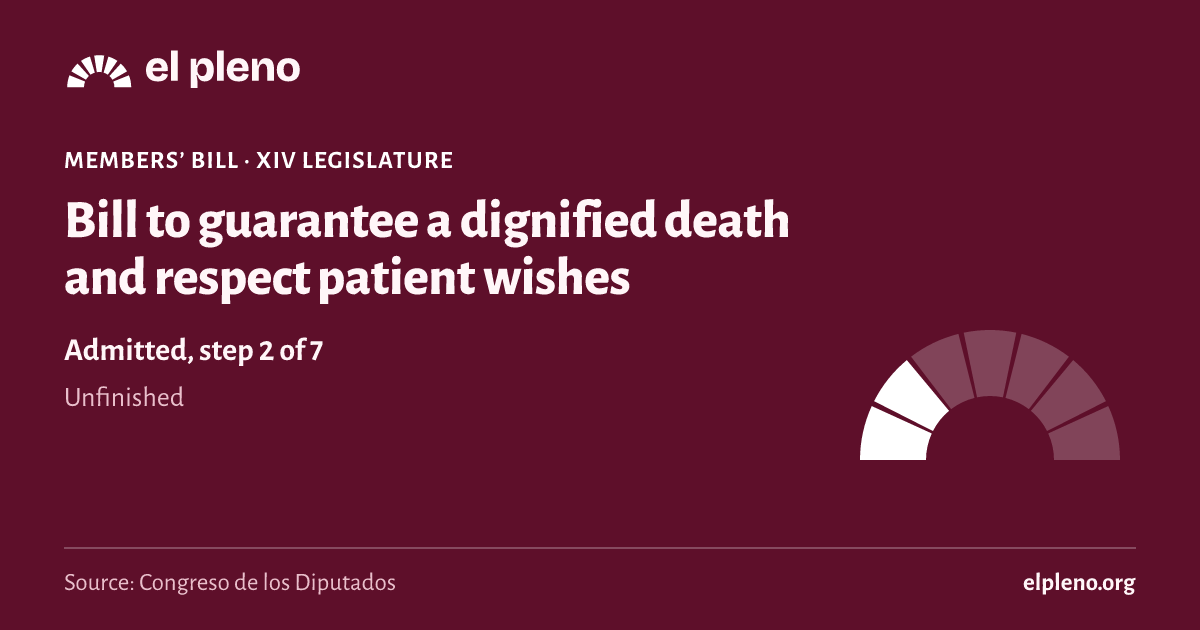
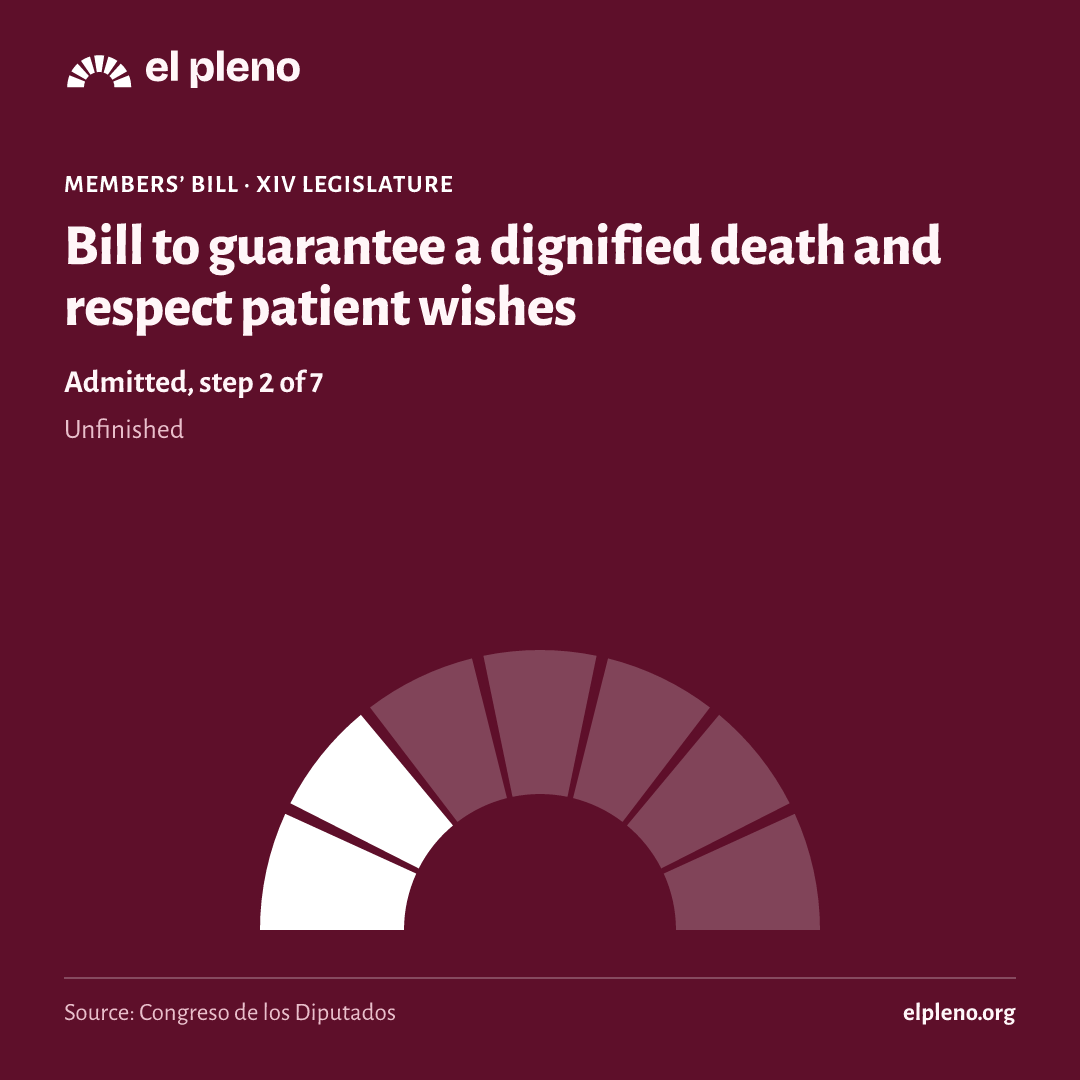
It took 2 of 7 steps. It reached Admitted, and today it is unfinished.
- Introduced10 February 2020Someone registers the text in the Congreso.
- Admitted18 February 2020The Bureau of the Congreso accepts it and, for a members’ bill, the plenary decides whether to consider it.
- Amendmentsnot reachedGroups propose changes.
- Committeenot reachedA committee goes through the text in detail.
- Plenarynot reachedAll 350 deputies vote.
- Senatenot reachedThe Senate can pass it, amend it or veto it.
- BOEnot reachedIt is published in the Official State Gazette (BOE) and comes into force.
See the 6 official steps on a timeline
Was there a plenary vote?
We have no plenary vote linked to this law in the Congreso’s data.
What happens next
What happens now?
The legislature ended before it finished. To go on, someone would have to introduce it again in the new Cortes.
It has not been presented again yet.
Presented before in:
- XII Legislature, Congreso de los Diputados· Unfinished Rights and guarantees for a dignified death at the end of life
- XII Legislature, Senate Private member's bill on the rights and guarantees of the dignity of the person in the final process of their life.
- XIII Legislature, Congreso de los Diputados· Unfinished Bill proposes rights to a dignified death and respect for patient wishes
Sources
Where does all this come from?
- Congreso de los Diputados, file 122/000029
Official title, type, author, dates and stage.
Retrieved 11 November 2026
- The data comes from the open files of the Congreso, the Senate and the BOE, unaltered.
- Each deputy’s province is the one of their seat on the day of the vote.
- We only say “passed” or “rejected” when the majority needed is certain; otherwise we say which side had more votes.