What it is
Bill would update EU rules on public contracts, insurance and taxes
It is a government bill. Introduced by the Government. It was introduced on 20 February 2020. Introduced by: Gobierno.
Official title: Government bill on urgent measures incorporating various European Union directives into Spanish law in the areas of public procurement in certain sectors; private insurance; pension plans and funds; and tax matters and tax litigation (originating from Royal Decree-Law 3/2020, of 4 February).
Source: Congreso de los Diputados, file 121/000005· updated 11 Nov
Automatic summary, not yet reviewed
- The bill would regulate the award of works, supply and service contracts signed by public and private entities in the water, energy, transport and postal sectors, with thresholds of €428,000 for supplies and services and €5,350,000 for works.
- It would require contracting entities to include social and environmental criteria in all procurement, and to ensure that companies meet labor and environmental obligations during contract performance, with penalties for breaches.
- It would create new award procedures, such as competitive dialogue and innovation partnerships, in addition to the open, restricted, negotiated with publication and negotiated without publication procedures.
- It would make procurement generally electronic: tender documents would be freely available on the contractor profile and communications and notices would be electronic, with narrow exceptions.
- It would allow reserving contracts or lots for special employment centers and integration companies, provided at least 30 percent of their workers have a disability or are in a situation of social exclusion.
- On insurance, it would replace the current insurance mediation law with a new rule governing insurance and reinsurance distribution, with stronger duties to inform customers and an administrative register of distributors.
- It would amend VAT and excise duty rules to simplify and harmonize the taxation of transactions in goods between EU member states, such as call-off stock sales.
- It would improve the resolution of tax disputes between member states, amending the Non-Resident income tax The personal income tax (IRPF in Spain): what people pay on what they earn from work, business or savings. rules and the law governing the administrative courts.
Who it affects
- Public sector contracting entities and companies holding special or exclusive rights: They would have to tender their contracts in the regulated sectors under the new procedures, with electronic publicity and social and environmental criteria.
- Companies wanting to bid for public contracts: They would have to submit bids electronically, with a responsible declaration, and meet labor and environmental obligations or face penalties.
- Brokers, intermediaries and insurers distributing insurance: They would face stronger duties to inform and advise customers and would have to register in the administrative register of insurance distributors.
- Insurance customers and pension plan members: They would receive more information before buying insurance and be better protected when buying insurance-based investment products.
- Businesses and professionals operating with other EU member states: VAT rules on cross-border transactions in goods would be simplified and the requirements for exemptions would be tightened.
Words worth knowing
- Entidad contratante
- A public or private body that buys works, supplies or services in the sectors covered by this rule.
- Perfil de contratante
- A website where the contracting body publishes all its tender and contract information free of charge.
- Pliego de condiciones
- The document setting out the rules, requirements and conditions of the contract being tendered.
- Real decreto-ley
- A rule with the force of law that the Government can pass on an urgent basis and that Congress must later validate.
- Transposición
- Adapting a European directive into Spanish law through a national rule.
- income tax
- The personal income tax (IRPF in Spain): what people pay on what they earn from work, business or savings.
It summarizes the text as it was introduced. It is written by artificial intelligence and may contain mistakes: the official text is what counts. Read the official text · How we make summaries
Where it stands
How far did it get?
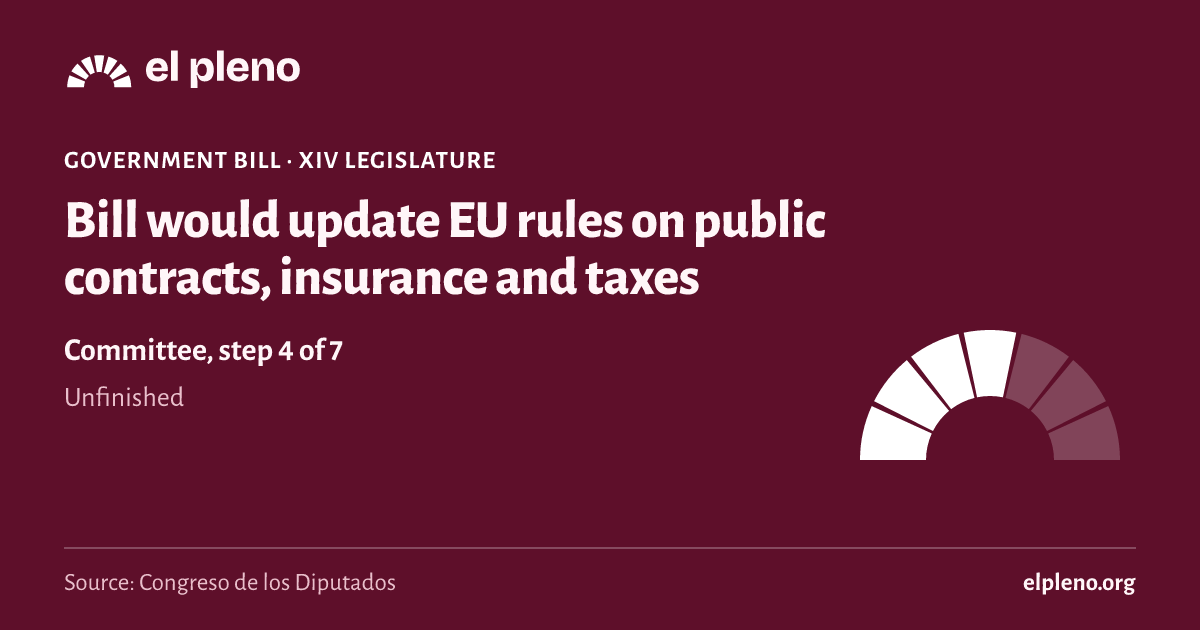
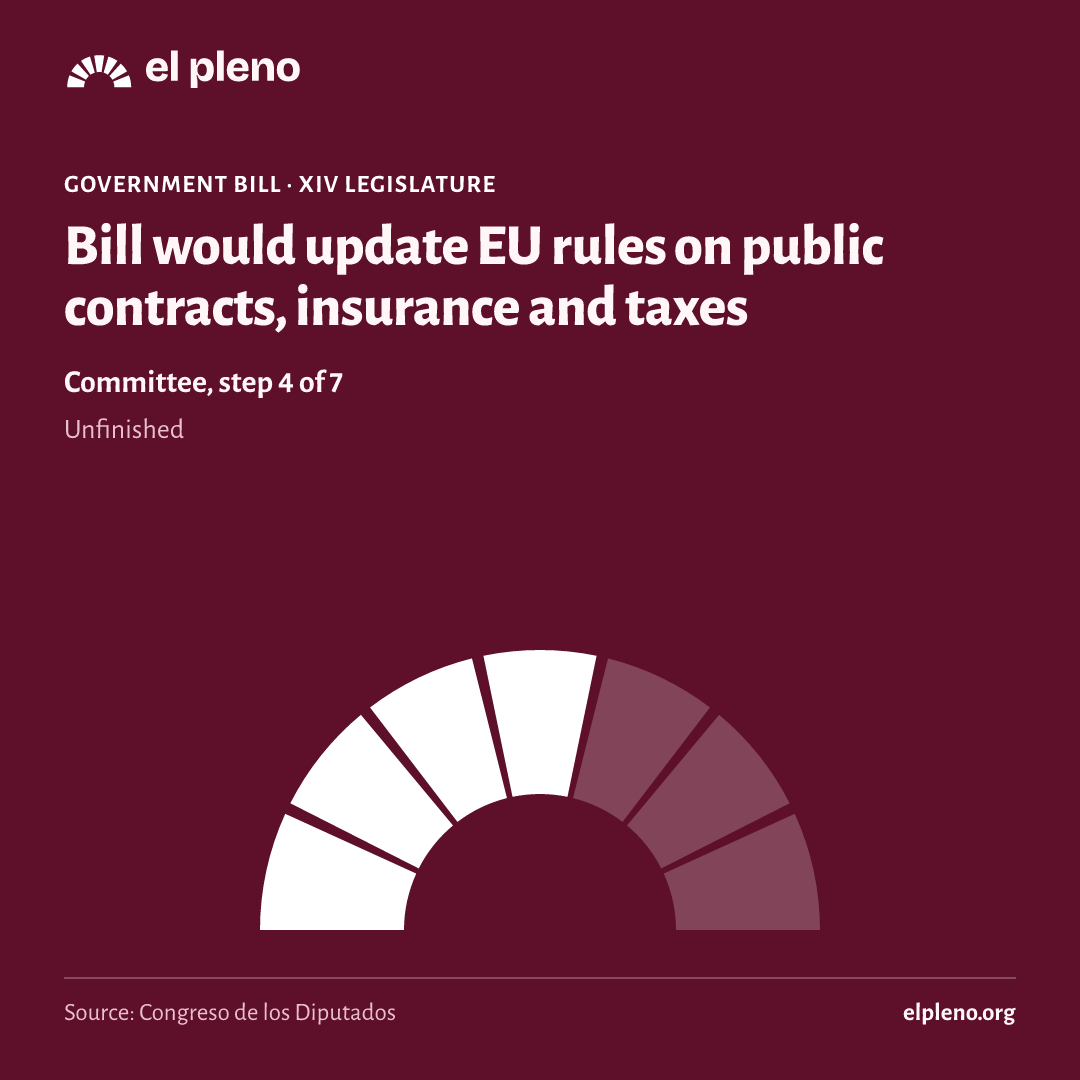
It took 4 of 7 steps. It reached Committee, and today it is unfinished.
- Introduced20 February 2020Someone registers the text in the Congreso.
- Admitted25 February 2020The Bureau of the Congreso accepts it and, for a members’ bill, the plenary decides whether to consider it.
- Amendments28 February 2020Groups propose changes.
- Committee30 April 2020A committee goes through the text in detail.
- Plenarynot reachedAll 350 deputies vote.
- Senatenot reachedThe Senate can pass it, amend it or veto it.
- BOEnot reachedIt is published in the Official State Gazette (BOE) and comes into force.
See the 7 official steps on a timeline
Was there a plenary vote?
We have no plenary vote linked to this law in the Congreso’s data.
What happens next
What happens now?
The legislature ended before it finished. To go on, someone would have to introduce it again in the new Cortes.
It has not been presented again yet.
Sources
Where does all this come from?
- Congreso de los Diputados, file 121/000005
Official title, type, author, dates and stage.
Retrieved 11 November 2026
- The data comes from the open files of the Congreso, the Senate and the BOE, unaltered.
- Each deputy’s province is the one of their seat on the day of the vote.
- We only say “passed” or “rejected” when the majority needed is certain; otherwise we say which side had more votes.