What it is
Bill to cut emissions and switch Spain to renewable energy
It is a members’ bill. Introduced by parliamentary groups, the Senate, regional governments or citizens. It was introduced on 19 July 2018. Introduced by: Grupo Parlamentario Confederal de Unidos Podemos-En Comú Podem-En Marea.
Official title: Private member's bill on Climate Change and Energy Transition.
Source: Congreso de los Diputados, file 122/000265· updated 11 Nov
Automatic summary, not yet reviewed
- The bill would set greenhouse gas emission reduction targets: 35% by 2030, 70% by 2040 and 95% by 2050, always compared to 1990 levels.
- It would set renewable energy targets: at least 45% of final energy consumption from renewables in 2030 and 100% in 2050, with 100% renewable electricity before 2045. It would also cut primary energy use by 40% in 2030.
- It proposes closing nuclear plants when their current permits expire and closing coal plants by December 31, 2025 at the latest. It would also ban new nuclear plants and ban oil and gas exploration and extraction, including hydraulic fracturing.
- It would reform electricity bills: the fixed term could not exceed 25% of the variable one, prices would rise with consumption, and the charge on self-consumed energy, known as the "Impuesto al Sol" (sun tax), would be eliminated.
- It would create the State Climate Change Agency, an independent body that would oversee climate policies and regulate the electricity and hydrocarbon sectors, taking over functions from the CNMC and the IDAE.
- It proposes an environmental tax reform: a tax on power plant emissions, progressive rates on the electricity tax, a financial transactions tax, and new taxes on transport and waste.
- It would protect vulnerable consumers: a social bonus for natural gas (which did not exist before), specific water rates with a guaranteed minimum supply, and just transition plans with alternative jobs for areas affected by nuclear and coal plant closures.
- Cities with more than 100,000 inhabitants would have to draw up a Municipal Climate Change Plan every five years, covering mobility, waste and energy poverty measures.
Who it affects
- Electricity and gas consumers: Changes to tariffs, an end to charges on self-consumed energy, and a social bonus for lower-income households.
- Nuclear and coal plant workers and their regions: Just transition plans with reassignment or alternative local jobs before the closures.
- City councils of large cities: They must approve municipal climate change plans every five years.
- Electricity, gas and fossil fuel companies: New taxes, coal and nuclear plant closures, and limits on their activities.
- Drivers and car buyers: Taxes tied to emissions and electric vehicle sales targets reaching 100% by 2040.
Words worth knowing
- Autoconsumo eléctrico (self-consumption)
- Using electricity you generate yourself at home, for example with solar panels.
- Bono social (social bonus)
- A discount on the electricity or gas bill for people with low incomes.
- Término fijo y término variable (fixed and variable term)
- Parts of the bill: the fixed one depends on contracted capacity, the variable one on energy used.
- Fractura hidráulica (fracking)
- A technique that breaks rock with high-pressure water to extract gas or oil.
- Transición justa (just transition)
- Protecting those who lose their jobs or are harmed by the switch to a new energy model.
It summarizes the text as it was introduced. It is written by artificial intelligence and may contain mistakes: the official text is what counts. Read the official text · How we make summaries
Where it stands
How far did it get?
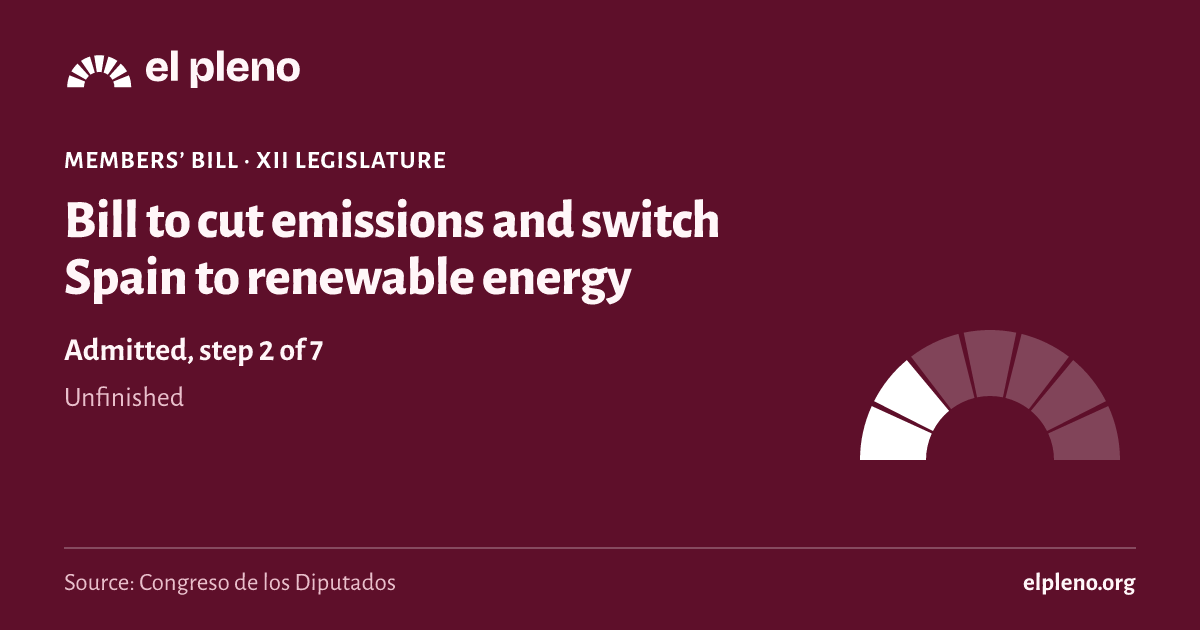
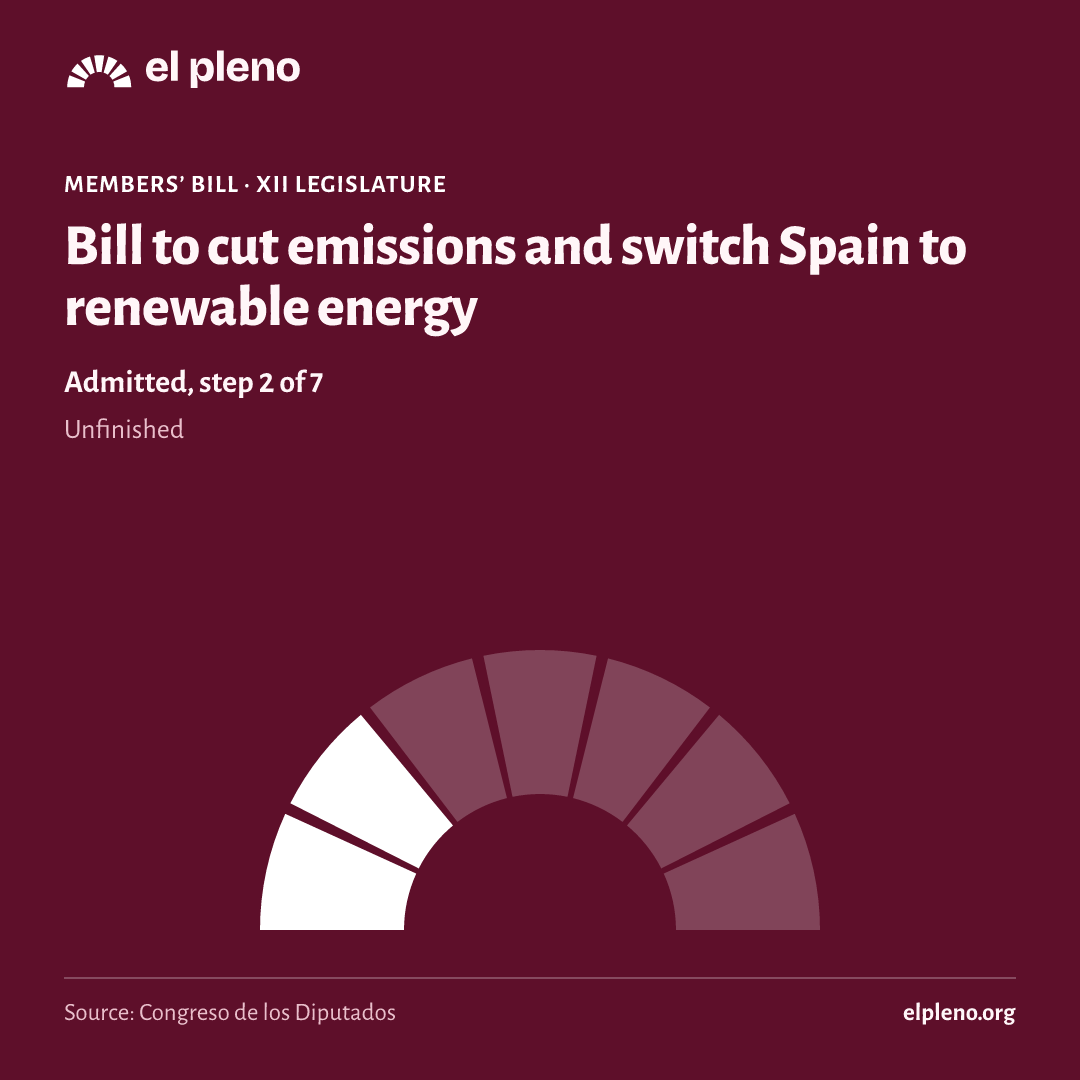
It took 2 of 7 steps. It reached Admitted, and today it is unfinished.
- Introduced19 July 2018Someone registers the text in the Congreso.
- Admitted4 September 2018The Bureau of the Congreso accepts it and, for a members’ bill, the plenary decides whether to consider it.
- Amendmentsnot reachedGroups propose changes.
- Committeenot reachedA committee goes through the text in detail.
- Plenarynot reachedAll 350 deputies vote.
- Senatenot reachedThe Senate can pass it, amend it or veto it.
- BOEnot reachedIt is published in the Official State Gazette (BOE) and comes into force.
See the 6 official steps on a timeline
Was there a plenary vote?
We have no plenary vote linked to this law in the Congreso’s data.
What happens next
What happens now?
The legislature ended before it finished. To go on, someone would have to introduce it again in the new Cortes.
It was presented again:
- XIII Legislature, Congreso de los Diputados· Unfinished Bill proposing emission cuts and a new energy model
Sources
Where does all this come from?
- Congreso de los Diputados, file 122/000265
Official title, type, author, dates and stage.
Retrieved 11 November 2026
- The data comes from the open files of the Congreso, the Senate and the BOE, unaltered.
- Each deputy’s province is the one of their seat on the day of the vote.
- We only say “passed” or “rejected” when the majority needed is certain; otherwise we say which side had more votes.