What it is
Bill to protect the jobs of women undergoing assisted reproduction
It is a members’ bill. Introduced by parliamentary groups, the Senate, regional governments or citizens. It was introduced on 2 October 2017. Introduced by: Grupo Parlamentario Confederal de Unidos Podemos-En Comú Podem-En Marea.
Official title: Private member's bill amending certain provisions of Royal Legislative Decree 2/2015, of 23 October, approving the consolidated text of the Workers' Statute, for the labor protection of workers undergoing assisted reproduction treatments.
Source: Congreso de los Diputados, file 122/000130· updated 11 Nov
Automatic summary, not yet reviewed
- The bill would expand paid leave to attend assisted reproduction procedures, prenatal exams, childbirth preparation, sessions required in adoption or foster care cases, and also the medical process for donating an organ, always within working hours.
- Absences due to assisted reproduction treatments, organ donation and certain medical leaves would no longer count toward the attendance failures that justify an objective dismissal.
- Dismissal would be null and void, both objective and disciplinary, for workers undergoing assisted reproduction treatment from its start until the pregnancy suspension period begins, in addition to the existing cases of pregnancy, leave, extended leave and gender violence Violence a woman suffers from a current or former partner because she is a woman..
- The explanatory statement says the reform also seeks to protect living organ donors and workers on long medical leave, so they do not have to choose between their health and their job.
Who it affects
- Women workers undergoing assisted reproduction treatment: They would get leave for the procedures and their dismissal would be null during treatment.
- Pregnant workers: The nullity of dismissal from the start of pregnancy is maintained.
- Living organ donors: Their absences for donation would not count as attendance failures and they would get leave for the medical process.
- Workers on long medical leave, with cancer or serious illness: Those absences would no longer count toward objective dismissal.
- Employers: They could not dismiss workers on objective or disciplinary grounds for the absences covered by the reform.
Words worth knowing
- Despido objetivo
- A non-disciplinary dismissal the company justifies for economic, technical, organizational or production reasons, or due to absences from work.
- Nulidad del despido
- The dismissal is declared void and the worker must be reinstated with payment of unpaid wages.
- Reproducción asistida
- Medical techniques to achieve pregnancy, such as in vitro fertilization.
- Excedencia
- A situation where the worker stops working and receiving pay but keeps the right to return to their job.
- gender violence
- Violence a woman suffers from a current or former partner because she is a woman.
It summarizes the text as it was introduced. It is written by artificial intelligence and may contain mistakes: the official text is what counts. Read the official text · How we make summaries
Where it stands
How far did it get?
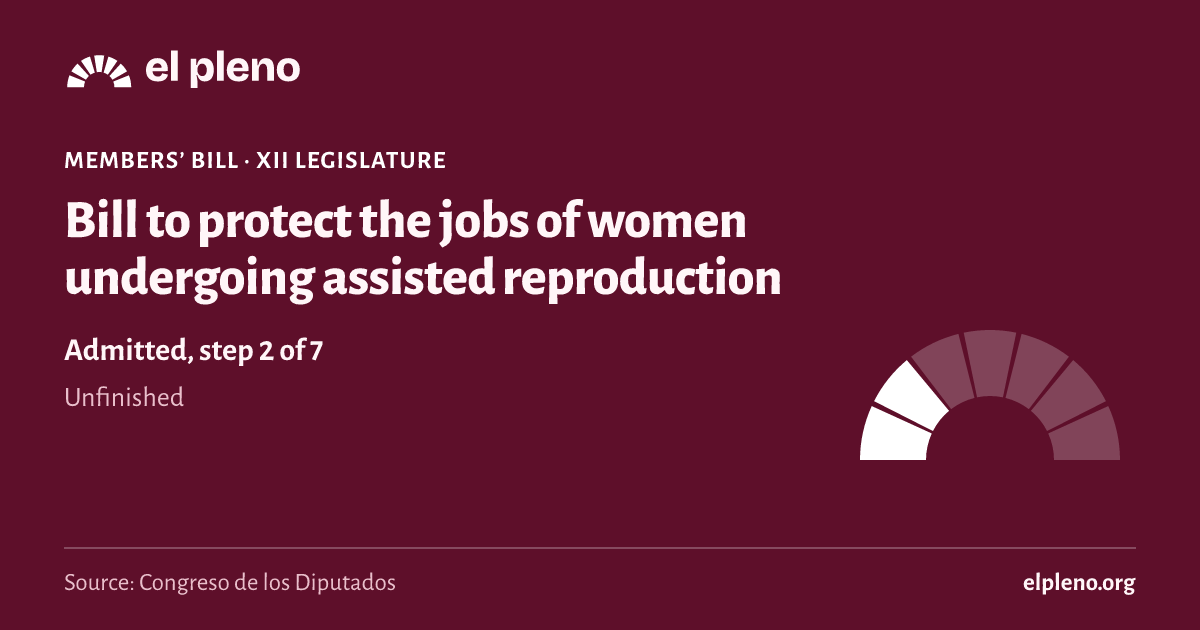
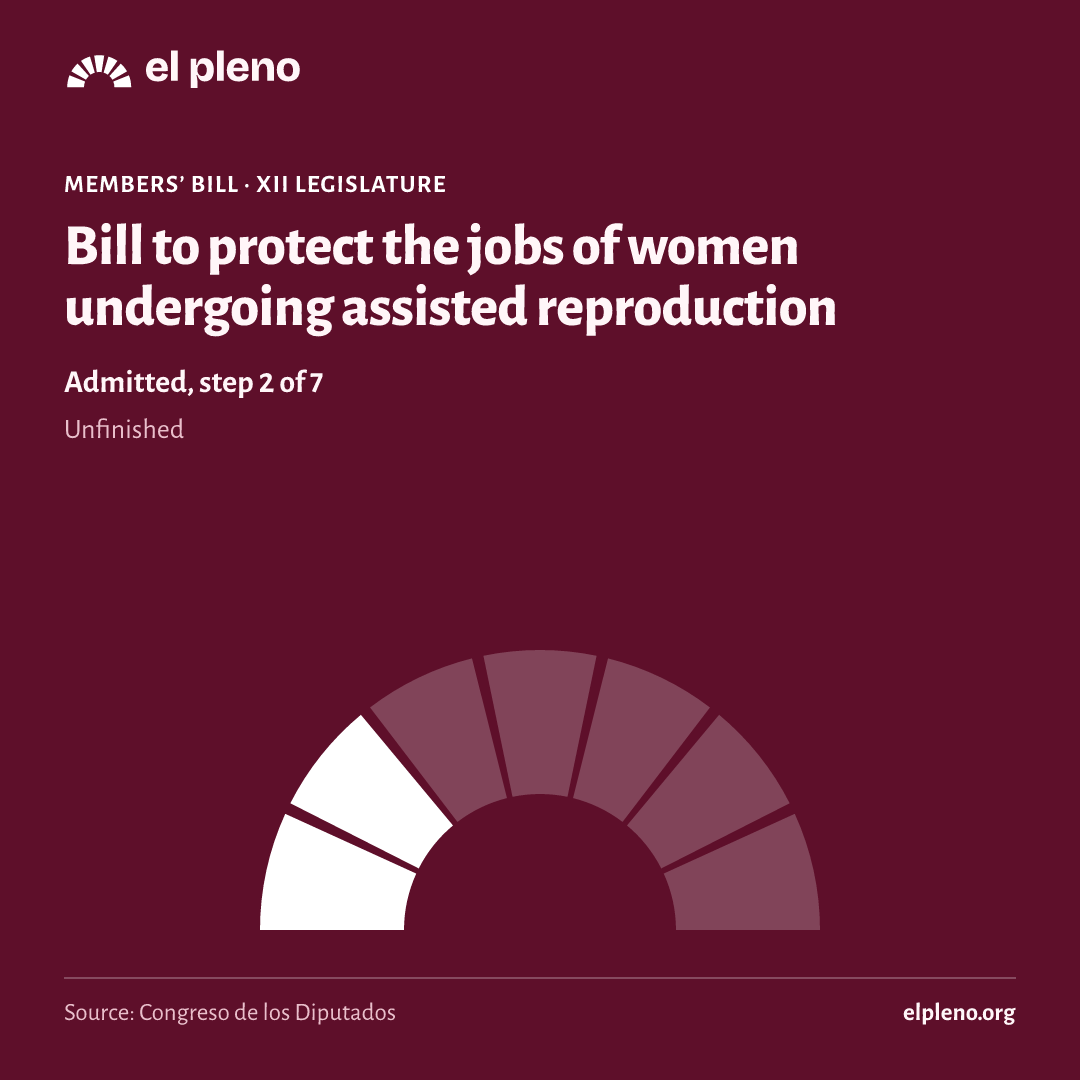
It took 2 of 7 steps. It reached Admitted, and today it is unfinished.
- Introduced2 October 2017Someone registers the text in the Congreso.
- Admitted10 October 2017The Bureau of the Congreso accepts it and, for a members’ bill, the plenary decides whether to consider it.
- Amendmentsnot reachedGroups propose changes.
- Committeenot reachedA committee goes through the text in detail.
- Plenarynot reachedAll 350 deputies vote.
- Senatenot reachedThe Senate can pass it, amend it or veto it.
- BOEnot reachedIt is published in the Official State Gazette (BOE) and comes into force.
See the 6 official steps on a timeline
Was there a plenary vote?
We have no plenary vote linked to this law in the Congreso’s data.
What happens next
What happens now?
The legislature ended before it finished. To go on, someone would have to introduce it again in the new Cortes.
It has not been presented again yet.
Sources
Where does all this come from?
- Congreso de los Diputados, file 122/000130
Official title, type, author, dates and stage.
Retrieved 11 November 2026
- The data comes from the open files of the Congreso, the Senate and the BOE, unaltered.
- Each deputy’s province is the one of their seat on the day of the vote.
- We only say “passed” or “rejected” when the majority needed is certain; otherwise we say which side had more votes.