What it is
Proposal to send dependency benefit disputes to the social courts
It is a members’ bill. Introduced by parliamentary groups, the Senate, regional governments or citizens. It was introduced on 6 March 2017. Introduced by: Grupo Parlamentario Socialista.
Official title: Private member's bill attributing competence to the social jurisdiction regarding care for persons in a situation of dependency.
Source: Congreso de los Diputados, file 122/000080· updated 11 Nov
Automatic summary, not yet reviewed
- The bill would remove the delay that kept the social jurisdiction from hearing disputes over benefits under the dependency law. That transfer of powers would take effect when the law enters into force.
- Administrative decisions on dependency benefits issued after the law takes effect could be challenged before the social courts. Cases that had already exhausted the administrative route before that would stay with the administrative courts.
- The law would enter into force two months after its publication in the official gazette (BOE).
- Law 36/2011 already assigned these matters to the social jurisdiction, but postponed its entry into force until a later law that the Government never sent to the Cortes. The bill would fulfill that pending mandate.
Who it affects
- People in situations of dependency and their families: Could file claims before the social courts, which are faster and cheaper, when disputing dependency benefits.
- Public administrations that manage dependency benefits: Would be treated like Social Security managing bodies in these court cases.
- Administrative courts (contencioso-administrativo): Would stop hearing new dependency benefit cases, which would move to the social courts.
Words worth knowing
- Jurisdicción social
- The courts that handle labor and Social Security disputes.
- Jurisdicción contencioso-administrativa
- The courts that review decisions made by public administrations.
- Ley de dependencia
- Law 39/2006, which regulates support for people who need help with daily life.
- Agotar la vía administrativa
- That no more appeals are possible within the administration, so going to court is the only option left.
It summarizes the text as it was introduced. It is written by artificial intelligence and may contain mistakes: the official text is what counts. Read the official text · How we make summaries
Where it stands
How far did it get?
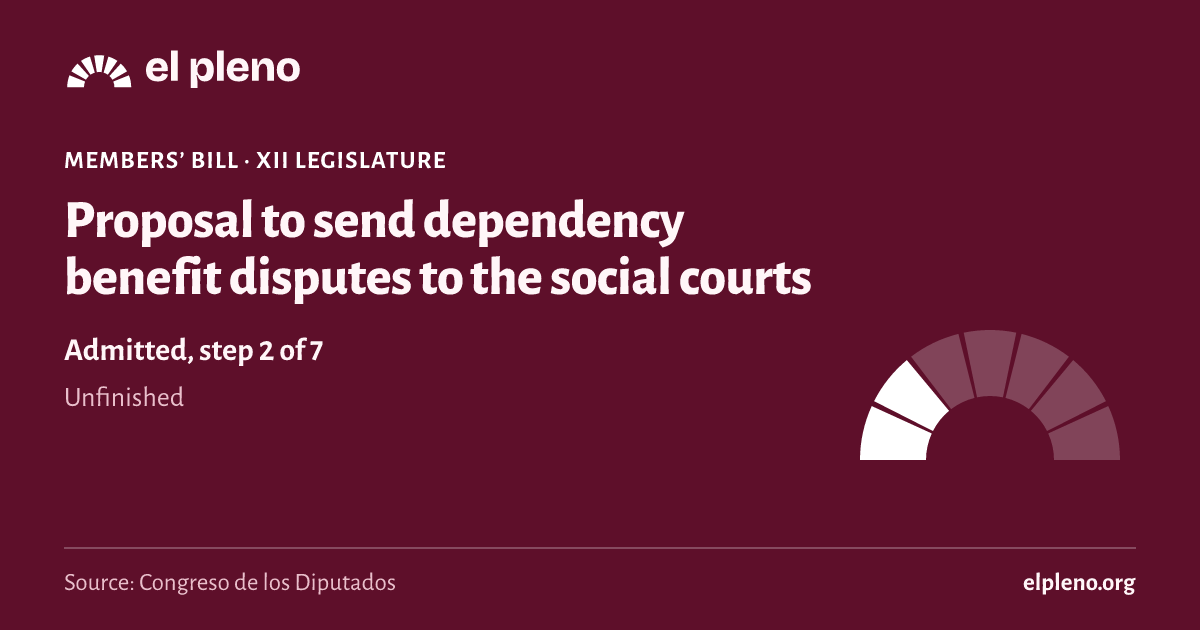
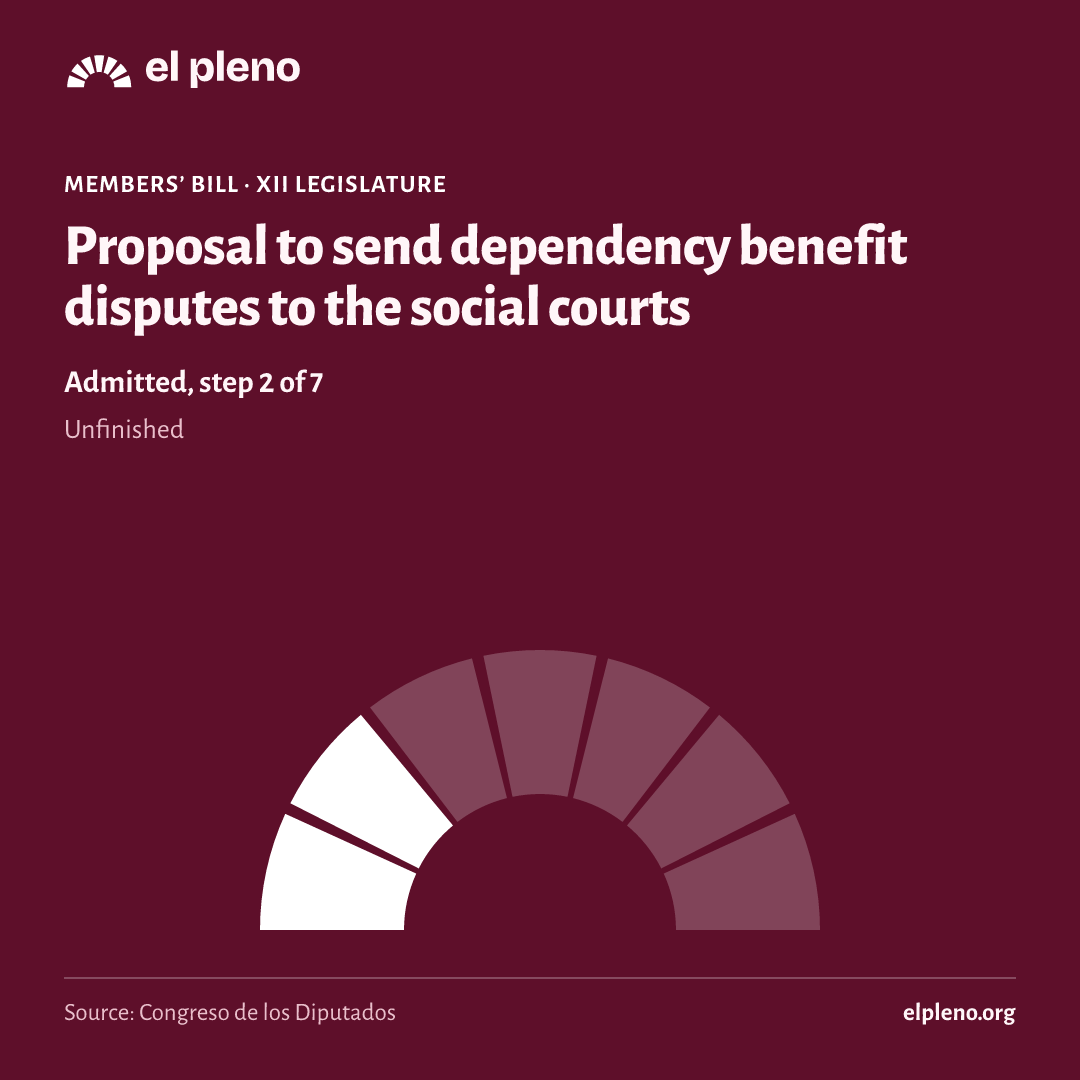
It took 2 of 7 steps. It reached Admitted, and today it is unfinished.
- Introduced6 March 2017Someone registers the text in the Congreso.
- Admitted14 March 2017The Bureau of the Congreso accepts it and, for a members’ bill, the plenary decides whether to consider it.
- Amendmentsnot reachedGroups propose changes.
- Committeenot reachedA committee goes through the text in detail.
- Plenarynot reachedAll 350 deputies vote.
- Senatenot reachedThe Senate can pass it, amend it or veto it.
- BOEnot reachedIt is published in the Official State Gazette (BOE) and comes into force.
See the 6 official steps on a timeline
Was there a plenary vote?
We have no plenary vote linked to this law in the Congreso’s data.
What happens next
What happens now?
The legislature ended before it finished. To go on, someone would have to introduce it again in the new Cortes.
It has not been presented again yet.
Presented before in:
- X Legislature, Congreso de los Diputados· Unfinished Private member's bill attributing competence to the social jurisdiction regarding care for persons in a situation of dependency.
Sources
Where does all this come from?
- Congreso de los Diputados, file 122/000080
Official title, type, author, dates and stage.
Retrieved 11 November 2026
- The data comes from the open files of the Congreso, the Senate and the BOE, unaltered.
- Each deputy’s province is the one of their seat on the day of the vote.
- We only say “passed” or “rejected” when the majority needed is certain; otherwise we say which side had more votes.