What it is
Proposal so no one loses their civil residence status unwillingly
It is a members’ bill. Introduced by parliamentary groups, the Senate, regional governments or citizens. It was introduced on 13 January 2016. Introduced by: Comunidad Autónoma de Aragón-Cortes.
Official title: Private member's bill amending the Civil Code regarding personal status and civil domicile (corresponds to file number 125/000017/0000 of the X Legislature).
Source: Congreso de los Diputados, file 125/000001· updated 11 Nov
Automatic summary, not yet reviewed
- The bill would remove the current Civil Code rule under which a person changes their civil residence status after ten years of continuous residence in another region, without any statement to the contrary. Under the change, a new status would only be acquired if the person expressly declares it in the Civil Registry.
- It would extend the period for a child to choose their civil residence status: from one year after emancipation to five years. The child could also choose any status their parents ever had, not just the last one.
- It would set up a transitional system to recover a civil residence status lost under the ten-year rule. Anyone who lost it could recover it by declaring so before the Civil Registry within five years of the law taking effect.
- The law would take effect the day after its publication in the Official State Gazette.
Who it affects
- People born in regions with their own civil law (such as Aragon) who live outside their region: They would no longer lose their civil residence status simply by living ten years elsewhere, and could recover it if already lost.
- Children of parents with a regional civil residence status: They would have five years after emancipation to choose any civil residence status their parents ever had.
- People who want to change their civil residence status: They could only do so by making an express declaration before the Civil Registry.
Words worth knowing
- Vecindad civil (civil residence status)
- The link between a person and the civil law of a Spanish region (for example, Aragon or Catalonia). It is not the same as municipal registration.
- Derecho foral (regional civil law)
- Civil law specific to some Spanish regions, separate from the general Civil Code.
- Emancipación (emancipation)
- The situation of a minor who, through marriage or with parental authorization, is no longer under parental authority.
- Registro Civil (Civil Registry)
- Public office where key life events, such as birth or marriage, are recorded.
- Proposición de ley (bill)
- A text in the form of a law proposed by a legislative assembly that still needs to be debated and passed.
It summarizes the text as it was introduced. It is written by artificial intelligence and may contain mistakes: the official text is what counts. Read the official text · How we make summaries
Where it stands
How far did it get?
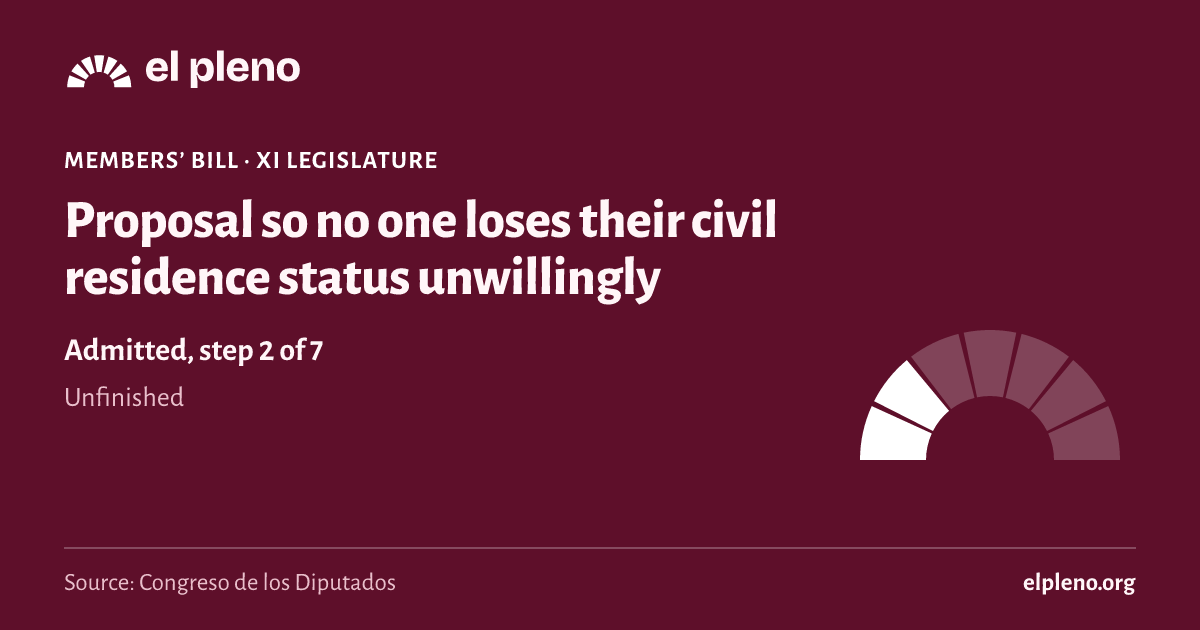
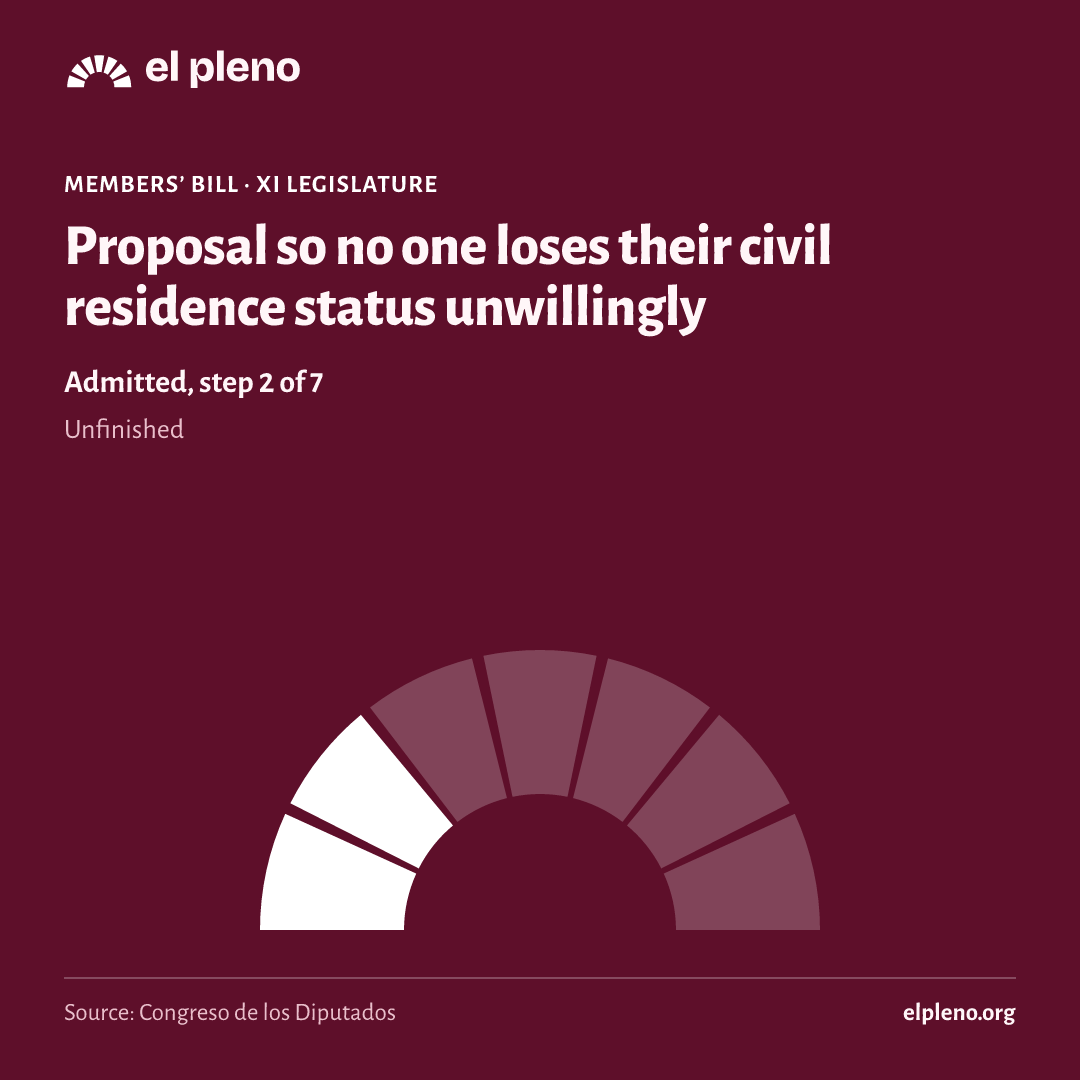
It took 2 of 7 steps. It reached Admitted, and today it is unfinished.
- Introduced13 January 2016Someone registers the text in the Congreso.
- Admitted2 February 2016The Bureau of the Congreso accepts it and, for a members’ bill, the plenary decides whether to consider it.
- Amendmentsnot reachedGroups propose changes.
- Committeenot reachedA committee goes through the text in detail.
- Plenarynot reachedThe deputies vote, usually in the plenary; some laws are passed by a committee without going to it.
- Senatenot reachedThe Senate can pass it, amend it or veto it.
- BOEnot reachedThe King gives royal assent and it is published in the Official State Gazette (BOE). It comes into force on the date it sets, or after 20 days if it sets none.
See the 2 official steps on a timeline
Was there a plenary vote?
We have no plenary vote linked to this law in the Congreso’s data.
What happens next
What happens now?
The legislature ended before it finished. To go on, someone would have to introduce it again in the new Cortes.
It has not been presented again yet.
Sources
Where does all this come from?
- Congreso de los Diputados, file 125/000001
Official title, type, author, dates and stage.
Retrieved 11 November 2026
- The data comes from the open files of the Congreso, the Senate and the BOE, unaltered.
- Each deputy’s province is the one of their seat on the day of the vote.
- We only say “passed” or “rejected” when the majority needed is certain; otherwise we say which side had more votes.