What it is
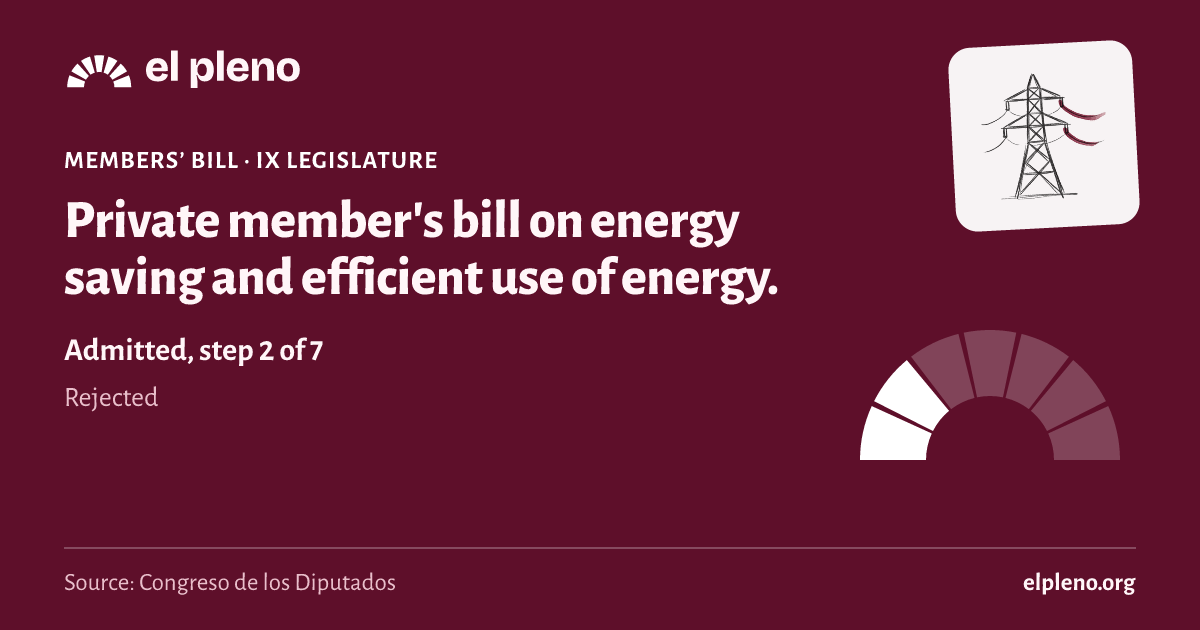
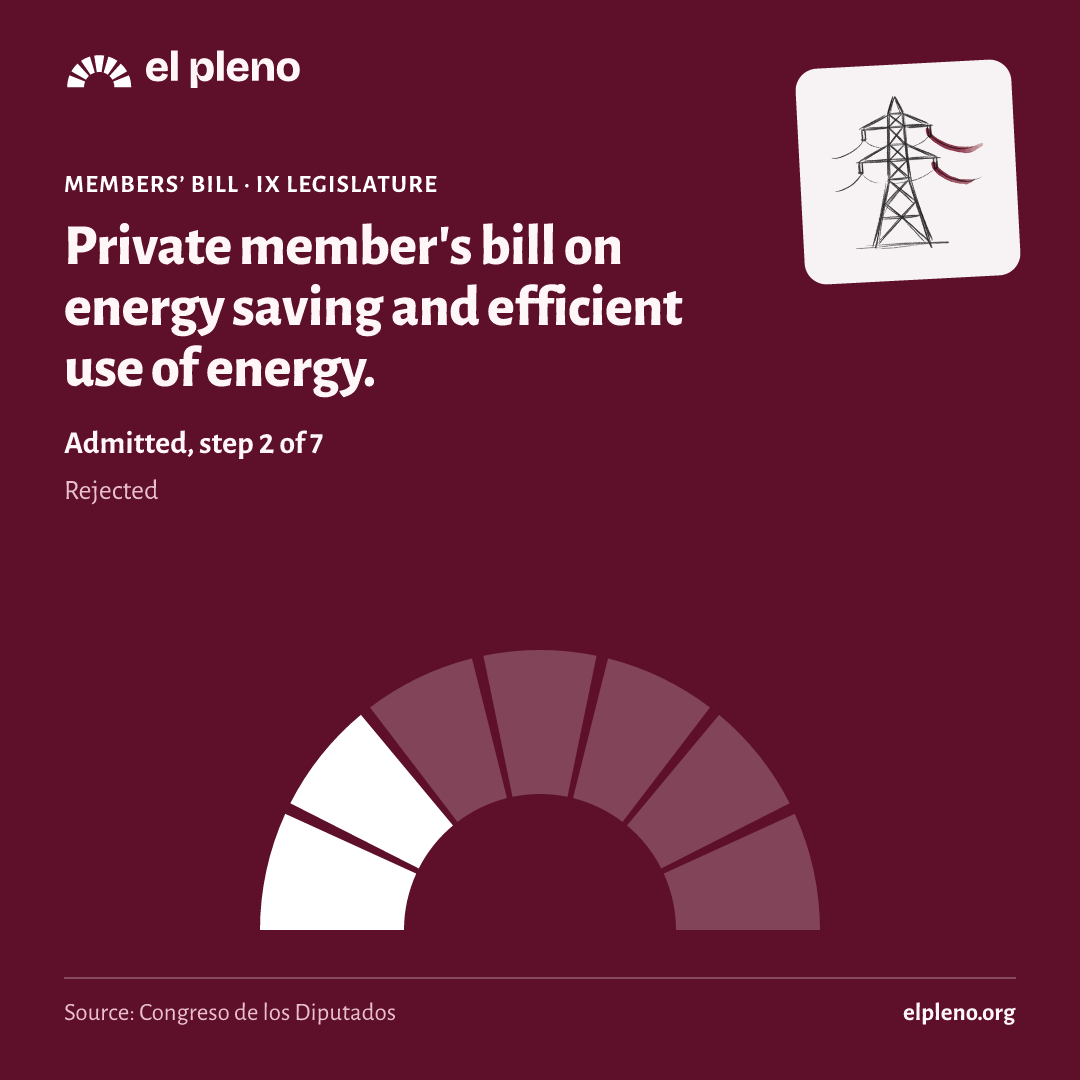
Private member's bill on energy saving and efficient use of energy.
It is a members’ bill. Introduced by parliamentary groups, the Senate, regional governments or citizens. It was introduced on 3 April 2008. Introduced by: Grupo Parlamentario de Esquerra Republicana-Izquierda Unida-Iniciativa per Catalunya Verds.
Source: Congreso de los Diputados, file 122/000033· updated 11 Nov
We do not have a summary of this text yet, so we do not tell you what it changes: only what the official page says. Read the official page
Where it stands
How far did it get?
It took 2 of 7 steps. It reached Admitted, and today it is rejected.
- Introduced3 April 2008Someone registers the text in the Congreso.
- Admitted7 April 2008The Bureau of the Congreso accepts it and, for a members’ bill, the plenary decides whether to consider it.
- Amendmentsnot reachedGroups propose changes.
- Committeenot reachedA committee goes through the text in detail.
- Plenarynot reachedAll 350 deputies vote.
- Senatenot reachedThe Senate can pass it, amend it or veto it.
- BOEnot reachedIt is published in the Official State Gazette (BOE) and comes into force.
See the 4 official steps on a timeline
Was there a plenary vote?
We have no plenary vote linked to this law in the Congreso’s data.
What happens next
What happens now?
It goes no further. A similar one could be introduced later.
Sources
Where does all this come from?
- Congreso de los Diputados, file 122/000033
Official title, type, author, dates and stage.
Retrieved 11 November 2026
- The data comes from the open files of the Congreso, the Senate and the BOE, unaltered.
- Each deputy’s province is the one of their seat on the day of the vote.
- We only say “passed” or “rejected” when the majority needed is certain; otherwise we say which side had more votes.