What it is
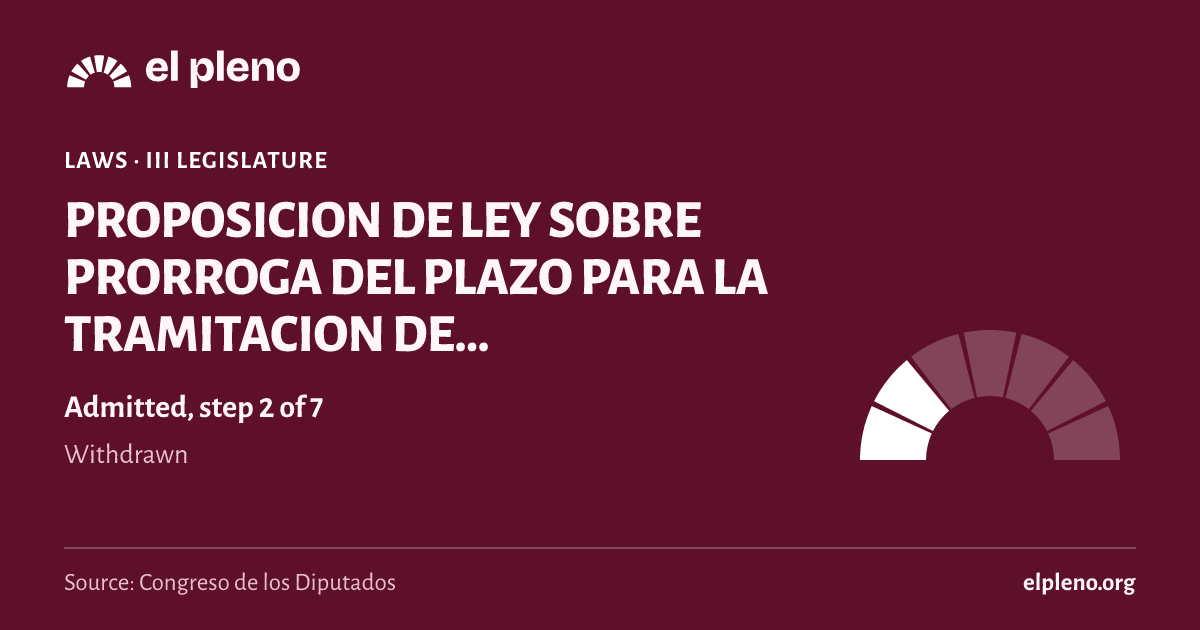
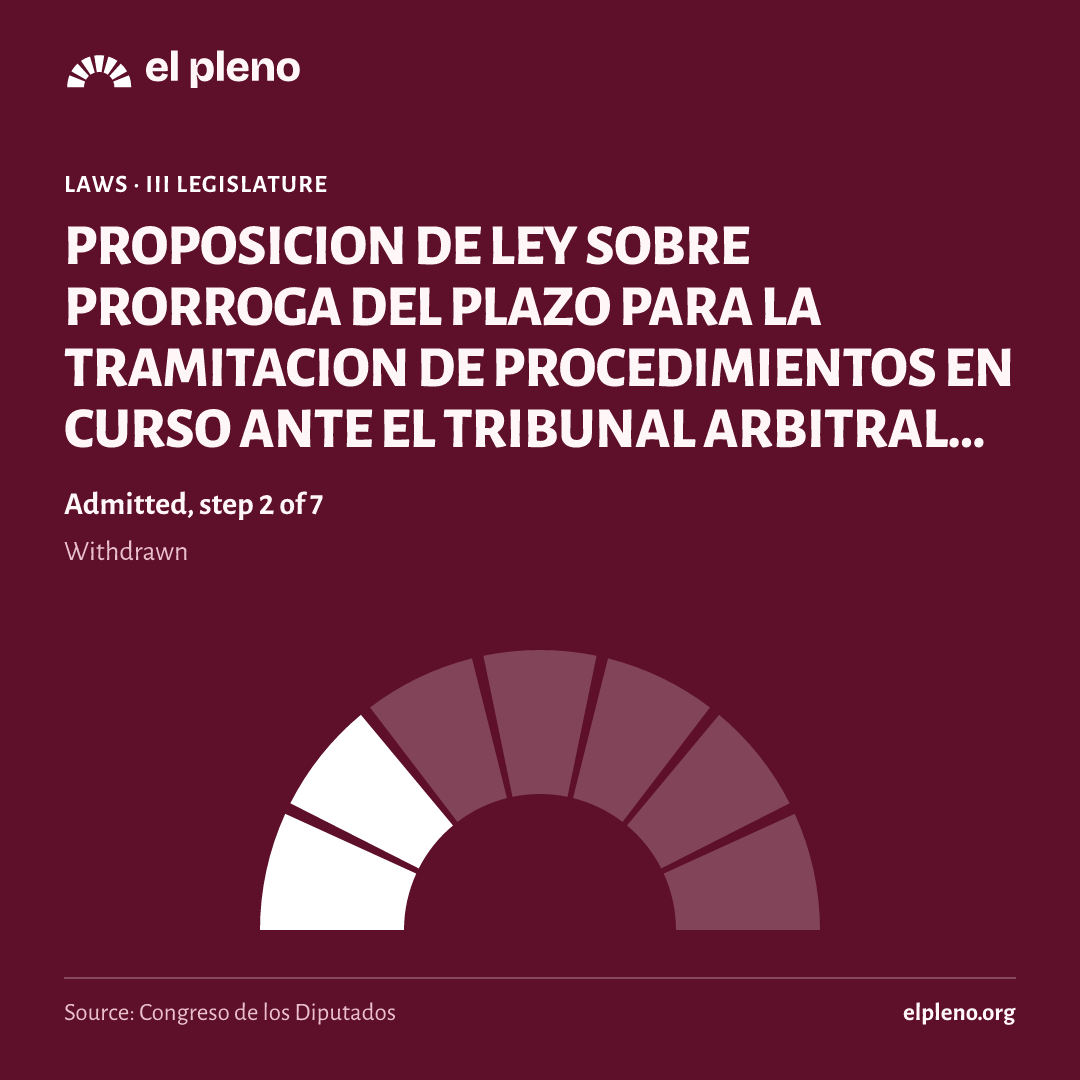
PROPOSICION DE LEY SOBRE PRORROGA DEL PLAZO PARA LA TRAMITACION DE PROCEDIMIENTOS EN CURSO ANTE EL TRIBUNAL ARBITRAL DE SEGUROS(in Spanish)
Admitted step 2 of 7 · WithdrawnType of initiative: . It was introduced on 1 August 1986. Introduced by: COMUNIDAD AUTONOMA DEL PAIS VASCO - PARLAMENTO.
Source: Congreso de los Diputados, file 125/000003· updated 11 Nov
We do not have a summary of this text yet, so we do not tell you what it changes: only what the official page says. Read the official page
Where it stands
How far did it get?
It took 2 of 7 steps. It reached Admitted, and today it is withdrawn.
- Introduced1 August 1986Someone registers the text in the Congreso.
- Admitted4 September 1986The Bureau of the Congreso accepts it and, for a members’ bill, the plenary decides whether to consider it.
- Amendmentsnot reachedGroups propose changes.
- Committeenot reachedA committee goes through the text in detail.
- Plenarynot reachedAll 350 deputies vote.
- Senatenot reachedThe Senate can pass it, amend it or veto it.
- BOEnot reachedIt is published in the Official State Gazette (BOE) and comes into force.
See the 2 official steps on a timeline
Was there a plenary vote?
We have no plenary vote linked to this law in the Congreso’s data.
What happens next
What happens now?
Whoever introduced it withdrew it, or it was merged into another one. It goes no further.
Sources
Where does all this come from?
- Congreso de los Diputados, file 125/000003
Official title, type, author, dates and stage.
Retrieved 11 November 2026
- The data comes from the open files of the Congreso, the Senate and the BOE, unaltered.
- Each deputy’s province is the one of their seat on the day of the vote.
- We only say “passed” or “rejected” when the majority needed is certain; otherwise we say which side had more votes.