What it is
Bill to protect Spain's official symbols and public bodies
It is a members’ bill. Introduced by parliamentary groups, the Senate, regional governments or citizens. It was introduced on 6 February 2026. Introduced by: Senado.
Official title: Private member's bill for the defense and protection of official symbols.
Source: Congreso de los Diputados, file 124/000041· updated 11 Nov
Automatic summary, not yet reviewed
- The bill would require public administrations to defend and protect official symbols: the flags, coats of arms and anthems of Spain, the Autonomous Communities and local entities, plus the coat of arms and standard of the Royal Household and the image of the King. The protection would only apply inside buildings and premises owned by public administrations.
- Public authorities and senior officials would have to respect and protect the symbols and stay institutionally neutral, without displaying partisan symbols. Violations would be punished, from a warning up to removal from office and a four-year ban on new appointments for the most serious offenses.
- Disciplinary proceedings would start on the administration's own initiative or through citizen complaints. For Ministers and Secretaries of State, the Council of Ministers would decide; for other senior state officials, the Minister of Territorial Policy and Public Function. Offenses would expire after one year (minor), two (serious) or four (very serious).
- Public employees would have to act with institutional neutrality and respect the symbols. If they fail to do so, they would answer under the disciplinary regime of the Public Employee Basic Statute, with minor, serious or very serious offenses.
Who it affects
- Members of the Government and Secretaries of State: They must protect the symbols and can be sanctioned by the Council of Ministers.
- Senior officials of the state administration: They must protect the symbols and can be sanctioned by the Minister of Territorial Policy and Public Function.
- Members of regional government councils and their senior officials: They would be subject to the obligations and disciplinary regime of each Autonomous Community.
- Members of municipal corporations and provincial councils: They would be subject to the obligations and local disciplinary regimes.
- Public employees of all administrations: They must stay neutral and respect the symbols; otherwise they face disciplinary action.
Words worth knowing
- Neutralidad institucional (institutional neutrality)
- The duty of public officials and employees not to use their position to favor a party or ideology.
- Infracción muy grave, grave o leve (very serious, serious or minor offense)
- Classification of violations by how serious they are, from most to least.
- Prescripción (statute of limitations)
- The maximum time to punish an offense or enforce a sanction; once it passes, no action is possible.
- Procedimiento sancionador (disciplinary proceeding)
- An official administrative process to investigate a violation and impose a sanction.
It summarizes the text as it was introduced. It is written by artificial intelligence and may contain mistakes: the official text is what counts. Read the official text · How we make summaries
Where it stands
How far did it get?
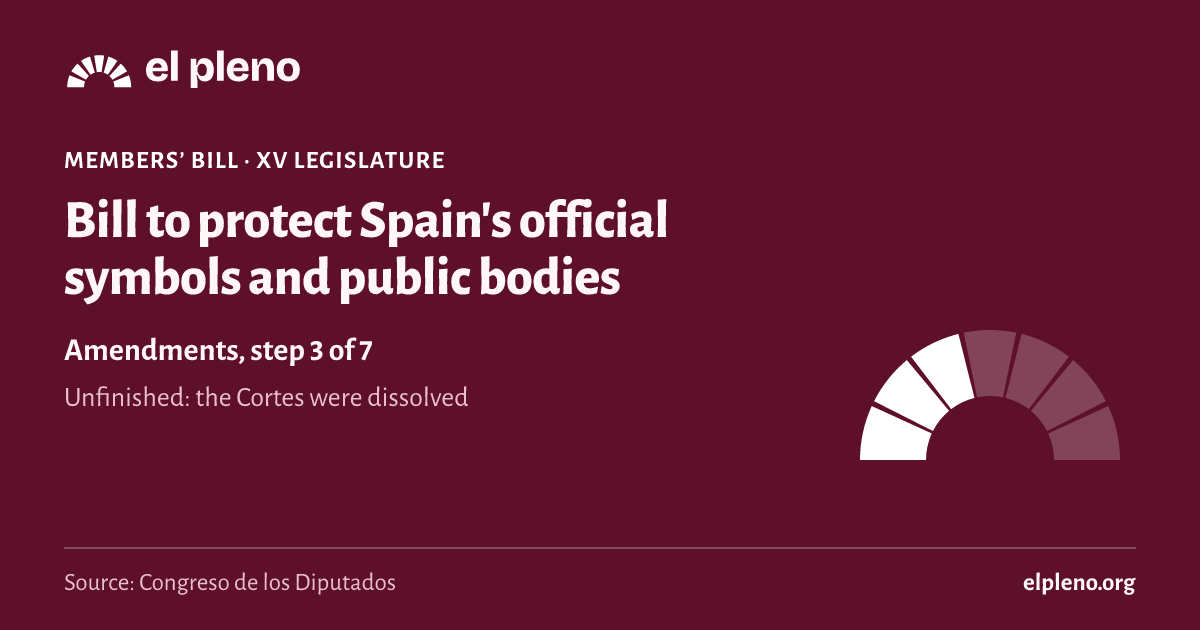
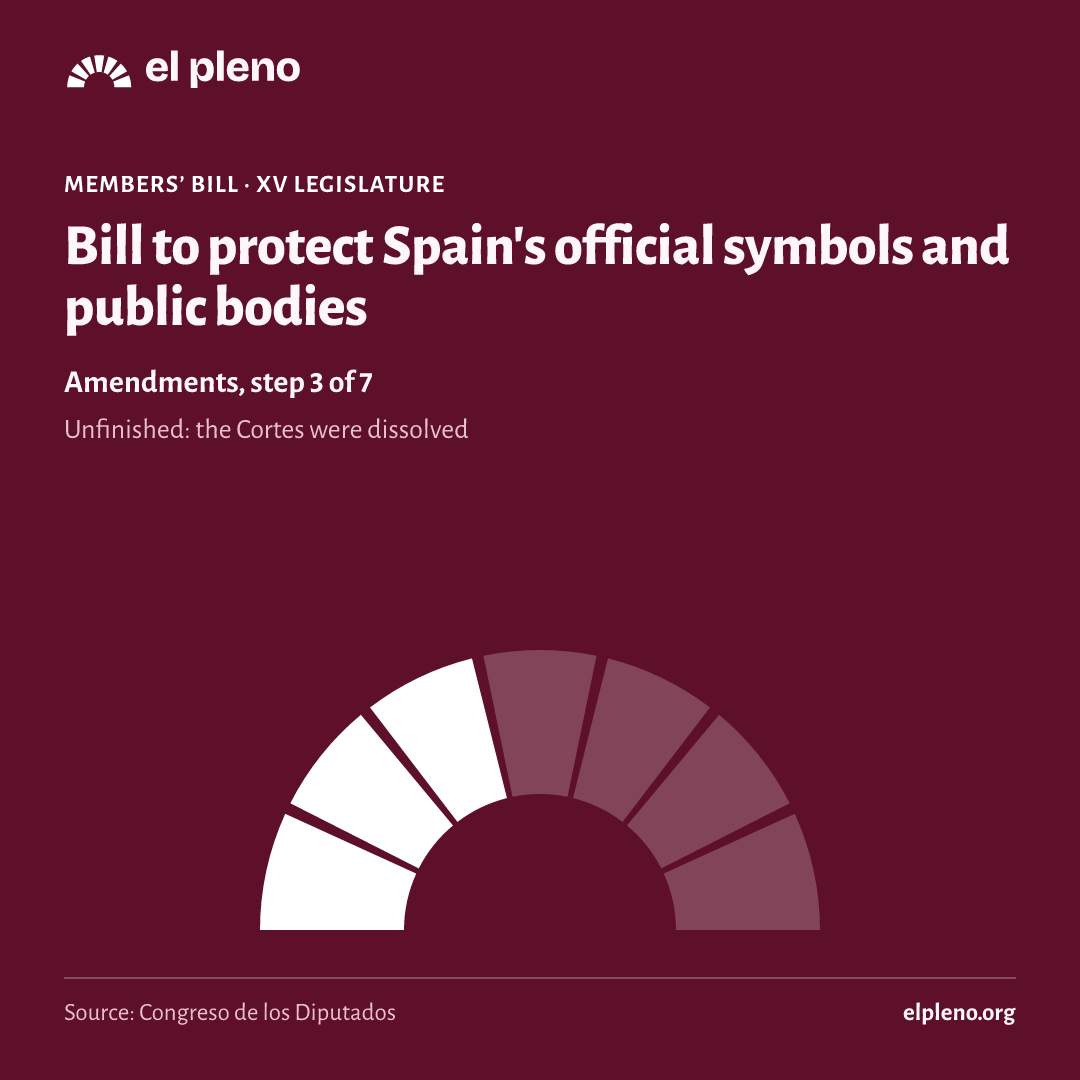
It took 3 of 7 steps. It reached Amendments, and today it is unfinished.
- Introduced6 February 2026Someone registers the text in the Congreso.
- Admitted10 February 2026The Bureau of the Congreso accepts it and, for a members’ bill, the plenary decides whether to consider it.
- Amendments13 February 2026Groups propose changes.
- Committeenot reachedA committee goes through the text in detail.
- Plenarynot reachedAll 350 deputies vote.
- Senatenot reachedThe Senate can pass it, amend it or veto it.
- BOEnot reachedIt is published in the Official State Gazette (BOE) and comes into force.
See the 5 official steps on a timeline
Was there a plenary vote?
We have no plenary vote linked to this law in the Congreso’s data.
What happens next
What happens now?
The legislature ended before it finished. To go on, someone would have to introduce it again in the new Cortes.
It has not been presented again yet.
The same initiative in the other chamber:
- XV Legislature, Senate Private member's bill for the defense and protection of official symbols.
Sources
Where does all this come from?
- Congreso de los Diputados, file 124/000041
Official title, type, author, dates and stage.
Retrieved 11 November 2026
- Congreso de los Diputados, procedure
The date of each step, with its official wording.
Retrieved 12 November 2026
- The data comes from the open files of the Congreso, the Senate and the BOE, unaltered.
- Each deputy’s province is the one of their seat on the day of the vote.
- We only say “passed” or “rejected” when the majority needed is certain; otherwise we say which side had more votes.