What it is
Bill to remove mandatory mediation in family cases with minors
It is a members’ bill. Introduced by parliamentary groups, the Senate, regional governments or citizens. It was introduced on 18 September 2026. Introduced by: Grupo Parlamentario Popular en el Congreso.
Official title: Private member's bill to amend Organic Law 1/2025, of January 2, on measures regarding the efficiency of the public justice service, and to amend Law 1/2000, of January 7, on Civil Procedure regarding MASC as a requirement of admissibility in Family Law.
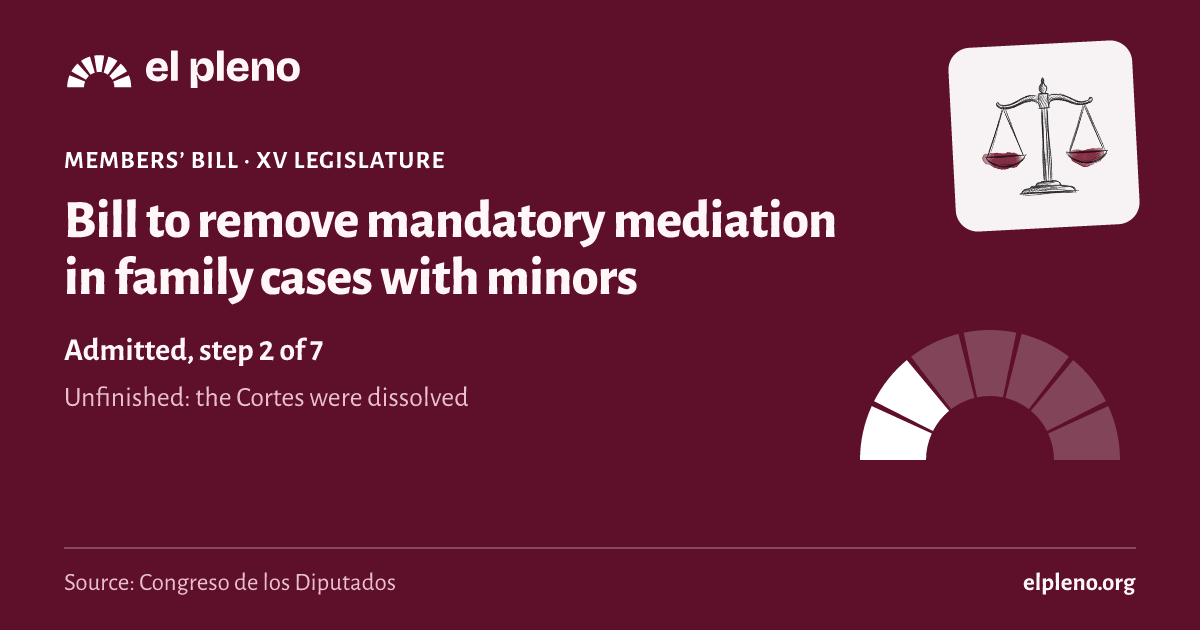
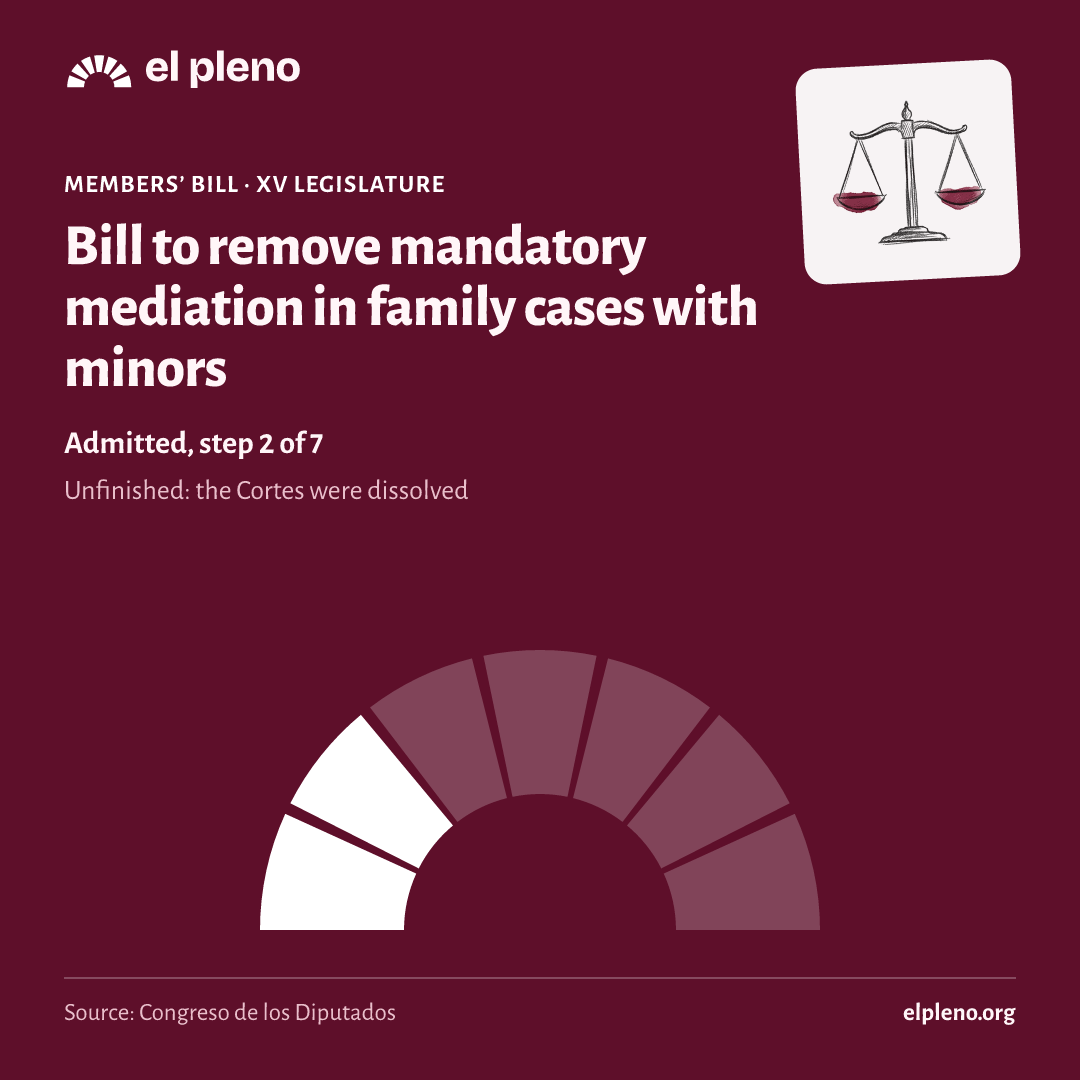
Source: Congreso de los Diputados, file 122/000305· updated 11 Nov
Automatic summary, not yet reviewed
- The bill would remove the duty to use an alternative dispute resolution method (such as mediation) before suing in several family cases: separation, divorce, annulment or child-related claims when measures affecting minors are requested, and also when interim or precautionary measures have already been ordered.
- It would also exempt from the mandatory requirement preliminary proceedings requests, voluntary jurisdiction cases (except marital disagreements and joint property administration), Exequatur Court authorization for a foreign ruling or document to be valid and enforceable in Spain. proceedings, and cross-border or international family cases.
- Starting the negotiation process through an alternative dispute resolution method would count as starting court proceedings, once the lawsuit is admitted. This avoids losing Spanish courts' jurisdiction to foreign proceedings and allows child support to be backdated to the start of the negotiation.
- In special family summary proceedings, holding a hearing would become mandatory, with the parties themselves and their lawyers required to attend.
Who it affects
- Parents in family disputes involving minors: They could go straight to court without prior mandatory mediation in the cases the bill exempts.
- Minors caught up in their parents' conflicts: The bill aims to protect their best interests and their rights to support, housing and contact with both parents.
- Lawyers and court clerks (procuradores): They would no longer apply the mediation requirement in the exempted cases, which currently cause criticism and delays.
- People in family cases with a party living abroad: They would not have to go through mandatory mediation, avoiding risks such as losing Spanish courts' jurisdiction.
Words worth knowing
- MASC (medios adecuados de solución de controversias)
- Ways to resolve a dispute without a trial, such as mediation or conciliation, with help from a third party.
- Requisito de procedibilidad
- A requirement that must be met before filing a lawsuit; here, first attempting an agreement through mediation.
- Exequatur
- Court authorization for a foreign ruling or document to be valid and enforceable in Spain.
- Jurisdicción voluntaria (voluntary jurisdiction)
- Court proceedings that are not a trial between opposing parties, such as authorizing an act or intervening in a disagreement.
- Patria potestad (parental authority)
- The set of parents' rights and duties over their minor children, such as decisions about schooling or health.
It summarizes the text as it was introduced. It is written by artificial intelligence and may contain mistakes: the official text is what counts. Read the official text · How we make summaries
Where it stands
How far did it get?
It took 2 of 7 steps. It reached Admitted, and today it is unfinished.
- Introduced18 September 2026Someone registers the text in the Congreso.
- Admitted22 September 2026The Bureau of the Congreso accepts it and, for a members’ bill, the plenary decides whether to consider it.
- Amendmentsnot reachedGroups propose changes.
- Committeenot reachedA committee goes through the text in detail.
- Plenarynot reachedAll 350 deputies vote.
- Senatenot reachedThe Senate can pass it, amend it or veto it.
- BOEnot reachedIt is published in the Official State Gazette (BOE) and comes into force.
See the 5 official steps on a timeline
Was there a plenary vote?
We have no plenary vote linked to this law in the Congreso’s data.
What happens next
What happens now?
The legislature ended before it finished. To go on, someone would have to introduce it again in the new Cortes.
It has not been presented again yet.
Sources
Where does all this come from?
- Congreso de los Diputados, file 122/000305
Official title, type, author, dates and stage.
Retrieved 11 November 2026
- Congreso de los Diputados, procedure
The date of each step, with its official wording.
Retrieved 13 November 2026
- The data comes from the open files of the Congreso, the Senate and the BOE, unaltered.
- Each deputy’s province is the one of their seat on the day of the vote.
- We only say “passed” or “rejected” when the majority needed is certain; otherwise we say which side had more votes.