What it is
Proposal to make property tax (IBI Impuesto sobre Bienes Inmuebles: the local property tax paid to Spanish city councils for owning a home, premises or other real estate.) higher for those who own more
It is a members’ bill. Introduced by parliamentary groups, the Senate, regional governments or citizens. It was introduced on 22 April 2026. Introduced by: Grupo Parlamentario Plurinacional SUMAR.
Official title: Private member's bill for a reform of the IBI to make it fairer and more favorable to the right to housing.
Source: Congreso de los Diputados, file 122/000278· updated 11 Nov
Automatic summary, not yet reviewed
- The bill would let city councils set a progressive property tax rate based on cadastral value, as happens with income tax The personal income tax (IRPF in Spain): what people pay on what they earn from work, business or savings., and create a surcharge on permanently vacant homes: up to 50% of the tax bill if they have been empty for more than two years and up to 100% beyond three years, with additional increases for owners with two or more vacant homes in the same municipality.
- It would create new coefficients that increase the tax bill: up to 1.3 for owners that are not individuals, up to 1.6 for those who own three or more homes in the same municipality, and a 1.5% coefficient for homes used for tourism or seasonal rentals in tight housing markets.
- It would allow the property tax rebates of up to 90% currently available to large families to also apply to single-parent families, if the local tax ordinance includes them.
- It would ban owners from passing on to their tenants the property tax increases caused by these measures, during the year they occur and the following three. The law would take effect the day after its publication in the Official State Gazette (Boletín Oficial del Estado).
Who it affects
- Owners of high-value homes or multiple properties: They would pay more property tax due to the progressive rate and new coefficients.
- Owners of permanently vacant homes: They could face surcharges of up to 100% of the tax bill.
- Large holders with three or more homes in a municipality, and corporate owners: Their tax bill could be multiplied by coefficients of up to 1.6 and 1.3.
- Single-parent families: They could benefit from property tax rebates of up to 90%.
- Tenants of homes: They could not be charged the property tax increases through their rent.
Words worth knowing
- IBI
- Impuesto sobre Bienes Inmuebles: the local property tax paid to Spanish city councils for owning a home, premises or other real estate.
- Valor catastral
- Cadastral value: the value the administration assigns to a property for tax purposes, often different from its market price.
- Cuota líquida
- The amount of tax due after reductions and rebates are applied.
- Ordenanza fiscal
- Local tax ordinance: the rule each city council approves to regulate local taxes in its municipality.
- Zonas tensionadas
- Tight housing markets: areas where home prices or rents have risen sharply, as defined by law.
- income tax
- The personal income tax (IRPF in Spain): what people pay on what they earn from work, business or savings.
It summarizes the text as it was introduced. It is written by artificial intelligence and may contain mistakes: the official text is what counts. Read the official text · How we make summaries
Where it stands
How far did it get?
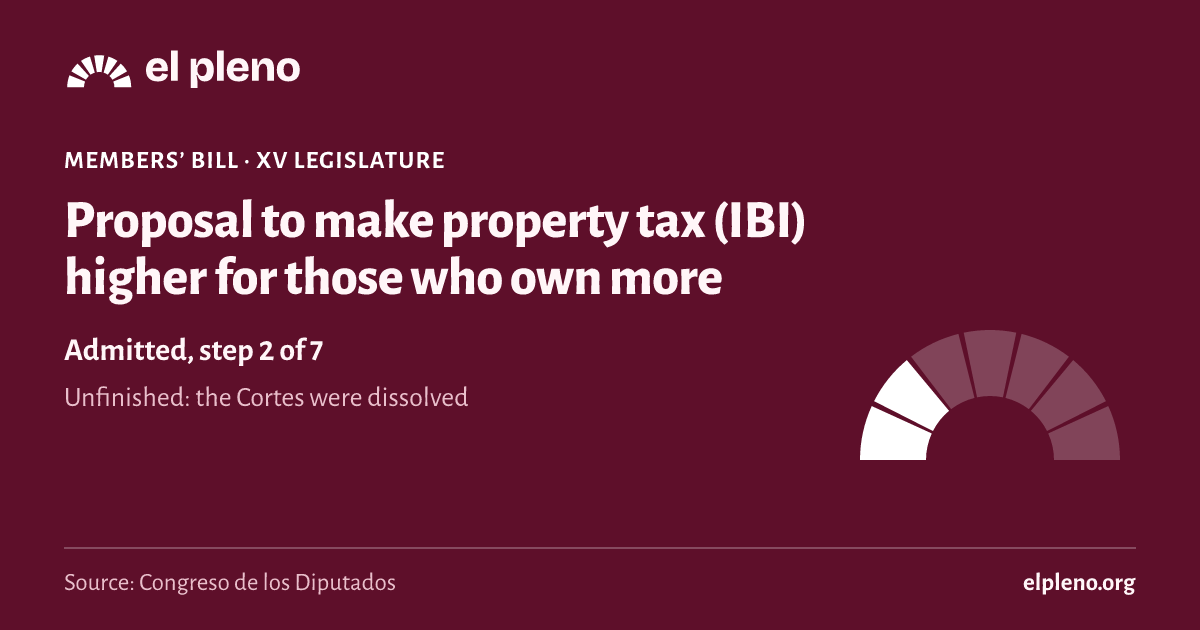
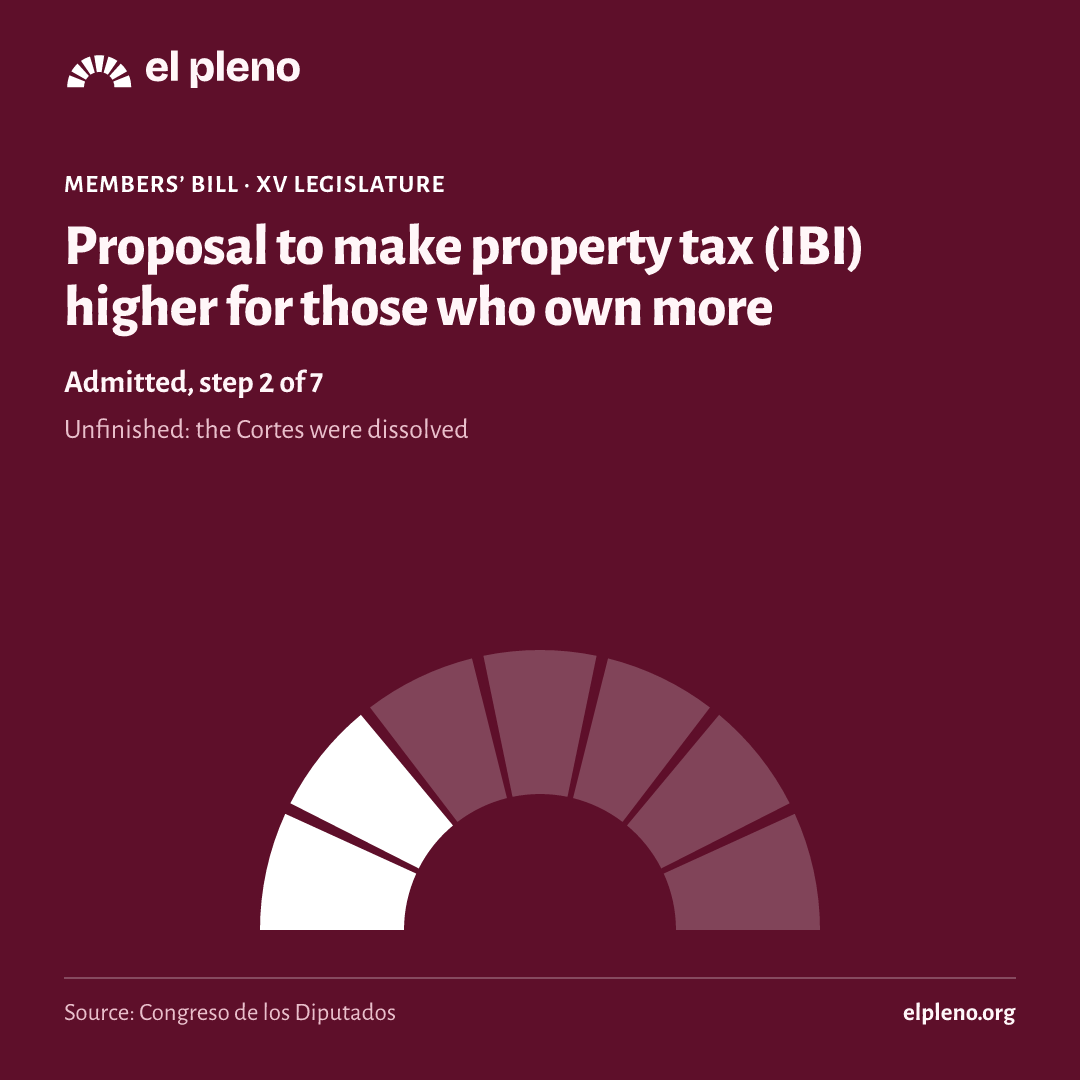
It took 2 of 7 steps. It reached Admitted, and today it is unfinished.
- Introduced22 April 2026Someone registers the text in the Congreso.
- Admitted28 April 2026The Bureau of the Congreso accepts it and, for a members’ bill, the plenary decides whether to consider it.
- Amendmentsnot reachedGroups propose changes.
- Committeenot reachedA committee goes through the text in detail.
- Plenarynot reachedAll 350 deputies vote.
- Senatenot reachedThe Senate can pass it, amend it or veto it.
- BOEnot reachedIt is published in the Official State Gazette (BOE) and comes into force.
See the 6 official steps on a timeline
Was there a plenary vote?
We have no plenary vote linked to this law in the Congreso’s data.
What happens next
What happens now?
The legislature ended before it finished. To go on, someone would have to introduce it again in the new Cortes.
It has not been presented again yet.
Sources
Where does all this come from?
- Congreso de los Diputados, file 122/000278
Official title, type, author, dates and stage.
Retrieved 11 November 2026
- Congreso de los Diputados, procedure
The date of each step, with its official wording.
Retrieved 13 November 2026
- The data comes from the open files of the Congreso, the Senate and the BOE, unaltered.
- Each deputy’s province is the one of their seat on the day of the vote.
- We only say “passed” or “rejected” when the majority needed is certain; otherwise we say which side had more votes.