What it is
Proposal to raise pensions in 2026 based on inflation
It is a members’ bill. Introduced by parliamentary groups, the Senate, regional governments or citizens. It was introduced on 7 November 2025. Introduced by: Grupo Parlamentario Popular en el Congreso.
Official title: Private member's bill to guarantee the purchasing power of public pensions.
Source: Congreso de los Diputados, file 122/000235· updated 11 Nov
Automatic summary, not yet reviewed
- The bill would update public pensions as of January 1, 2026, applying an increase equal to the average CPI of the twelve months before December 2025, using data from the National Statistics Institute.
- The increase would be applied automatically by the managing bodies, with payment of back amounts when due, meaning any amounts owed since January would be paid in one go even if the increase arrives later.
- The Government would have to issue the rules needed to calculate and pay the update, and the Ministry of Finance would give instructions to apply it immediately in payrolls.
- The text notes that the lack of a State Budget affects the purchasing power of 3 million public employees and more than 10 million public pensions, and that in 2025 an urgent royal decree had to be passed to update them.
Who it affects
- Retirees receiving contributory pensions and Clases Pasivas pensions: They would see their pension raised in 2026 according to the CPI, with back payments if the increase is applied late.
- Public employees and pensioners in general: The bill seeks to avoid the uncertainty of years without a State Budget.
- The Government and the Ministry of Finance: They would be required to calculate and apply the update in payrolls.
Words worth knowing
- Revalorización
- Increase in the amount of a pension so it does not lose value against rising prices.
- IPC
- Consumer Price Index: it measures how much the prices of what we buy go up.
- Pensiones contributivas
- Pensions paid to people who previously contributed to Social Security.
- Clases Pasivas
- Pension scheme for public employees who are not in the general Social Security system.
- Pacto de Toledo
- Political agreement in the Congress of Deputies on the future of pensions.
It summarizes the text as it was introduced. It is written by artificial intelligence and may contain mistakes: the official text is what counts. Read the official text · How we make summaries
Where it stands
How far did it get?
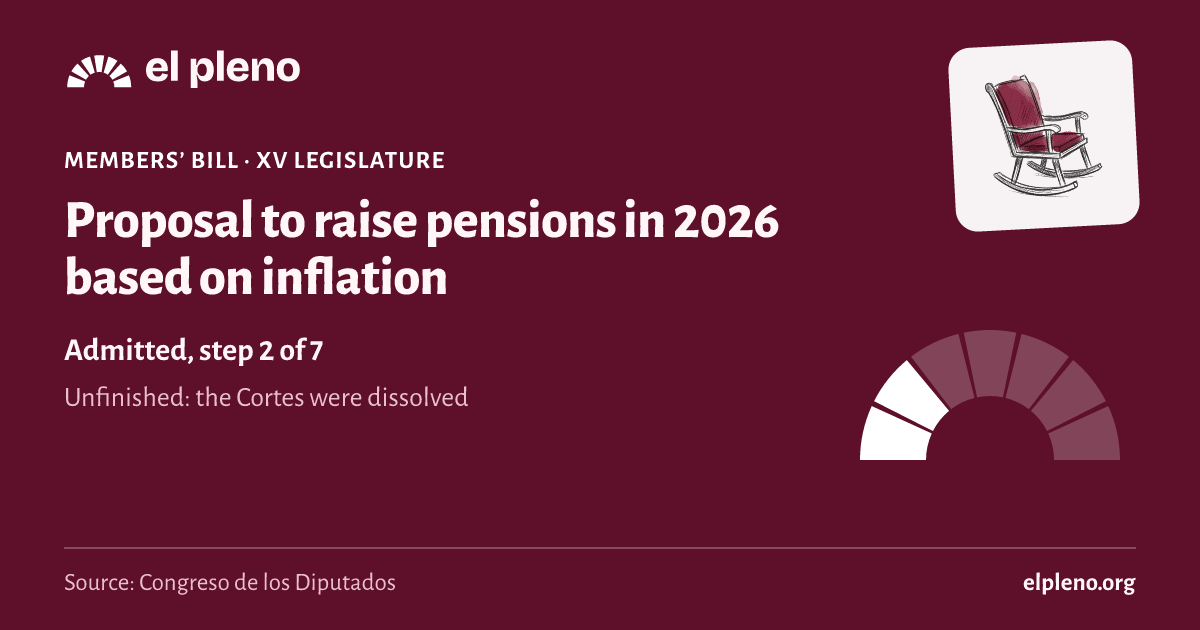
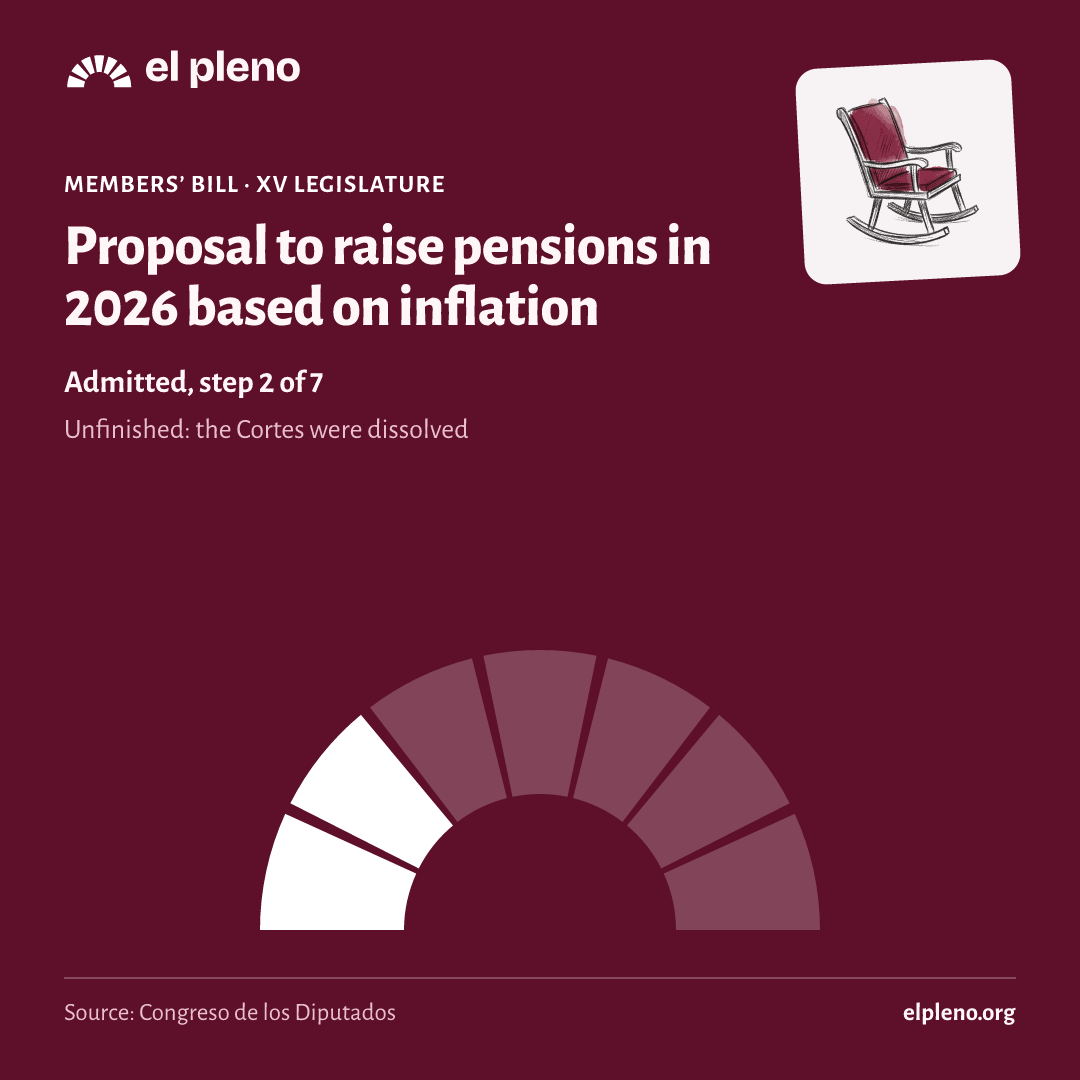
It took 2 of 7 steps. It reached Admitted, and today it is unfinished.
- Introduced7 November 2025Someone registers the text in the Congreso.
- Admitted11 November 2025The Bureau of the Congreso accepts it and, for a members’ bill, the plenary decides whether to consider it.
- Amendmentsnot reachedGroups propose changes.
- Committeenot reachedA committee goes through the text in detail.
- Plenarynot reachedAll 350 deputies vote.
- Senatenot reachedThe Senate can pass it, amend it or veto it.
- BOEnot reachedIt is published in the Official State Gazette (BOE) and comes into force.
See the 6 official steps on a timeline
Was there a plenary vote?
We have no plenary vote linked to this law in the Congreso’s data.
What happens next
What happens now?
The legislature ended before it finished. To go on, someone would have to introduce it again in the new Cortes.
It has not been presented again yet.
The same initiative in the other chamber:
- XV Legislature, Senate Private member's bill to guarantee the purchasing power of public pensions.
Sources
Where does all this come from?
- Congreso de los Diputados, file 122/000235
Official title, type, author, dates and stage.
Retrieved 11 November 2026
- Congreso de los Diputados, procedure
The date of each step, with its official wording.
Retrieved 12 November 2026
- The data comes from the open files of the Congreso, the Senate and the BOE, unaltered.
- Each deputy’s province is the one of their seat on the day of the vote.
- We only say “passed” or “rejected” when the majority needed is certain; otherwise we say which side had more votes.