What it is
Bill to protect free speech from abusive lawsuits
It is a members’ bill. Introduced by parliamentary groups, the Senate, regional governments or citizens. It was introduced on 28 October 2025. Introduced by: Grupo Parlamentario Socialista.
Official title: Private member's Organic bill on the guarantee and protection of fundamental rights against harassment derived from abusive judicial actions.
Source: Congreso de los Diputados, file 122/000231· updated 11 Nov
Automatic summary, not yet reviewed
- The bill would remove the crime of offending religious feelings from the Criminal Code, to allow public criticism of religious beliefs and rites. The explanatory section says European case law considers free speech covers ideas that offend, and that religious freedom would remain protected by other articles of the Criminal Code.
- The bill would add a new ground for judges to step aside or be recused: having publicly censured, or expressed agreement or disagreement with, actions by authorities, political parties, unions or other entities that are party to a case, invoking their status as judge. It would also cover privately contacting them for that purpose or taking part in events or gatherings with the same aim.
- The changes to the organic law A law on fundamental rights, the electoral system or other matters the Constitution reserves. It needs an absolute majority in the Congreso: 176 votes. of the Judiciary would also apply to cases already underway when the law takes effect. The law would enter into force twenty days after publication in the Official State Gazette.
Who it affects
- Artists, creators and activists: They could no longer be charged with the crime of offending religious feelings.
- People who publicly criticize religions or beliefs: They could do so without risk of criminal prosecution for that offense.
- Judges and magistrates: They would face a new ground for stepping aside or being recused if they make public statements about parties to a case.
- Parties in lawsuits against public authorities or other entities: They could ask for a judge to be recused on this new ground.
Words worth knowing
- Abstención y recusación
- Mechanisms to keep a judge off a case: abstention is decided by the judge, recusal is requested by one of the parties.
- Derogar
- To repeal, that is, to remove a rule or article from the law.
- TEDH
- European Court of Human Rights, the European court that interprets the Human Rights Convention.
- organic law
- A law on fundamental rights, the electoral system or other matters the Constitution reserves. It needs an absolute majority in the Congreso: 176 votes.
It summarizes the text as it was introduced. It is written by artificial intelligence and may contain mistakes: the official text is what counts. Read the official text · How we make summaries
Where it stands
How far did it get?
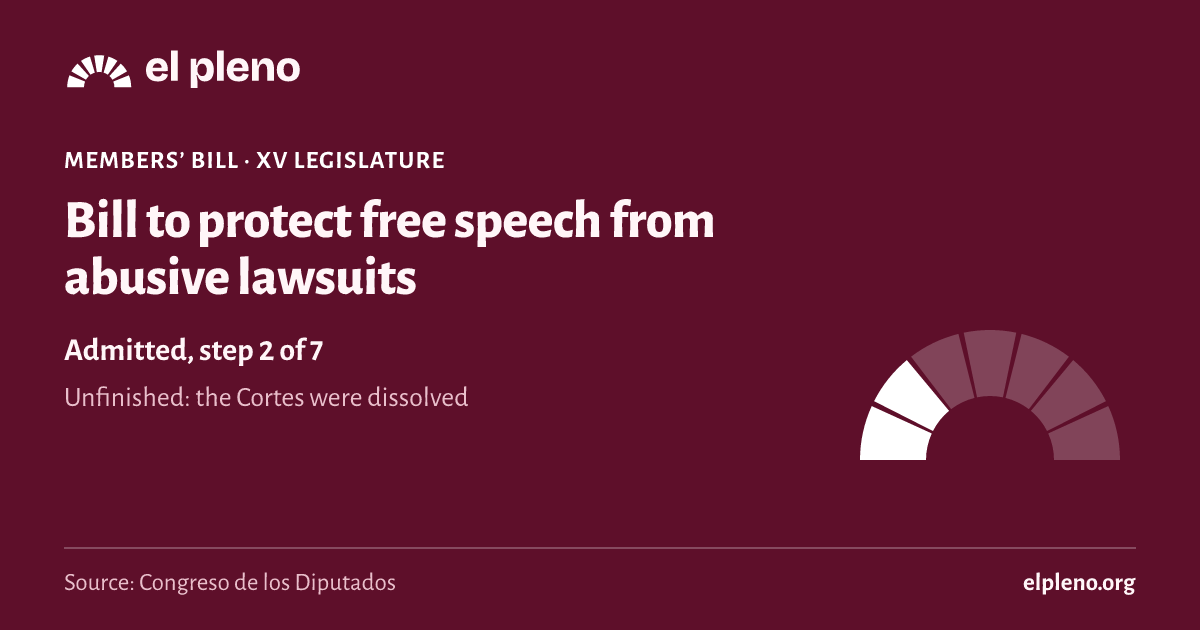
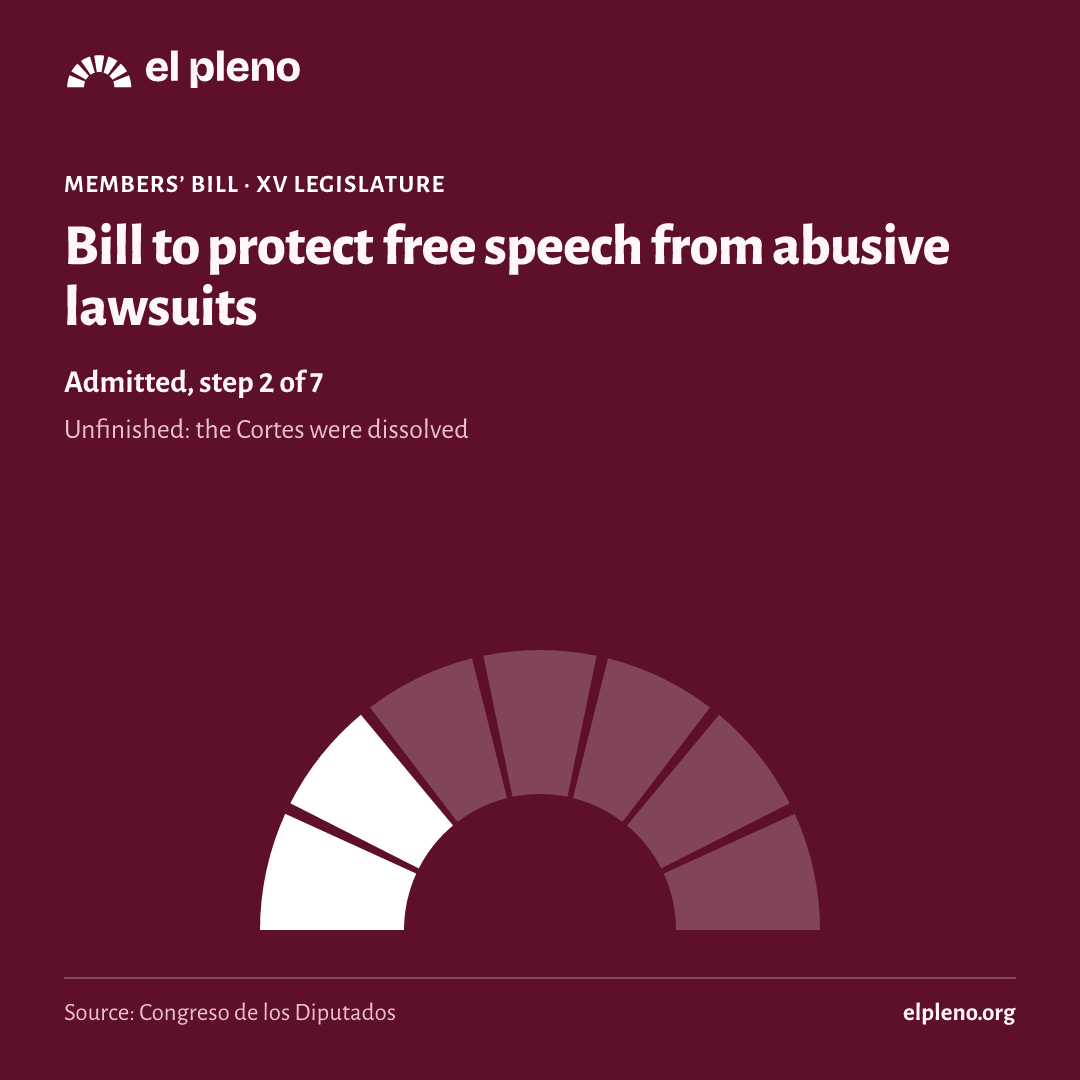
It took 2 of 7 steps. It reached Admitted, and today it is unfinished.
- Introduced28 October 2025Someone registers the text in the Congreso.
- Admitted11 November 2025The Bureau of the Congreso accepts it and, for a members’ bill, the plenary decides whether to consider it.
- Amendmentsnot reachedGroups propose changes.
- Committeenot reachedA committee goes through the text in detail.
- Plenarynot reachedAll 350 deputies vote.
- Senatenot reachedThe Senate can pass it, amend it or veto it.
- BOEnot reachedIt is published in the Official State Gazette (BOE) and comes into force.
See the 6 official steps on a timeline
Was there a plenary vote?
We have no plenary vote linked to this law in the Congreso’s data.
What happens next
What happens now?
The legislature ended before it finished. To go on, someone would have to introduce it again in the new Cortes.
It has not been presented again yet.
Sources
Where does all this come from?
- Congreso de los Diputados, file 122/000231
Official title, type, author, dates and stage.
Retrieved 11 November 2026
- Congreso de los Diputados, procedure
The date of each step, with its official wording.
Retrieved 12 November 2026
- The data comes from the open files of the Congreso, the Senate and the BOE, unaltered.
- Each deputy’s province is the one of their seat on the day of the vote.
- We only say “passed” or “rejected” when the majority needed is certain; otherwise we say which side had more votes.