What it is
Bill proposes better social protection for shellfish gatherers and miners
It is a members’ bill. Introduced by parliamentary groups, the Senate, regional governments or citizens. It was introduced on 22 October 2025. Introduced by: Grupo Parlamentario Plurinacional SUMAR.
Official title: Private member's bill for the reform of social protection measures and recognition of special working conditions in strategic sectors with high hardship.
Source: Congreso de los Diputados, file 122/000227· updated 11 Nov
Automatic summary, not yet reviewed
- The bill would allow people in shellfishing to collect the cessation-of-activity benefit due to force majeure while doing other work, as long as shellfishing is their main activity and their other earnings stay below the proportional minimum wage.
- It would replace the requirement of 12 months of uninterrupted contributions within the 24 months before the stoppage with a more flexible one: contributions in any of the previous 48 months. It would also cut the waiting period between benefits from 18 to 6 months.
- Within six months of the law taking effect, the Government would have to establish a 100% exemption from Social Security contributions while the force majeure cessation benefit is being collected in onshore and boat-based shellfishing.
- It would automatically grant a retirement age reduction coefficient of 0.10 to surface mine workers in tasks other than roza y arranque with dust-related risks, including those at mineral processing companies, and would update pensions for those who retired from 2020 on.
Who it affects
- Onshore and boat-based shellfish workers, mostly self-employed: Could receive the cessation-of-activity benefit with more flexible requirements and while doing other work.
- Surface workers in mining tasks and mineral processing companies: Could retire earlier automatically, without going to court, if the required risks apply.
- People who retired from 2020 onward in those mining jobs: Their pension amount would be updated with the reduction coefficient.
Words worth knowing
- Cese de actividad por fuerza mayor
- Benefit for self-employed people who must stop working due to causes beyond their control, such as a ban imposed by the authorities.
- Coeficiente reductor
- Reduction coefficient: a percentage that lowers the minimum retirement age for people who worked in very harsh or dangerous conditions.
- Riesgos pulvígenos
- Health damage from breathing dust at work, such as silicosis.
- Empresas de beneficio
- Companies that process and transform minerals without extracting them directly from the mine.
- Veda
- Temporary ban on shellfishing or fishing ordered by the authorities to let resources recover.
It summarizes the text as it was introduced. It is written by artificial intelligence and may contain mistakes: the official text is what counts. Read the official text · How we make summaries
Where it stands
How far did it get?
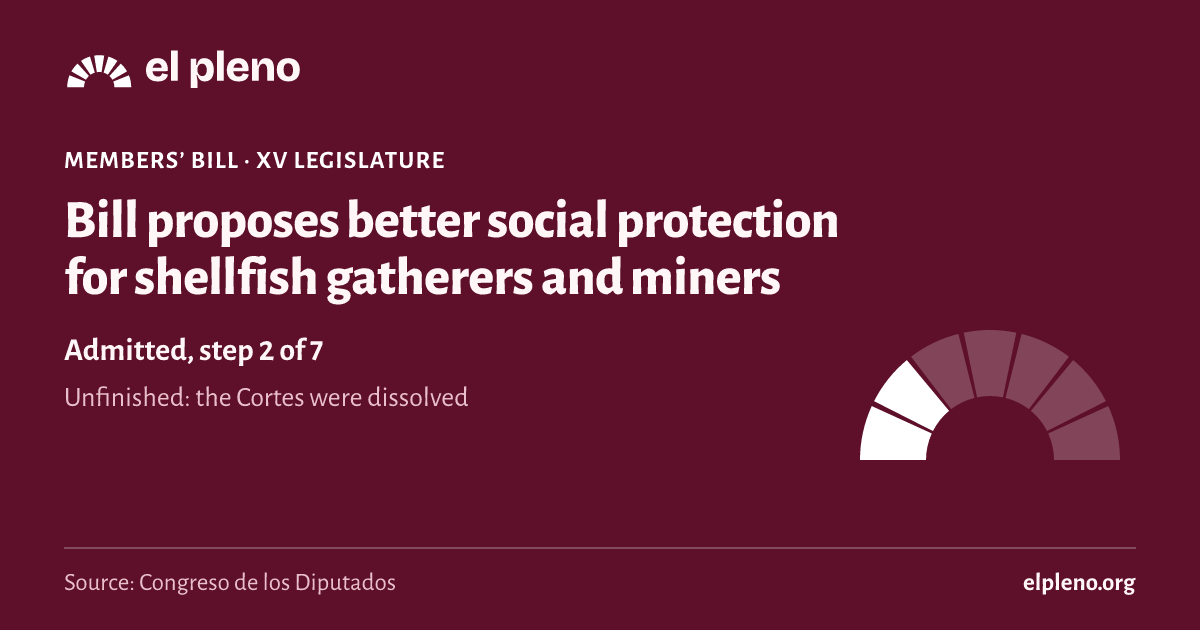
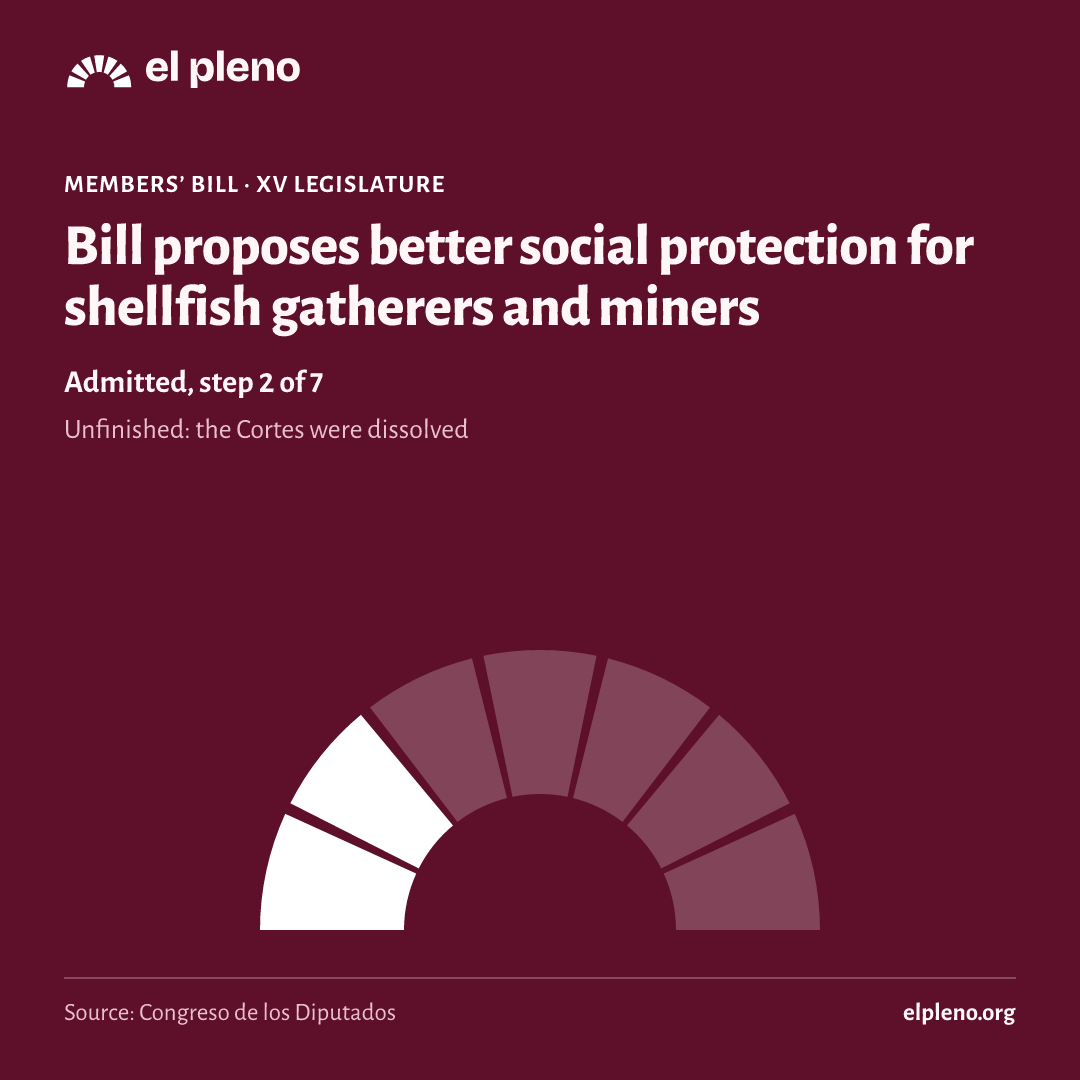
It took 2 of 7 steps. It reached Admitted, and today it is unfinished.
- Introduced22 October 2025Someone registers the text in the Congreso.
- Admitted28 October 2025The Bureau of the Congreso accepts it and, for a members’ bill, the plenary decides whether to consider it.
- Amendmentsnot reachedGroups propose changes.
- Committeenot reachedA committee goes through the text in detail.
- Plenarynot reachedAll 350 deputies vote.
- Senatenot reachedThe Senate can pass it, amend it or veto it.
- BOEnot reachedIt is published in the Official State Gazette (BOE) and comes into force.
See the 6 official steps on a timeline
Was there a plenary vote?
We have no plenary vote linked to this law in the Congreso’s data.
What happens next
What happens now?
The legislature ended before it finished. To go on, someone would have to introduce it again in the new Cortes.
It has not been presented again yet.
Sources
Where does all this come from?
- Congreso de los Diputados, file 122/000227
Official title, type, author, dates and stage.
Retrieved 11 November 2026
- Congreso de los Diputados, procedure
The date of each step, with its official wording.
Retrieved 12 November 2026
- The data comes from the open files of the Congreso, the Senate and the BOE, unaltered.
- Each deputy’s province is the one of their seat on the day of the vote.
- We only say “passed” or “rejected” when the majority needed is certain; otherwise we say which side had more votes.