What it is
Bill would turn AICA into a state agency
It is a members’ bill. Introduced by parliamentary groups, the Senate, regional governments or citizens. It was introduced on 28 July 2025. Introduced by: Grupo Parlamentario Socialista.
Official title: Private member's bill on the conversion of the Autonomous Body Food Information and Control Agency into the State Agency for Food Chain Inspection.
Source: Congreso de los Diputados, file 122/000216· updated 11 Nov
Automatic summary, not yet reviewed
- The bill would turn the autonomous body Agencia de Información y Control Alimentarios (AICA) into the State Agency for Food Chain Inspection, attached to the Ministry of Agriculture, Fisheries and Food. The new agency would inherit all the assets, rights and obligations of the previous body.
- The new agency would have its own legal personality, assets and treasury, plus management autonomy. According to the explanatory statement, this would give it more technical independence and flexibility to enforce Law 12/2013 on commercial relations in the food chain.
- Its duties would include managing information systems for the olive oil, wine and dairy markets, inspecting compliance with the law, starting sanction proceedings, and cooperating with the European Commission and authorities of other EU countries.
- Agency inspectors, acting as officers of the authority, could enter premises and vehicles, review books and documents, seal goods and take samples. Entering premises or sealing goods would require the consent of the person affected or a judicial authorization.
- The Government would have to approve the agency's Statute by royal decree within eighteen months of the law taking effect. The law would enter into force the day after its publication in the Official State Gazette.
- Until the agency has its own budget approved by law, its expenses would be paid from the credits allocated to the current body, and the Ministry would keep handling common services. The management contract would be approved later through a joint ministerial order.
Who it affects
- Farmers and livestock breeders: The agency would check that companies buying from them follow food chain rules and could sanction violations.
- Food, beverage and distribution companies: They would be subject to inspections and required to cooperate with the agency, providing data and documents within ten days.
- Current AICA staff: They would move to the new agency keeping their civil servant, statutory or employment status.
- Consumers: According to the explanatory statement, the goal is to make the food chain work better for their benefit.
Words worth knowing
- Agencia estatal (state agency)
- A type of public entity with its own legal personality and more management autonomy than an autonomous body, created under Law 40/2015.
- Organismo autónomo (autonomous body)
- A public entity attached to the Administration with its own legal personality, but with less autonomy than a state agency.
- Cadena alimentaria (food chain)
- The set of links that take food from the field to the consumer: farmers, livestock breeders, manufacturers and distributors.
- Expediente sancionador (sanction proceeding)
- The official process to investigate a violation and, if appropriate, impose a penalty.
- Contrato de gestión (management contract)
- A document setting the goals, resources and controls of a state agency, approved jointly by several ministries.
It summarizes the text as it was introduced. It is written by artificial intelligence and may contain mistakes: the official text is what counts. Read the official text · How we make summaries
Where it stands
How far did it get?
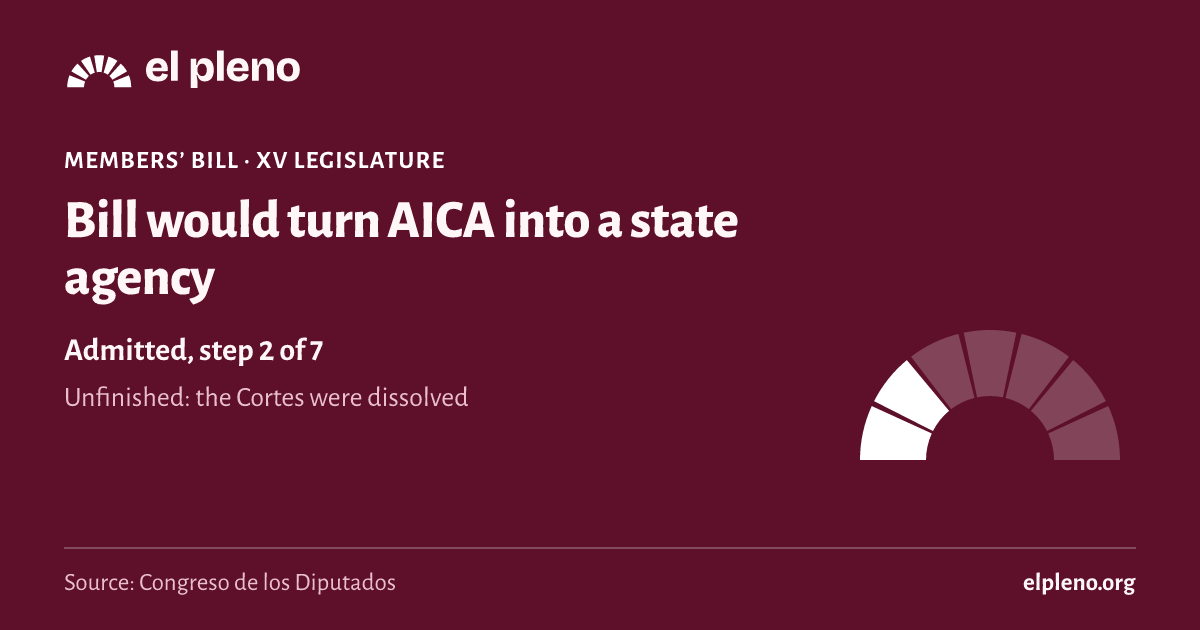
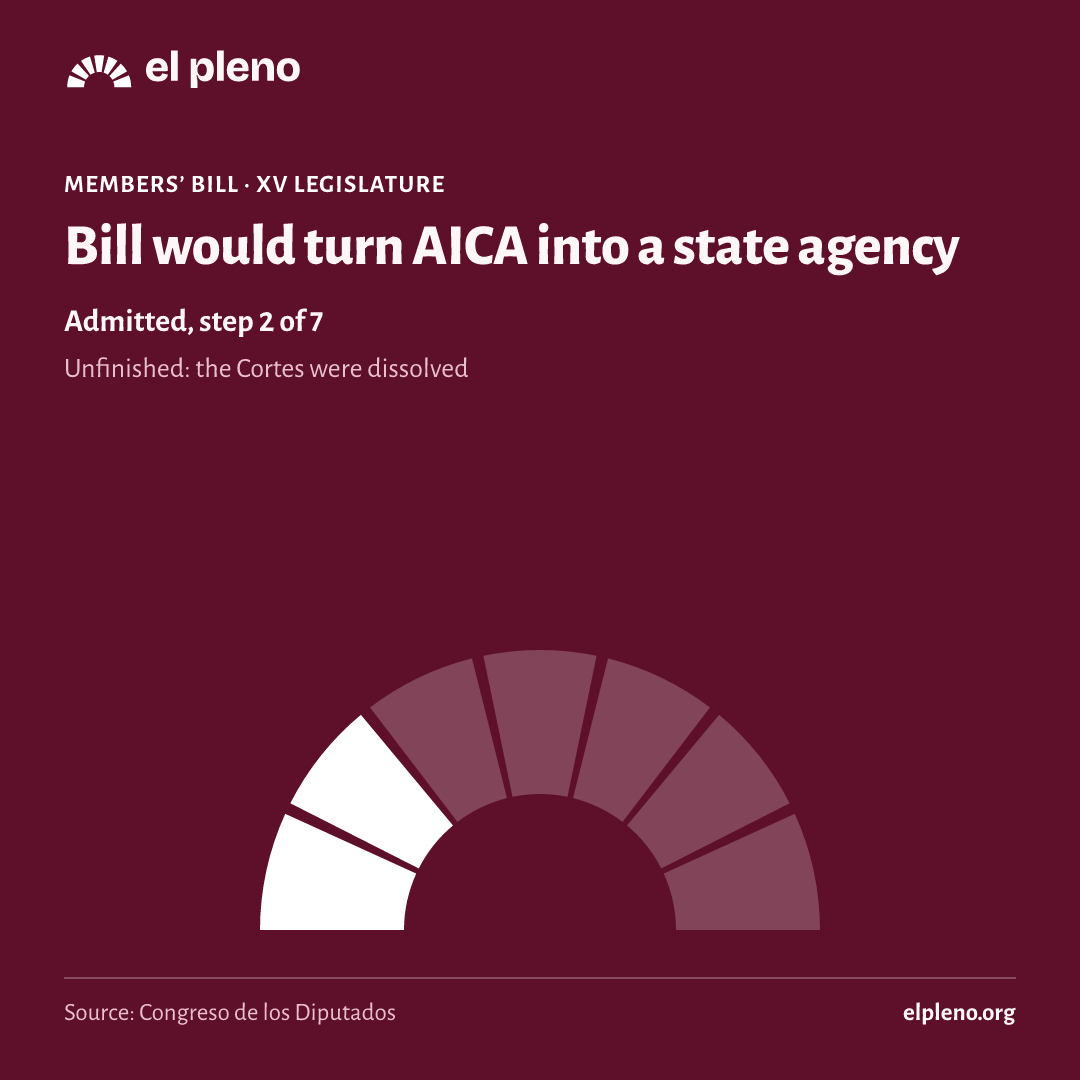
It took 2 of 7 steps. It reached Admitted, and today it is unfinished.
- Introduced28 July 2025Someone registers the text in the Congreso.
- Admitted26 August 2025The Bureau of the Congreso accepts it and, for a members’ bill, the plenary decides whether to consider it.
- Amendmentsnot reachedGroups propose changes.
- Committeenot reachedA committee goes through the text in detail.
- Plenarynot reachedAll 350 deputies vote.
- Senatenot reachedThe Senate can pass it, amend it or veto it.
- BOEnot reachedIt is published in the Official State Gazette (BOE) and comes into force.
See the 7 official steps on a timeline
Was there a plenary vote?
We have no plenary vote linked to this law in the Congreso’s data.
What happens next
What happens now?
The legislature ended before it finished. To go on, someone would have to introduce it again in the new Cortes.
It has not been presented again yet.
Sources
Where does all this come from?
- Congreso de los Diputados, file 122/000216
Official title, type, author, dates and stage.
Retrieved 11 November 2026
- Congreso de los Diputados, procedure
The date of each step, with its official wording.
Retrieved 12 November 2026
- The data comes from the open files of the Congreso, the Senate and the BOE, unaltered.
- Each deputy’s province is the one of their seat on the day of the vote.
- We only say “passed” or “rejected” when the majority needed is certain; otherwise we say which side had more votes.