

What it is
Bill proposes indefinite rental contracts and more tenant protection
It is a members’ bill. Introduced by parliamentary groups, the Senate, regional governments or citizens. It was introduced on 17 February 2025. Introduced by: Grupo Parlamentario Plurinacional SUMAR.
Official title: Private member's bill for the amendment of Law 29/1994, of November 24, on Urban Leases.
Source: Congreso de los Diputados, file 122/000162· updated 11 Nov
Automatic summary, not yet reviewed
- The bill would amend the Urban Leases Law so that housing rental contracts are mandatorily extended in one-year periods, with no time limit, unless the tenant does not want to renew, breaches the contract, or the landlord, if an individual, needs the home for themselves or their family. If the landlord takes back the home and does not move in within three months, the tenant can return with compensation.
- It would remove Article 10 and section 4 of Article 16 of the current law, and amend Article 13 so that a tenant in good faith can stay in the home even if the landlord's right changes, for example through a mortgage foreclosure.
- The new buyer of a rented home would take over the landlord's rights and obligations for the whole life of the contract, even if the requirements of Article 34 of the Mortgage Law apply.
- If the landlord carries out improvement works, they could raise the rent by at most 20% of the current amount, applying the legal interest rate plus three points to the money invested. They would have to detail the calculations and provide documents showing the cost of the works.
Who it affects
- Housing tenants: Could keep their rental contract indefinitely, with mandatory one-year extensions, and would have more protection if the home is sold or the landlord's situation changes.
- Individual landlords: Could take back the home only in the cases provided, giving six months' notice, and could raise the rent by up to 20% if they do improvement works.
- Buyers of rented homes: Would have to respect the existing rental contract for its entire duration.
Words worth knowing
- Prórroga obligatoria (mandatory extension)
- The duty to continue the rental contract for new periods, even if the parties do not agree to it.
- Subrogación (subrogation)
- When a new person takes the landlord's place and assumes the same rights and obligations.
- Retracto convencional (conventional right of first refusal)
- A right that lets someone buy a home under certain agreed conditions, for example when the owner sells it.
- Propiedad horizontal (horizontal property regime)
- A system where each person owns their apartment in a building and shares common areas with the others.
It summarizes the text as it was introduced. It is written by artificial intelligence and may contain mistakes: the official text is what counts. Read the official text · How we make summaries
Where it stands
How far did it get?
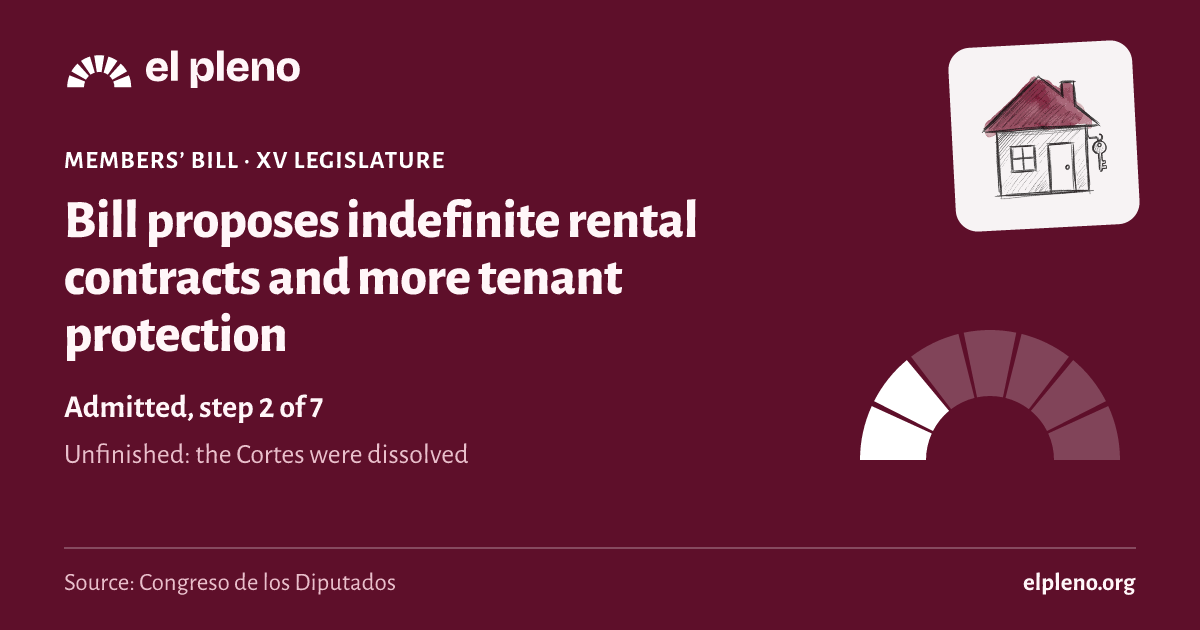
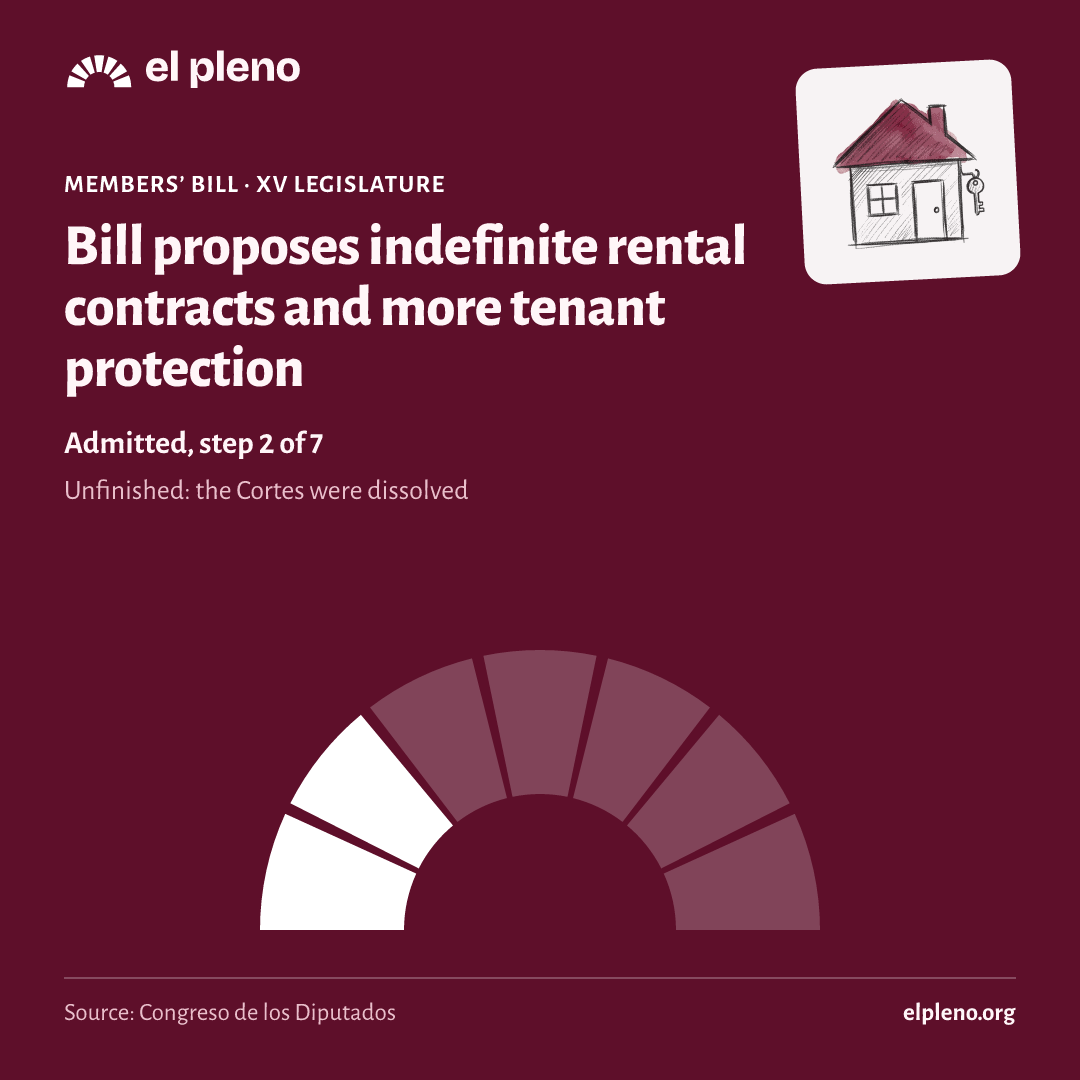
It took 2 of 7 steps. It reached Admitted, and today it is unfinished.
- Introduced17 February 2025Someone registers the text in the Congreso.
- Admitted25 February 2025The Bureau of the Congreso accepts it and, for a members’ bill, the plenary decides whether to consider it.
- Amendmentsnot reachedGroups propose changes.
- Committeenot reachedA committee goes through the text in detail.
- Plenarynot reachedAll 350 deputies vote.
- Senatenot reachedThe Senate can pass it, amend it or veto it.
- BOEnot reachedIt is published in the Official State Gazette (BOE) and comes into force.
See the 6 official steps on a timeline
Was there a plenary vote?
We have no plenary vote linked to this law in the Congreso’s data.
What happens next
What happens now?
The legislature ended before it finished. To go on, someone would have to introduce it again in the new Cortes.
It has not been presented again yet.
Sources
Where does all this come from?
- Congreso de los Diputados, file 122/000162
Official title, type, author, dates and stage.
Retrieved 11 November 2026
- Congreso de los Diputados, procedure
The date of each step, with its official wording.
Retrieved 13 November 2026
- The data comes from the open files of the Congreso, the Senate and the BOE, unaltered.
- Each deputy’s province is the one of their seat on the day of the vote.
- We only say “passed” or “rejected” when the majority needed is certain; otherwise we say which side had more votes.