What it is
Bill to waive social security contributions for low-income self-employed
It is a members’ bill. Introduced by parliamentary groups, the Senate, regional governments or citizens. It was introduced on 24 May 2024. Introduced by: Grupo Parlamentario VOX.
Official title: Private member's bill for the protection of self-employed workers.
Source: Congreso de los Diputados, file 122/000106· updated 11 Nov
Automatic summary, not yet reviewed
- The bill, introduced by the VOX parliamentary group and admitted for processing in the Congress of Deputies (Congreso de los Diputados), aims to protect self-employed workers. It is not an approved law.
- The bill would grant a 100% waiver of social security contributions for self-employed workers whose real income is below the minimum wage. It would be optional, and the months covered by the waiver would not count toward the self-employment cessation benefit or an active insertion income.
- It would also give taxpayers six months to pay what they owe after filing income tax The personal income tax (IRPF in Spain): what people pay on what they earn from work, business or savings. and VAT returns, and would allow deferring a payment without interest if the Tax Agency owes them a VAT refund.
- Receiving the minimum living income (Ingreso mínimo vital A state benefit for families with low incomes.) would be incompatible with that contribution waiver.
- The bill would amend the General Subsidies Law so that individuals or entities with tax residence in a foreign country could not receive subsidies.
- The law would take effect on the first day of the budgetary year after its publication in the Official State Gazette (Boletín Oficial del Estado), and the Government would issue the regulations needed to apply it.
Who it affects
- Self-employed workers earning below the minimum wage: Could choose not to pay social security contributions.
- All self-employed workers: Would have six months to pay income tax and VAT, and could defer payments without interest if owed a VAT refund.
- Self-employed workers receiving the minimum living income: Could not receive it and the contribution waiver at the same time.
- Individuals and entities with tax residence abroad: Would be excluded from public subsidies under the General Subsidies Law.
Words worth knowing
- Salario Mínimo Interprofesional (SMI)
- The minimum wage that employers must pay by law in Spain.
- Cuota de la Seguridad Social
- The periodic payment self-employed workers make for health coverage and future benefits.
- Prestación por cese de actividad
- A benefit for self-employed workers who stop working, similar to unemployment benefits.
- Renta activa de inserción
- A public benefit for people who have trouble finding a job.
- Ingreso mínimo vital
- A state benefit for families with low incomes.
- income tax
- The personal income tax (IRPF in Spain): what people pay on what they earn from work, business or savings.
It summarizes the text as it was introduced. It is written by artificial intelligence and may contain mistakes: the official text is what counts. Read the official text · How we make summaries
Where it stands
How far did it get?
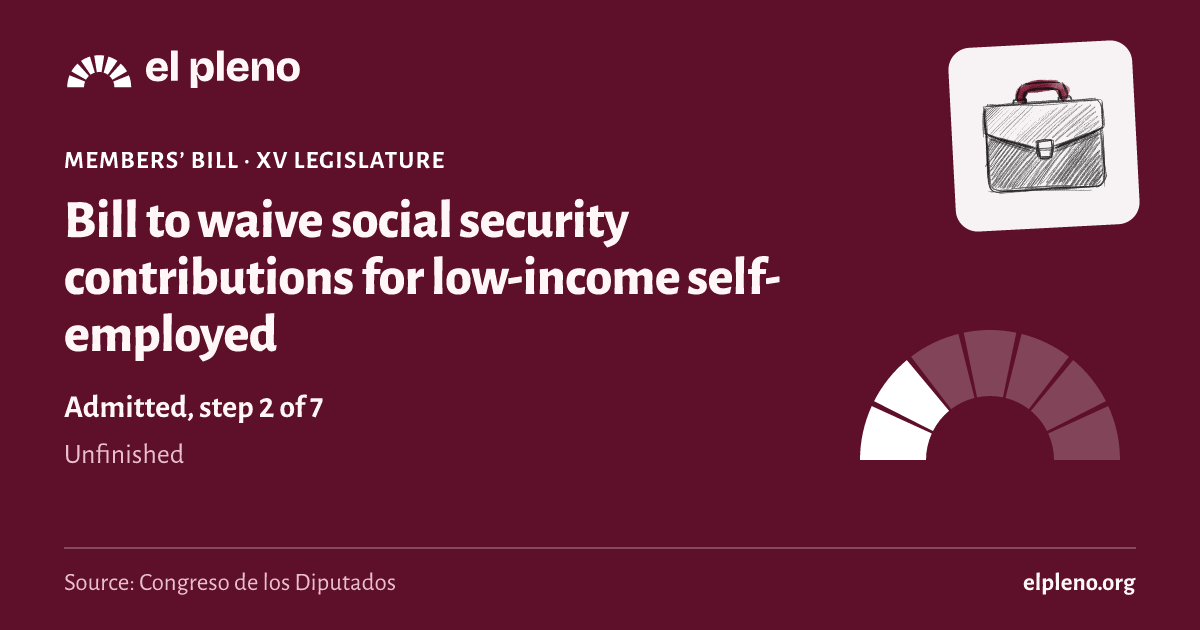
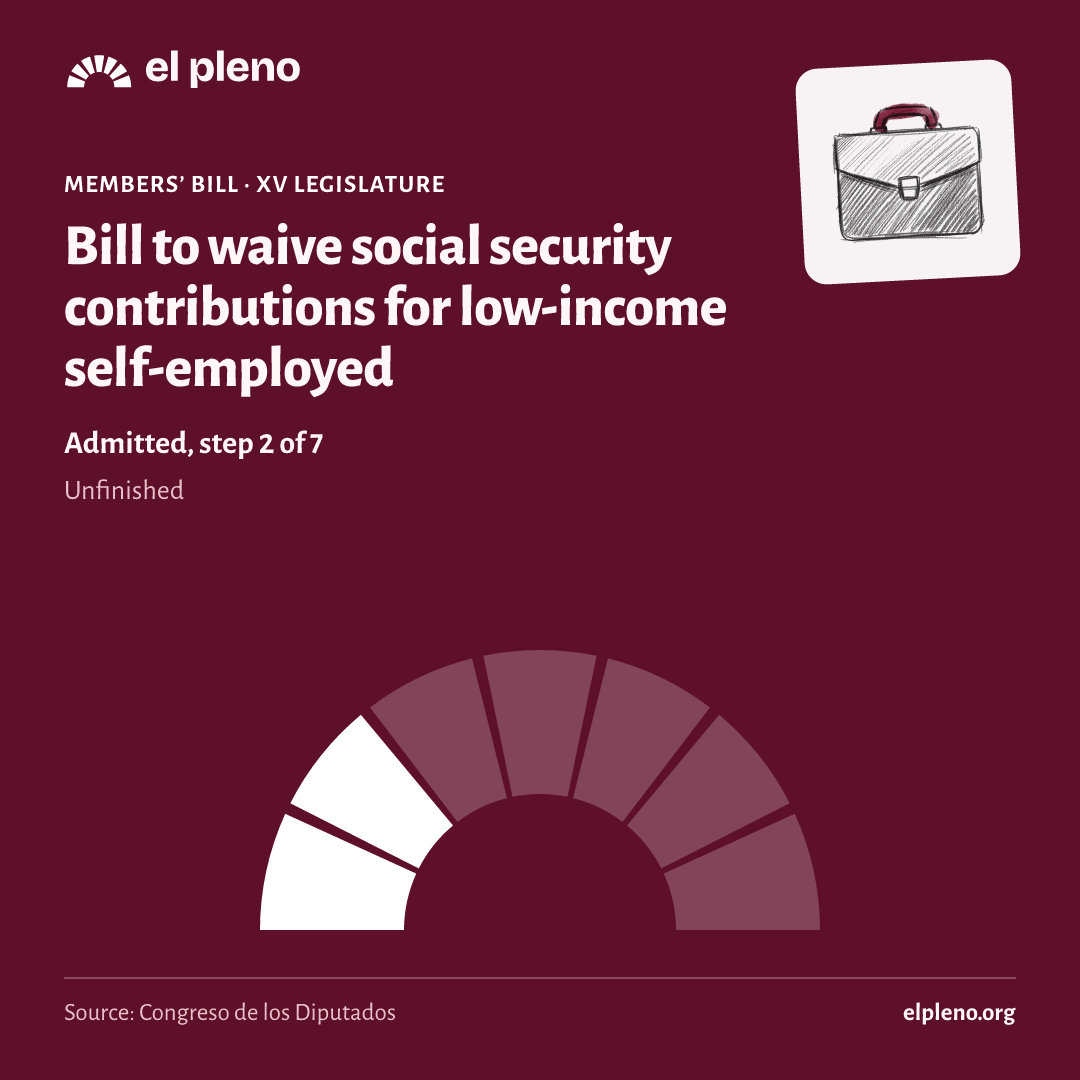
It took 2 of 7 steps. It reached Admitted, and today it is unfinished.
- Introduced24 May 2024Someone registers the text in the Congreso.
- Admitted28 May 2024The Bureau of the Congreso accepts it and, for a members’ bill, the plenary decides whether to consider it.
- Amendmentsnot reachedGroups propose changes.
- Committeenot reachedA committee goes through the text in detail.
- Plenarynot reachedAll 350 deputies vote.
- Senatenot reachedThe Senate can pass it, amend it or veto it.
- BOEnot reachedIt is published in the Official State Gazette (BOE) and comes into force.
See the 5 official steps on a timeline
Was there a plenary vote?
We have no plenary vote linked to this law in the Congreso’s data.
What happens next
What happens now?
The legislature ended before it finished. To go on, someone would have to introduce it again in the new Cortes.
It has not been presented again yet.
Sources
Where does all this come from?
- Congreso de los Diputados, file 122/000106
Official title, type, author, dates and stage.
Retrieved 11 November 2026
- Congreso de los Diputados, procedure
The date of each step, with its official wording.
Retrieved 12 November 2026
- The data comes from the open files of the Congreso, the Senate and the BOE, unaltered.
- Each deputy’s province is the one of their seat on the day of the vote.
- We only say “passed” or “rejected” when the majority needed is certain; otherwise we say which side had more votes.