What it is
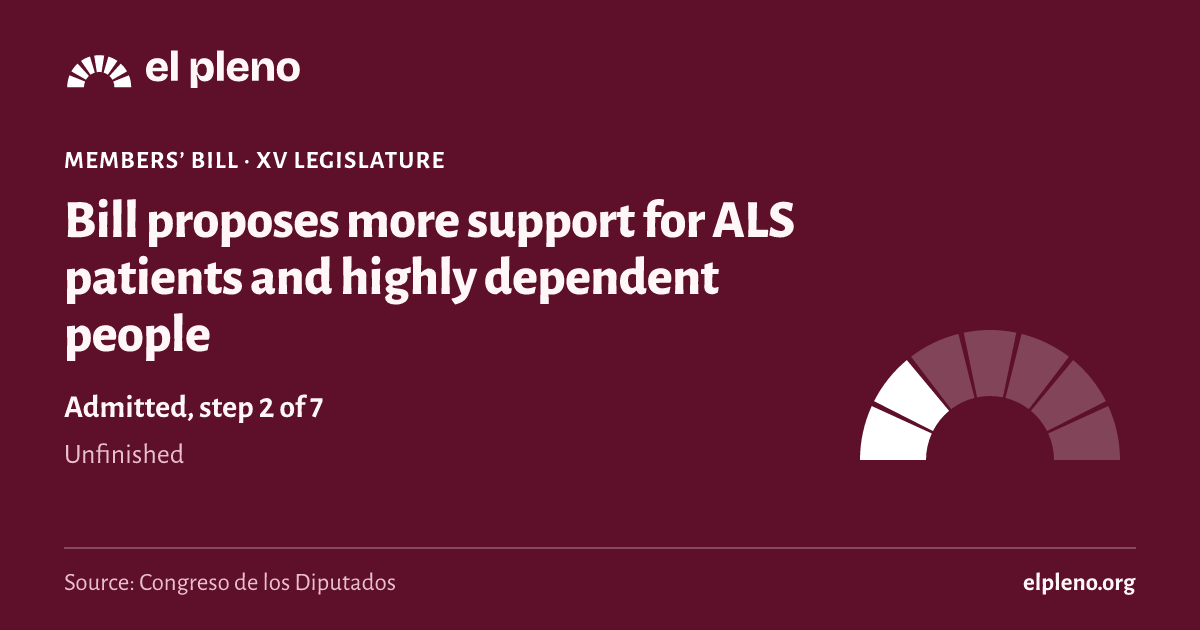
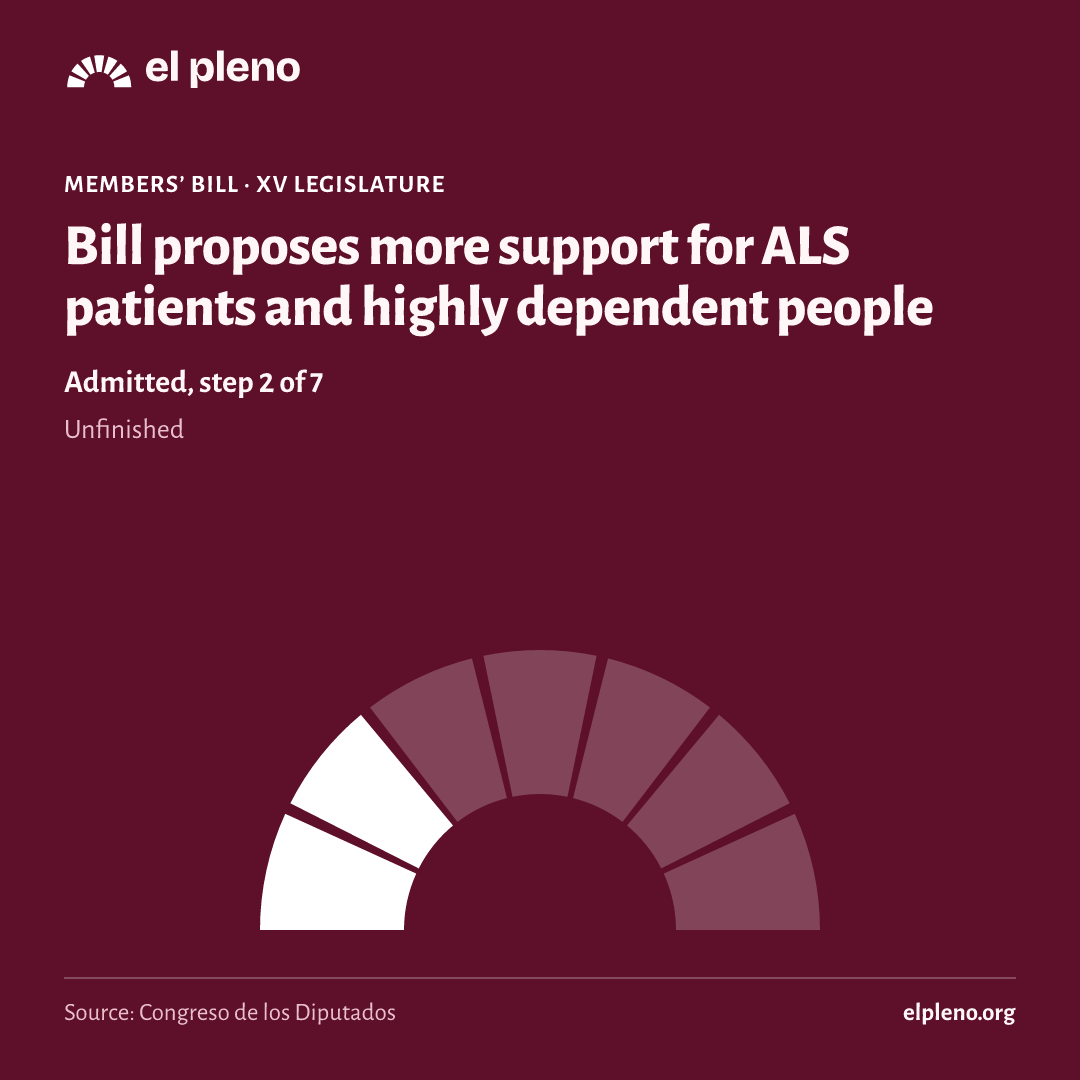
Bill proposes more support for ALS patients and highly dependent people
It is a members’ bill. Introduced by parliamentary groups, the Senate, regional governments or citizens. It was introduced on 23 November 2023. Introduced by: Grupo Parlamentario VOX.
Official title: Private member's bill for comprehensive care for patients with amyotrophic lateral sclerosis (ALS) and other persons in a situation of great dependency.
Source: Congreso de los Diputados, file 122/000020· updated 11 Nov
Automatic summary, not yet reviewed
- The bill would amend the dependency law so that access to benefits is equal across Spain, regardless of where the person lives, and so that public authorities act diligently and speed up procedures.
- It proposes that the amounts of economic benefits be set according to the real, updated costs of beneficiaries, especially those who are highly dependent, and that the system's funding be sufficient each year based on the actual number of beneficiaries.
- It would expand home help services to include nursing and physiotherapy, and recognize the economic benefit for care in the family environment when adequate living and housing conditions are met.
- It would treat people in a situation of high dependency as having a disability of 33 percent or more if a medical report supports it, even without legal recognition, and would guarantee them equal opportunities throughout the territory.
- It proposes that people in a situation of high dependency automatically receive the electricity social bonus as vulnerable consumers, regardless of their income.
- Within three months of the law taking effect, the Government would have to add transportation and lodging for highly dependent people and their caregivers to the public health system when they must travel to another province for treatment, and add home nursing and physiotherapy to the dependency benefits catalog.
Who it affects
- People with ALS and others in situations of high dependency: They would receive more support: home care with nursing and physiotherapy, an automatic electricity bonus, and transportation and lodging for treatment outside their province.
- Families and non-professional caregivers: They could receive an economic benefit for caring for their dependent relative at home.
- People with disabilities or disability pensions: Their rights would be recognized equally across the territory, and disability would be presumed in cases of high dependency.
- Low-income households: Income requirements for the electricity social bonus would be adjusted.
Words worth knowing
- ELA
- Esclerosis lateral amiotrófica, known in English as ALS, a nervous system disease causing progressive loss of movement and, in advanced stages, the ability to breathe without help.
- SAAD
- Sistema para la Autonomía y Atención a la Dependencia, the Spanish public system that manages benefits for dependent people.
- Gran dependencia
- High dependency: a situation where a person needs help several times a day with basic activities and continuous support from another person.
- Bono social de electricidad
- A discount on electricity bills for low-income or vulnerable households.
- IPREM
- Indicador Público de Renta de Efectos Múltiples, a public income indicator used to decide who qualifies for benefits.
It summarizes the text as it was introduced. It is written by artificial intelligence and may contain mistakes: the official text is what counts. Read the official text · How we make summaries
Where it stands
How far did it get?
It took 2 of 7 steps. It reached Admitted, and today it is unfinished.
- Introduced23 November 2023Someone registers the text in the Congreso.
- Admitted28 November 2023The Bureau of the Congreso accepts it and, for a members’ bill, the plenary decides whether to consider it.
- Amendmentsnot reachedGroups propose changes.
- Committeenot reachedA committee goes through the text in detail.
- Plenarynot reachedAll 350 deputies vote.
- Senatenot reachedThe Senate can pass it, amend it or veto it.
- BOEnot reachedIt is published in the Official State Gazette (BOE) and comes into force.
See the 5 official steps on a timeline
Was there a plenary vote?
We have no plenary vote linked to this law in the Congreso’s data.
What happens next
What happens now?
The legislature ended before it finished. To go on, someone would have to introduce it again in the new Cortes.
It has not been presented again yet.
Sources
Where does all this come from?
- Congreso de los Diputados, file 122/000020
Official title, type, author, dates and stage.
Retrieved 11 November 2026
- Congreso de los Diputados, procedure
The date of each step, with its official wording.
Retrieved 12 November 2026
- The data comes from the open files of the Congreso, the Senate and the BOE, unaltered.
- Each deputy’s province is the one of their seat on the day of the vote.
- We only say “passed” or “rejected” when the majority needed is certain; otherwise we say which side had more votes.