What it is
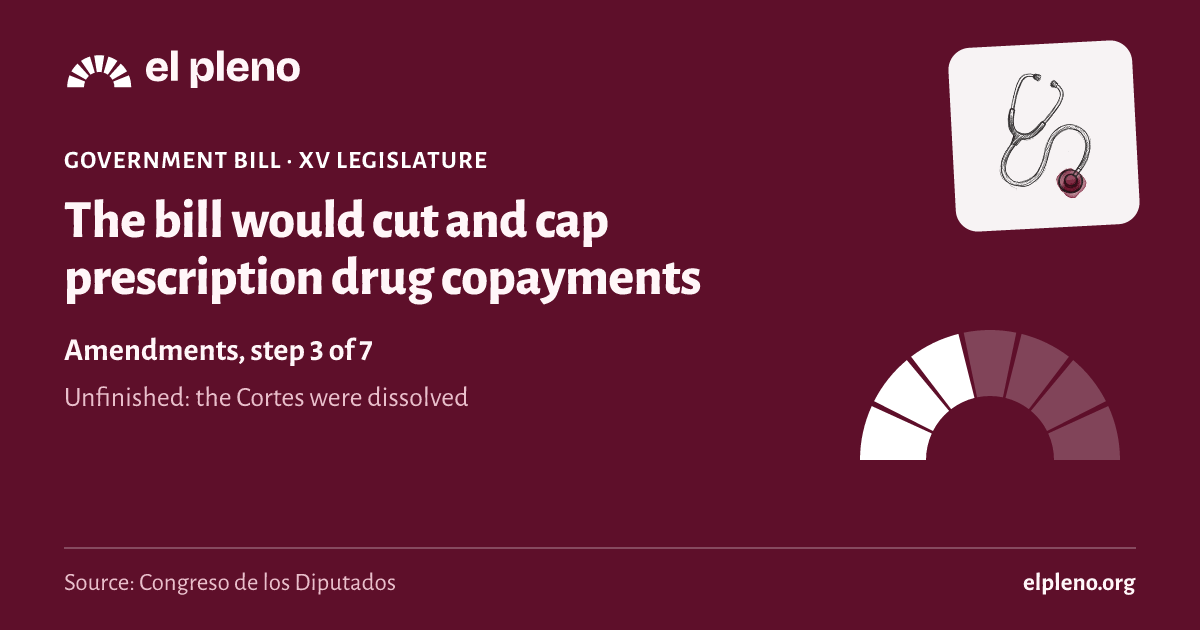
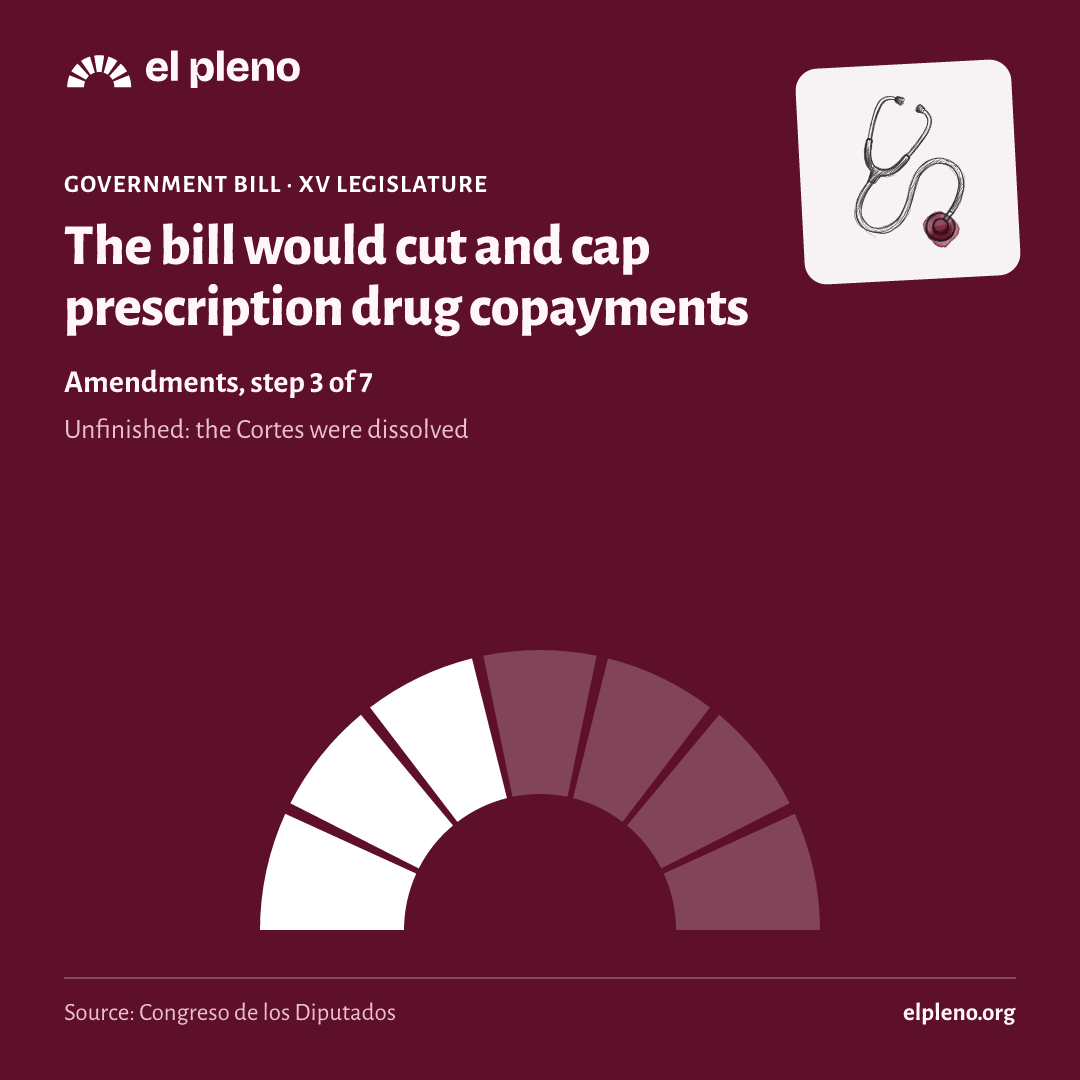
The bill would cut and cap prescription drug copayments
Amendments step 3 of 7· LapsedIt is a government bill. Introduced by the Government. It was introduced on 28 May 2026. Introduced by: Gobierno.
Official title: Government bill amending the contribution of users and their beneficiaries in outpatient pharmaceutical care (originating from Royal Decree-Law 11/2026, of May 12).
Source: Congreso de los Diputados, file 121/000097· updated 11 Nov
Automatic summary, not yet reviewed
- The bill would change the percentages each person pays for pharmacy medicines. It would go from three to six copayment levels for active workers and their beneficiaries, and from three to four for pensioners and their beneficiaries.
- It would introduce monthly payment caps for active workers earning under €35,000 and for pensioners earning between €18,000 and €60,000. If the cap is exceeded, the regional government must refund the difference within a maximum of six months.
- Pensioners receiving top-ups for pensions below the legal minimum would be exempt from paying. This replaces the previous fixed income threshold with a rule that updates automatically along with pensions.
- Pensioners who were already exempt under the previous rules but do not receive the minimum pension top-up would keep their exemption if their annual income is under €5,635, or under €11,200 if they do not file an income tax return. The exemption would also apply to their beneficiaries.
- The Government would be empowered to issue the rules needed to apply the reform, and the law would take effect the day after its publication in the Official State Gazette.
Who it affects
- Active workers and their beneficiaries: They would have more copayment levels based on income and, if they earn under €35,000 a year, a monthly cap on what they pay.
- Social Security pensioners and their beneficiaries: They would have four copayment levels and monthly caps based on income, with a new cap for incomes between €18,000 and €60,000.
- Pensioners with minimum pensions: They would stop paying anything for their medicines if they receive top-ups for pensions below the legal minimum.
- Pensioners already exempt who do not receive the top-up: They would keep their exemption if their annual income is under €5,635, or under €11,200 if they do not file an income tax return.
Words worth knowing
- Copago (copayment)
- The share of the medicine's price paid by the patient, with the rest covered by the health system.
- Prestación farmacéutica ambulatoria (outpatient pharmaceutical benefit)
- Medicines dispensed with a prescription through pharmacies, outside of hospitals.
- PVP
- Retail sale price, that is, the price of the medicine at the pharmacy.
- Base liquidable general y del ahorro (general and savings tax base)
- A line on the income tax return showing the income used to calculate the tax; it is used to set the copayment level.
- Complementos para pensiones inferiores a la mínima (top-ups for pensions below the minimum)
- An amount added to a pension when it falls below the minimum amount set by law.
It summarizes the text as it was introduced. It is written by artificial intelligence and may contain mistakes: the official text is what counts. Read the official text · How we make summaries
Where it stands
How far did it get?
It took 3 of 7 steps. It reached Amendments, and today it is lapsed.
- Introduced28 May 2026Someone registers the text in the Congreso.
- Admitted8 June 2026The Bureau of the Congreso accepts it and, for a members’ bill, the plenary decides whether to consider it.
- Amendments12 June 2026Groups propose changes.
- Committeenot reachedA committee goes through the text in detail.
- Plenarynot reachedAll 350 deputies vote.
- Senatenot reachedThe Senate can pass it, amend it or veto it.
- BOEnot reachedIt is published in the Official State Gazette (BOE) and comes into force.
See the 6 official steps on a timeline
Was there a plenary vote?
We have no plenary vote linked to this law in the Congreso’s data.
What happens next
What happens now?
The legislature ended before it finished. To go on, someone would have to introduce it again in the new Cortes.
Sources
Where does all this come from?
- Congreso de los Diputados, file 121/000097
Official title, type, author, dates and stage.
Retrieved 11 November 2026
- Congreso de los Diputados, procedure
The date of each step, with its official wording.
Retrieved 12 November 2026
- The data comes from the open files of the Congreso, the Senate and the BOE, unaltered.
- Each deputy’s province is the one of their seat on the day of the vote.
- We never say “passed” because of a vote: the files do not say which majority was needed.