What it is
Emergency aid for floods in Andalusia and Extremadura
Amendments step 3 of 7· LapsedIt is a government bill. Introduced by the Government. It was introduced on 18 March 2026. Introduced by: Gobierno.
Official title: Government bill adopting urgent measures in response to the damage caused by various adverse weather phenomena, with special impact in the autonomous communities of Andalusia and Extremadura (originating from Royal Decree-Law 5/2026, of February 17).
Source: Congreso de los Diputados, file 121/000089· updated 11 Nov
Automatic summary, not yet reviewed
- The bill would provide aid of 72,000 euros for death or disability, and up to 60,480 euros for total destruction of a primary home, with no income limit to qualify.
- People evacuated from their primary home could receive 150 euros per person per day, from the evacuation until the authorities allow them to return.
- Applicants could request an advance of up to 50 percent of the aid for home or household goods damage by simply signing a sworn statement, with no guarantees or prior audit.
- Local governments could receive up to 100 percent of the cost of repairing municipal infrastructure, with a 100 percent advance through a sworn statement, backed by a 2 billion euro credit line.
- An extraordinary farm aid would equal 30 percent of declared farm income, between 5,000 and 25,000 euros per beneficiary, funded with 2,121 million euros, for farms in Andalusia and Extremadura.
- Businesses and self-employed people in affected municipalities could receive direct aid: 5,000 euros for the self-employed and between 10,000 and 150,000 euros for companies depending on their revenue, requested through the Tax Agency until June 30, 2026.
- On employment, temporary layoff procedures for force majeure would be streamlined, a special unemployment benefit of 70 percent of the base salary would apply with no waiting period, and companies receiving aid could not fire workers; any such dismissal would be void.
- Consumers in evacuated municipalities would see the deadlines suspended for withdrawing from purchases or exercising return rights, and could terminate or postpone contracts for supplies and services they cannot use, with refunds within 30 days.
Who it affects
- People affected by floods or evacuations in Andalusia and Extremadura: Could apply for aid for death, disability, home and household goods damage, and 150 euros per person per day of evacuation.
- Farmers, livestock breeders and irrigation communities: Extraordinary aid for lost income, compensation for uninsured crop damage and up to 70 percent of the insurance premium covered.
- Businesses and self-employed people in affected municipalities: Direct aid from 5,000 to 150,000 euros and loan guarantees.
- Municipal councils and provincial councils: Aid for emergency costs and infrastructure rebuilding, with 100 percent advances.
- Employees, household workers and self-employed people: Special unemployment protection, Social Security exemptions and payment deferrals, and a ban on dismissals in aided companies.
Words worth knowing
- Declaración responsable (sworn statement)
- A document signed before the administration stating that you meet the required conditions; it allows aid to be paid without long prior procedures.
- Expediente de regulación temporal de empleo (ERTE)
- A procedure by which a company temporarily suspends contracts or reduces working hours, usually for reasons beyond its control, such as a disaster.
- Ayudas de minimis
- Small public aid amounts that European rules allow without prior authorization, subject to a cap per beneficiary.
- Derecho de desistimiento (right of withdrawal)
- The consumer's right to return a distance purchase or cancel a contract within a legal period, normally 14 days, without giving reasons.
- Zona afectada gravemente por una emergencia de protección civil
- An official declaration by the Council of Ministers recognizing that a disaster has severely damaged a territory and enabling State aid.
It summarizes the text as it was introduced. It is written by artificial intelligence and may contain mistakes: the official text is what counts. Read the official text · How we make summaries
Where it stands
How far did it get?
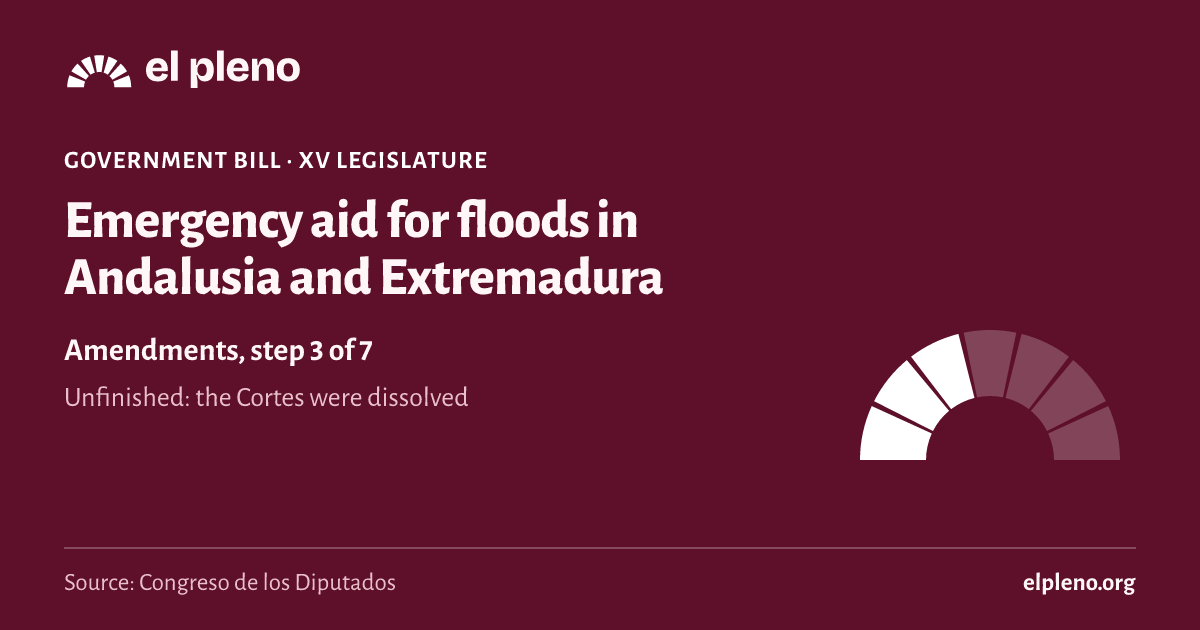
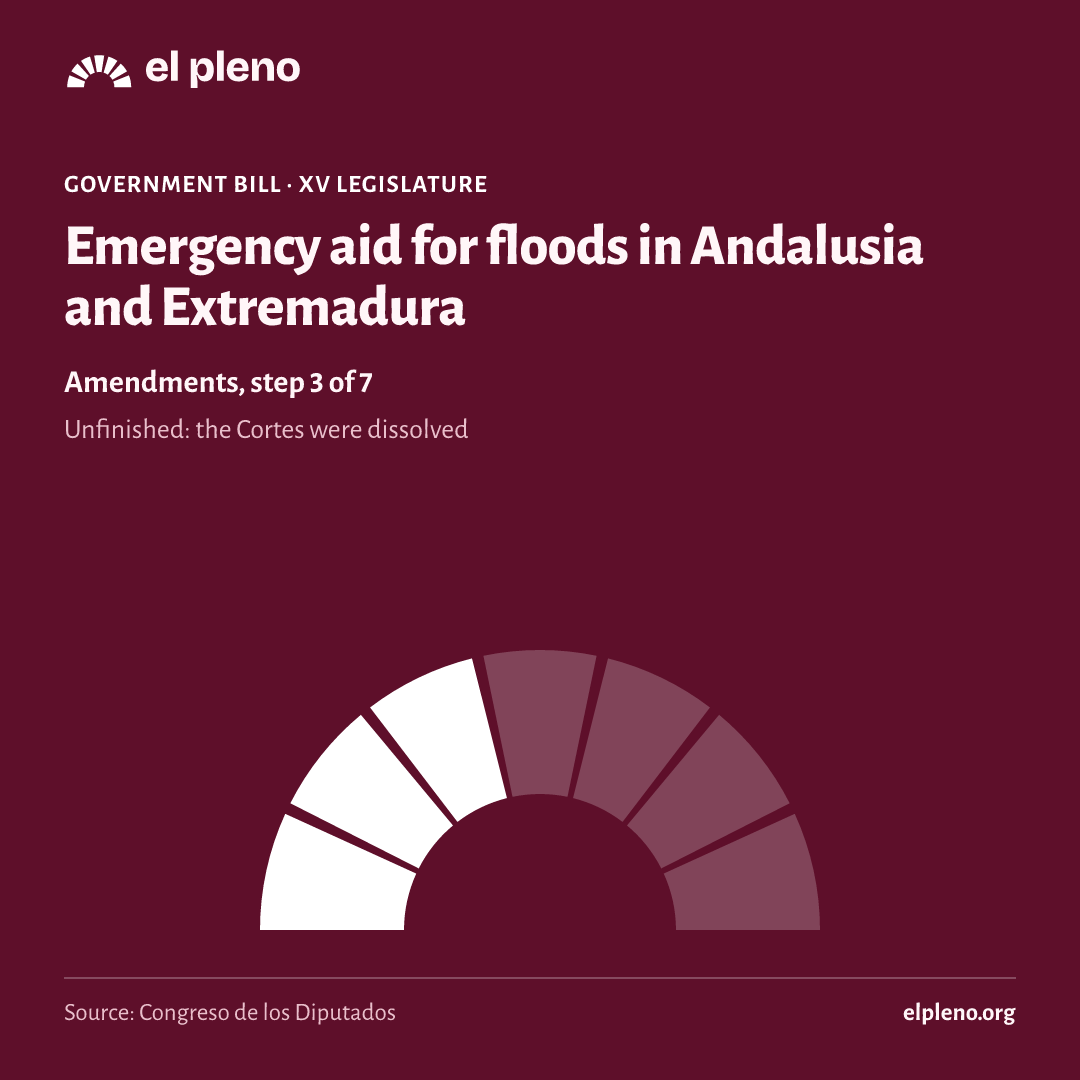
It took 3 of 7 steps. It reached Amendments, and today it is lapsed.
- Introduced18 March 2026Someone registers the text in the Congreso.
- Admitted24 March 2026The Bureau of the Congreso accepts it and, for a members’ bill, the plenary decides whether to consider it.
- Amendments27 March 2026Groups propose changes.
- Committeenot reachedA committee goes through the text in detail.
- Plenarynot reachedAll 350 deputies vote.
- Senatenot reachedThe Senate can pass it, amend it or veto it.
- BOEnot reachedIt is published in the Official State Gazette (BOE) and comes into force.
See the 5 official steps on a timeline
Was there a plenary vote?
We have no plenary vote linked to this law in the Congreso’s data.
What happens next
What happens now?
The legislature ended before it finished. To go on, someone would have to introduce it again in the new Cortes.
Sources
Where does all this come from?
- Congreso de los Diputados, file 121/000089
Official title, type, author, dates and stage.
Retrieved 11 November 2026
- Congreso de los Diputados, procedure
The date of each step, with its official wording.
Retrieved 12 November 2026
- The data comes from the open files of the Congreso, the Senate and the BOE, unaltered.
- Each deputy’s province is the one of their seat on the day of the vote.
- We never say “passed” because of a vote: the files do not say which majority was needed.