What it is
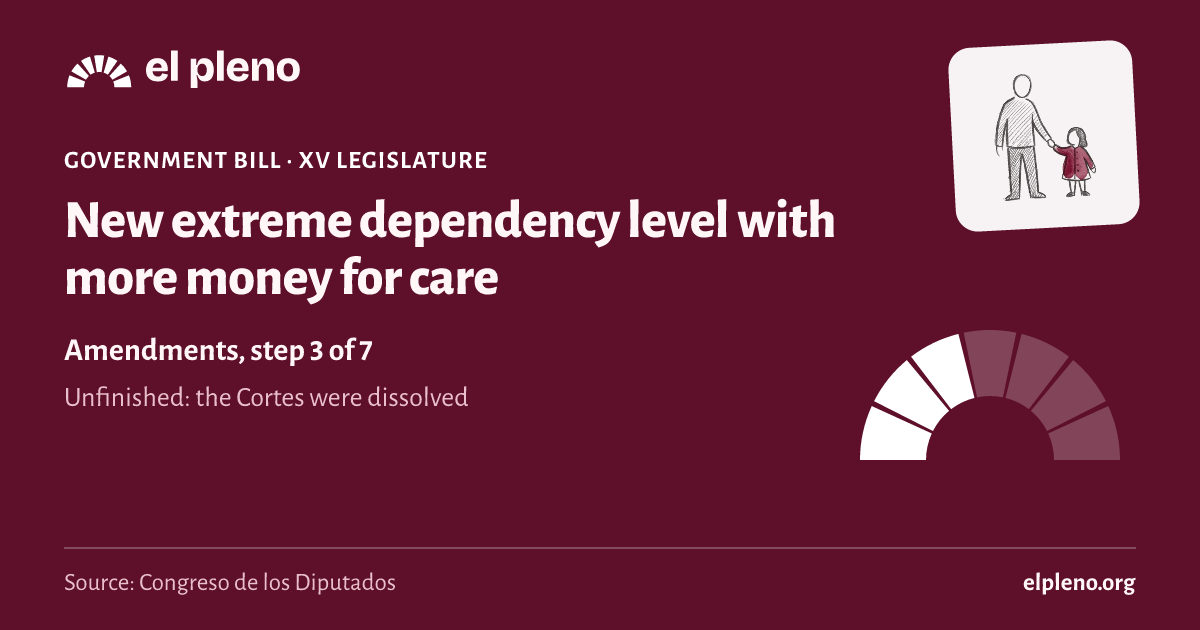
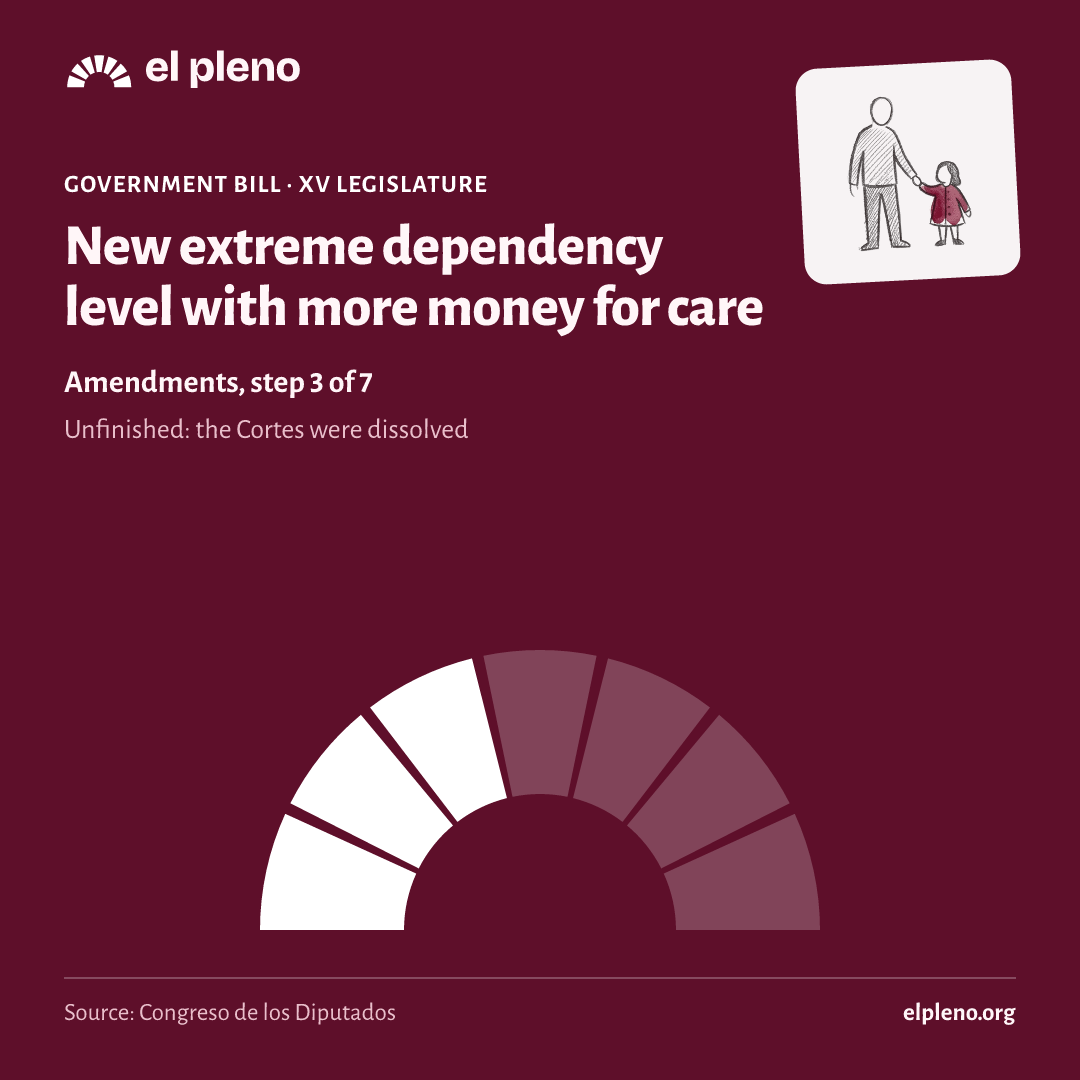
New extreme dependency level with more money for care
Amendments step 3 of 7· LapsedIt is a government bill. Introduced by the Government. It was introduced on 19 November 2025. Introduced by: Gobierno.
Official title: Government bill establishing measures for the strengthening of the System for Autonomy and Care for Dependence and fulfilling the obligations established in Law 3/2024, of October 30, to improve the quality of life of persons with Amyotrophic Lateral Sclerosis and other high-complexity diseases or irreversible processes (originating from Royal Decree-Law 11/2025, of October 21).
Source: Congreso de los Diputados, file 121/000076· updated 11 Nov
Automatic summary, not yet reviewed
- The bill would create a new Grado III+ (extreme dependency level) for people with ALS or other serious, irreversible illnesses who already have the Grado III dependency level recognized.
- This new level would carry a minimum protection amount guaranteed by the State of €4,930 per month per beneficiary.
- The bill would raise to €9,859 the maximum amounts of the economic benefit tied to home help and of the personal assistance benefit for people in Grado III+.
- It would grant budget supplements to the Ministry of Social Rights: €379 million for the guaranteed minimum in dependency care and €121 million for the agreed level.
- The additional distribution of these funds to the autonomous communities would follow special, faster rules, skipping some usual steps under budget law.
- Home care services would stop being eligible for the grant under Royal Decree 667/2025 once they are effectively covered by the dependency system, and any refund in that case would be exempt from late payment interest.
Who it affects
- People with ALS or other high-complexity, irreversible illnesses with a recognized Grado III dependency level: They could access the new Grado III+ level and its economic benefits.
- Families and caregivers of these patients: They would have more financial support for home care and 24-hour supervision.
- Autonomous communities: They would receive additional State funds under a special distribution procedure.
- Beneficiaries of the grant to the National Consortium of ALS Entities (ConELA): They would no longer be able to use the grant for certain services once the dependency system covers them.
Words worth knowing
- SAAD
- Sistema para la Autonomía y Atención a la Dependencia: Spain's public system of benefits and services for people in situations of dependency.
- Prestación económica vinculada al servicio
- Money the State gives so the person can hire a specific service, in this case home help.
- Nivel mínimo de protección garantizado
- Minimum amount of money the State guarantees for each beneficiary of the dependency system.
- Nivel convenido
- Part of dependency funding the State contributes beyond the guaranteed minimum, under an agreement with the autonomous communities.
- Disfagia
- Difficulty swallowing food or liquids.
It summarizes the text as it was introduced. It is written by artificial intelligence and may contain mistakes: the official text is what counts. Read the official text · How we make summaries
Where it stands
How far did it get?
It took 3 of 7 steps. It reached Amendments, and today it is lapsed.
- Introduced19 November 2025Someone registers the text in the Congreso.
- Admitted25 November 2025The Bureau of the Congreso accepts it and, for a members’ bill, the plenary decides whether to consider it.
- Amendments28 November 2025Groups propose changes.
- Committeenot reachedA committee goes through the text in detail.
- Plenarynot reachedAll 350 deputies vote.
- Senatenot reachedThe Senate can pass it, amend it or veto it.
- BOEnot reachedIt is published in the Official State Gazette (BOE) and comes into force.
See the 5 official steps on a timeline
Was there a plenary vote?
We have no plenary vote linked to this law in the Congreso’s data.
What happens next
What happens now?
The legislature ended before it finished. To go on, someone would have to introduce it again in the new Cortes.
Sources
Where does all this come from?
- Congreso de los Diputados, file 121/000076
Official title, type, author, dates and stage.
Retrieved 11 November 2026
- Congreso de los Diputados, procedure
The date of each step, with its official wording.
Retrieved 12 November 2026
- The data comes from the open files of the Congreso, the Senate and the BOE, unaltered.
- Each deputy’s province is the one of their seat on the day of the vote.
- We never say “passed” because of a vote: the files do not say which majority was needed.