What it is
Bill would extend 2025 electric car purchase incentives
Amendments step 3 of 7· LapsedIt is a government bill. Introduced by the Government. It was introduced on 10 April 2025. Introduced by: Gobierno.
Official title: Government bill establishing the program of incentives linked to electric mobility (MOVES III) for the year 2025 (originating from Royal Decree-Law 3/2025, of April 1).
Source: Congreso de los Diputados, file 121/000056· updated 11 Nov
Automatic summary, not yet reviewed
- The bill would keep the MOVES III electric mobility incentive program running through 2025, in force from January 1 to December 31, 2025. The grants go to the autonomous communities and the cities of Ceuta and Melilla.
- Applications could cover actions carried out from January 1, 2025, even before the rule takes effect. In other words, the program would work retroactively.
- The 2025 program would be funded with €400,000,000, channeled through the Institute for Diversification and Saving of Energy (IDAE) through an extraordinary credit.
- Applications filed in 2025 would have until December 31, 2026 to justify the work. The autonomous communities could shorten that deadline, and for grants under €100,000 a simplified justification report could be used.
- The bill would extend for one more year, until December 31, 2025, the 15% income tax deduction for buying a new electric vehicle (with a maximum base of €20,000) or for installing a charging point (with a maximum of €4,000 per year).
Who it affects
- People who want to buy an electric vehicle or install a charging point in 2025: They could apply for MOVES III grants and claim the 15% income tax deduction.
- Autonomous communities and the cities of Ceuta and Melilla: They would manage the grants, adapt their calls, and could set shorter justification deadlines.
- Electric vehicle dealers and sellers: They would have information duties to be set out by regulation.
Words worth knowing
- Cuenta justificativa simplificada
- A simpler way to show how the grant money was spent, allowed for grants under €100,000.
- Real decreto-ley
- A rule the Government can pass on an urgent basis; the Congress of Deputies must later validate it and process it as a law.
- Deducción en el IRPF
- An amount subtracted from the Spanish income tax owed for certain expenses, such as buying an electric car.
It summarizes the text as it was introduced. It is written by artificial intelligence and may contain mistakes: the official text is what counts. Read the official text · How we make summaries
Where it stands
How far did it get?
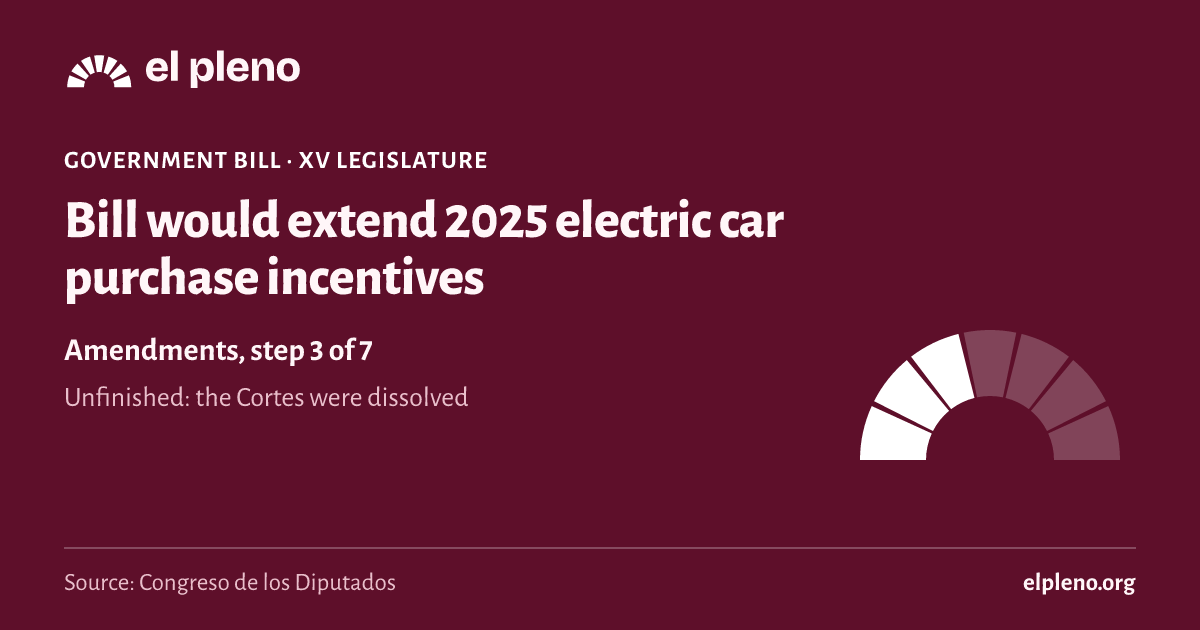
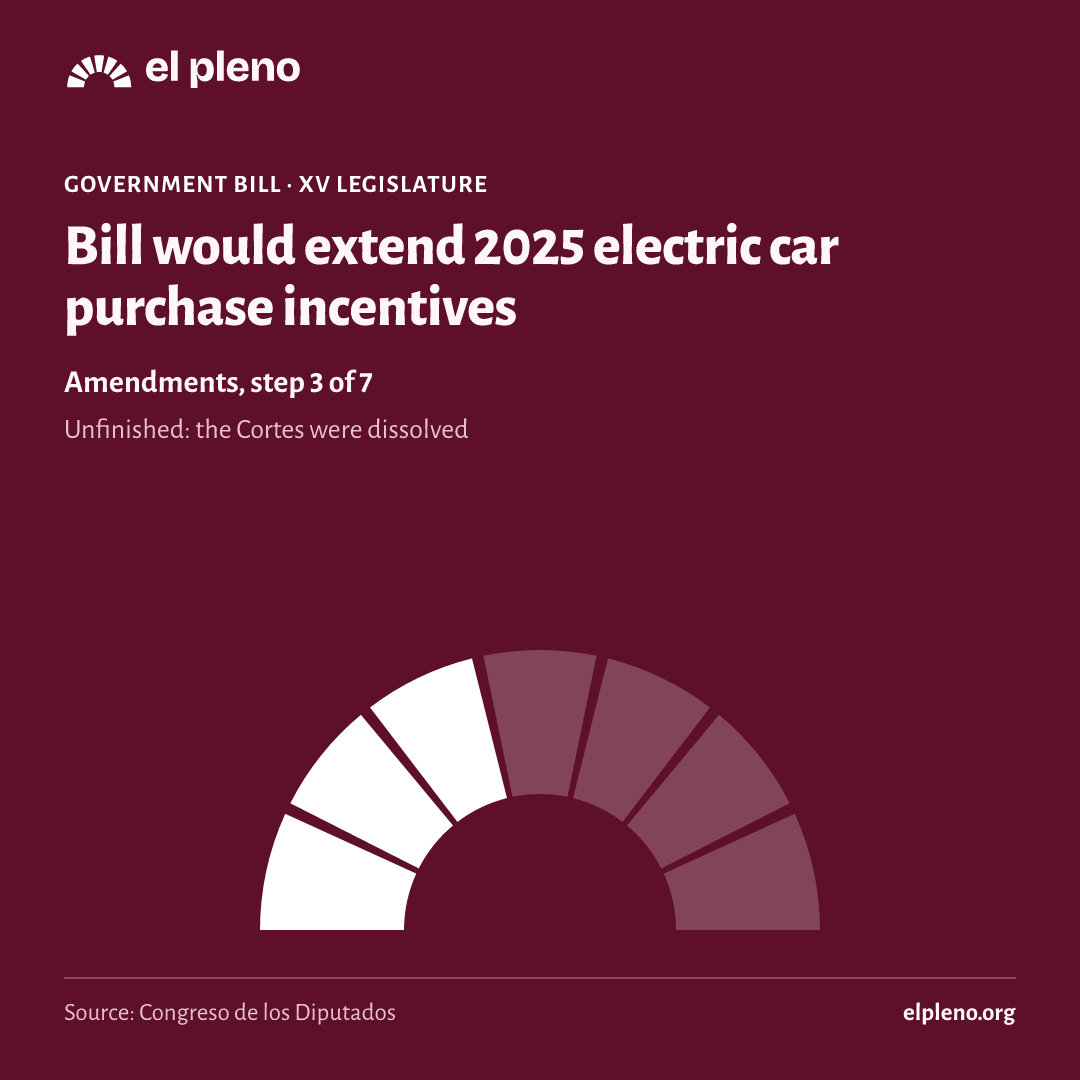
It took 3 of 7 steps. It reached Amendments, and today it is lapsed.
- Introduced10 April 2025Someone registers the text in the Congreso.
- Admitted6 May 2025The Bureau of the Congreso accepts it and, for a members’ bill, the plenary decides whether to consider it.
- Amendments9 May 2025Groups propose changes.
- Committeenot reachedA committee goes through the text in detail.
- Plenarynot reachedAll 350 deputies vote.
- Senatenot reachedThe Senate can pass it, amend it or veto it.
- BOEnot reachedIt is published in the Official State Gazette (BOE) and comes into force.
See the 5 official steps on a timeline
Was there a plenary vote?
We have no plenary vote linked to this law in the Congreso’s data.
What happens next
What happens now?
The legislature ended before it finished. To go on, someone would have to introduce it again in the new Cortes.
Sources
Where does all this come from?
- Congreso de los Diputados, file 121/000056
Official title, type, author, dates and stage.
Retrieved 11 November 2026
- Congreso de los Diputados, procedure
The date of each step, with its official wording.
Retrieved 12 November 2026
- The data comes from the open files of the Congreso, the Senate and the BOE, unaltered.
- Each deputy’s province is the one of their seat on the day of the vote.
- We never say “passed” because of a vote: the files do not say which majority was needed.