What it is
Proposal to give riverbed cleaning to the basin authorities
It is a members’ bill. Introduced by parliamentary groups, the Senate, regional governments or citizens. It was introduced on 23 February 2023. Introduced by: Grupo Parlamentario Ciudadanos.
Official title: Private member's bill for the full attribution of the competences for the conservation, maintenance and cleaning of public watercourses to the Hydrographic Confederations.
Source: Congreso de los Diputados, file 122/000309· updated 11 Nov
Automatic summary, not yet reviewed
- The bill would amend the National Hydrological Plan Law so that conservation, maintenance and cleaning of public riverbeds would be handled by the corresponding river basin authority (Confederación hidrográfica Public body that manages the waters and rivers of a basin.), not by town councils.
- It would also amend the Water Law to add the conservation, maintenance and cleaning of riverbeds in their basin to the duties of the basin organizations.
- If a town council or other administration already cleans riverbeds under a contract with third parties, it could keep doing so until that contract ends.
- The explanatory statement says the current law assigns this task based on whether the riverbed runs through an 'urban zone', a concept with no clear legal definition, which causes conflicts and inaction between administrations.
Who it affects
- Town councils (ayuntamientos): They would no longer have to clean urban stretches of rivers, a costly and risky task.
- River basin authorities (confederaciones hidrográficas): They would take over cleaning all riverbeds in their basin, with budgeted funding.
- Companies hired by town councils: Existing contracts would continue until they end.
Words worth knowing
- Confederación hidrográfica
- Public body that manages the waters and rivers of a basin.
- Cauce público
- Public riverbed: the space where river water flows, permanently or occasionally, including its banks.
- Dominio público hidráulico
- Set of public assets made up of waters, riverbeds and their margins.
- Conflicto negativo de competencias
- Situation where several administrations pass the responsibility to each other and none acts.
It summarizes the text as it was introduced. It is written by artificial intelligence and may contain mistakes: the official text is what counts. Read the official text · How we make summaries
Where it stands
How far did it get?
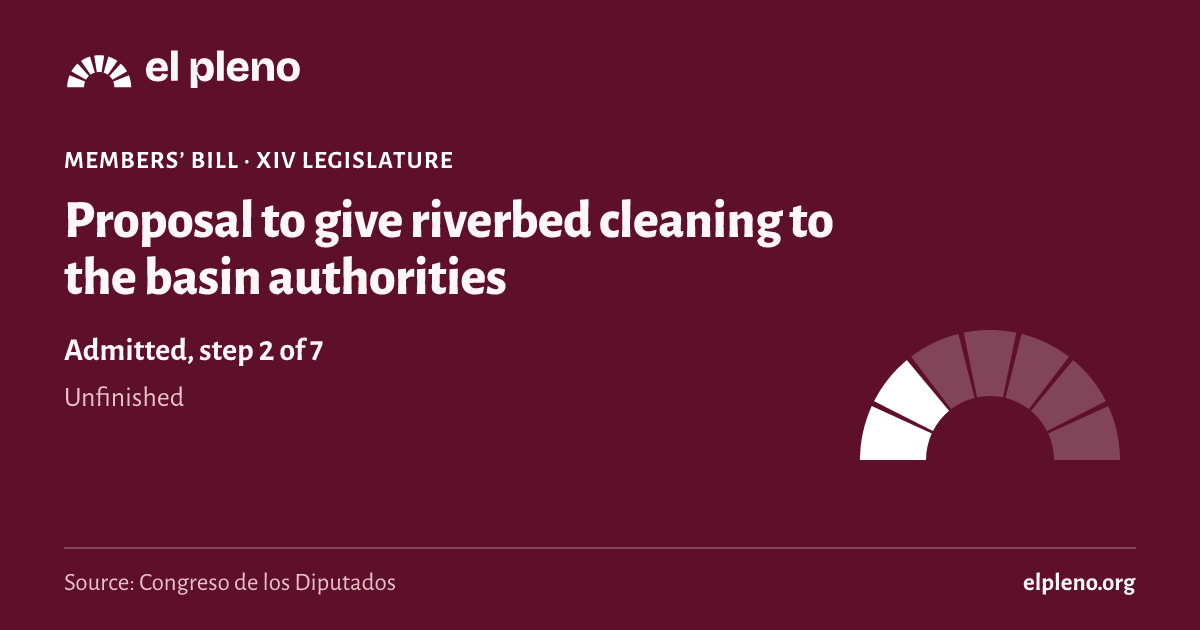
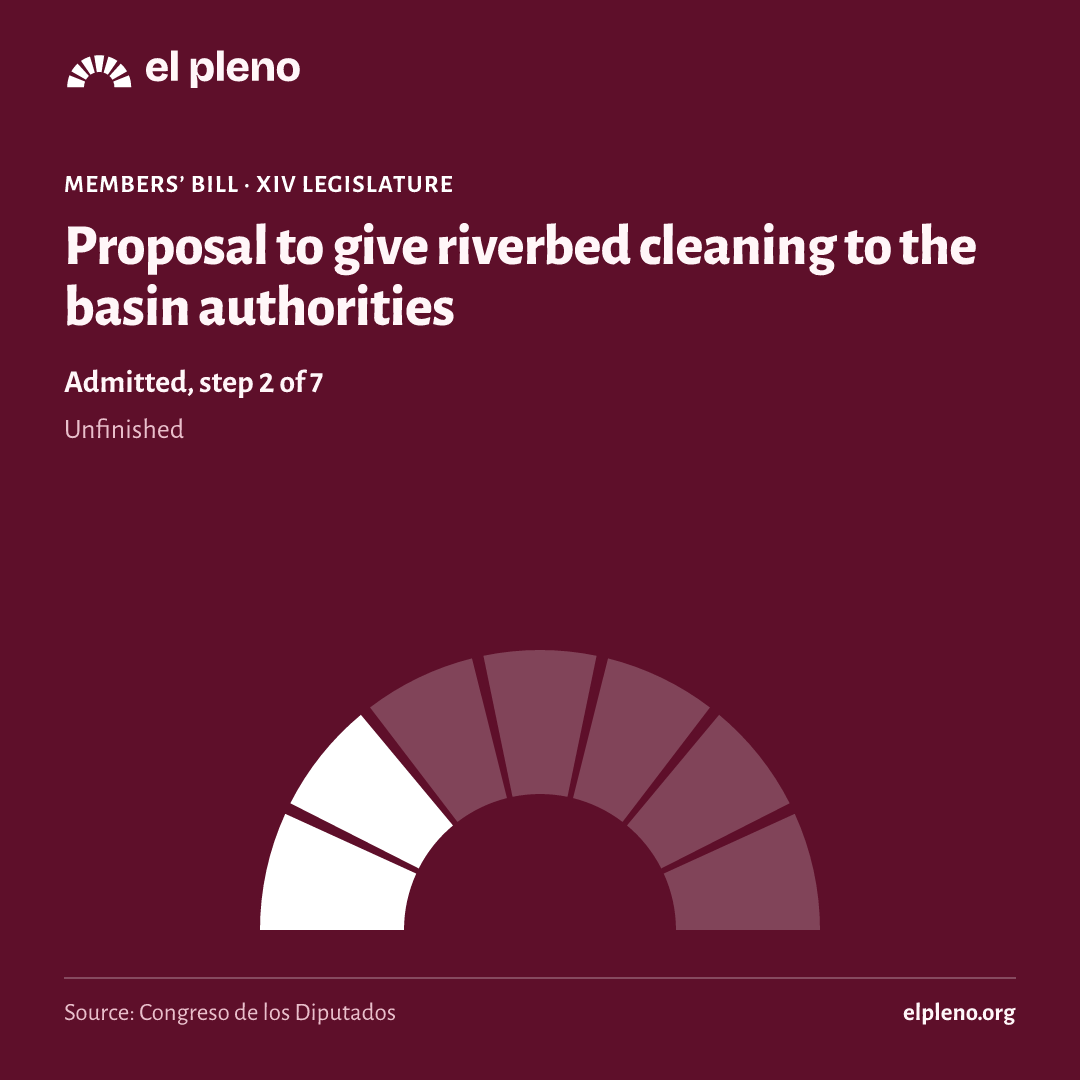
It took 2 of 7 steps. It reached Admitted, and today it is unfinished.
- Introduced23 February 2023Someone registers the text in the Congreso.
- Admitted28 February 2023The Bureau of the Congreso accepts it and, for a members’ bill, the plenary decides whether to consider it.
- Amendmentsnot reachedGroups propose changes.
- Committeenot reachedA committee goes through the text in detail.
- Plenarynot reachedAll 350 deputies vote.
- Senatenot reachedThe Senate can pass it, amend it or veto it.
- BOEnot reachedIt is published in the Official State Gazette (BOE) and comes into force.
See the 6 official steps on a timeline
Was there a plenary vote?
We have no plenary vote linked to this law in the Congreso’s data.
What happens next
What happens now?
The legislature ended before it finished. To go on, someone would have to introduce it again in the new Cortes.
It has not been presented again yet.
Sources
Where does all this come from?
- Congreso de los Diputados, file 122/000309
Official title, type, author, dates and stage.
Retrieved 11 November 2026
- The data comes from the open files of the Congreso, the Senate and the BOE, unaltered.
- Each deputy’s province is the one of their seat on the day of the vote.
- We only say “passed” or “rejected” when the majority needed is certain; otherwise we say which side had more votes.