What it is
Proposal to soften Spain's packaging waste law
It is a members’ bill. Introduced by parliamentary groups, the Senate, regional governments or citizens. It was introduced on 12 December 2022. Introduced by: Grupo Parlamentario Popular en el Congreso.
Official title: Private member's bill regarding the sustainability of packaging management and their waste.
Source: Congreso de los Diputados, file 122/000281· updated 11 Nov
Automatic summary, not yet reviewed
- The Popular Party introduces a bill to amend Law 7/2022 on waste and contaminated soils, aiming to cut costs and provide legal certainty for companies and consumers. It is not an approved law, just a text filed in Congress.
- It defines which packaging counts as recyclable and requires analyzing life cycle, costs and carbon footprint before approving prevention measures, so they are proportionate and viable.
- It relaxes waste reduction and plastic bottle targets: waste reduction becomes 13% by 2025 and 15% by 2030, and separate collection of plastic bottles is set at 70% in 2023, reaching 90% in 2029. It also bans measures to reduce consumption of single-use drink bottles.
- It softens the single-use plastic reduction calendar (30% by 2026 and 50% by 2030 compared to 2022) and makes minimum recycled plastic percentages in bottles conditional on having enough quality material, referring to EU rules.
- It limits the tax on non-reusable plastic packaging: it exempts compostable packaging certified under standard UNE EN 13432 and packaging made of plastic from renewable sources, and clarifies that only packaging where plastic is the main component is taxed.
- It adds two transitional provisions linking recycling and reuse targets to the future revision of the EU packaging directive, to preserve the single market. The law would take effect the day after its publication in the official state gazette (BOE).
Who it affects
- Companies that make or use packaging: They would get clearer recyclability definitions, fewer cost obligations and exemptions from the plastic tax.
- Consumers: The goal is to avoid cost increases that would be passed on to the shopping basket.
- Producers of plastic-containing products: Their financial contribution would be limited to the costs needed to meet waste management targets.
- Public administrations: They would need to coordinate food waste prevention programs, and the Government could issue regulations to apply the law.
Words worth knowing
- Economía circular (circular economy)
- An economic model that seeks to reuse and recycle materials instead of throwing them away, to make the most of them.
- Responsabilidad ampliada del productor (extended producer responsibility)
- The duty of whoever makes or sells a product to cover the costs of managing its waste at the end of its useful life.
- Directiva europea (EU directive)
- An EU rule setting goals that each country must incorporate into its own legislation.
- Transposición (transposition)
- The process of incorporating an EU directive into Spanish law.
- Proposición de ley (bill introduced by lawmakers)
- A text in the form of a law introduced by parliamentary groups (not the Government) that still must go through Congress.
It summarizes the text as it was introduced. It is written by artificial intelligence and may contain mistakes: the official text is what counts. Read the official text · How we make summaries
Where it stands
How far did it get?
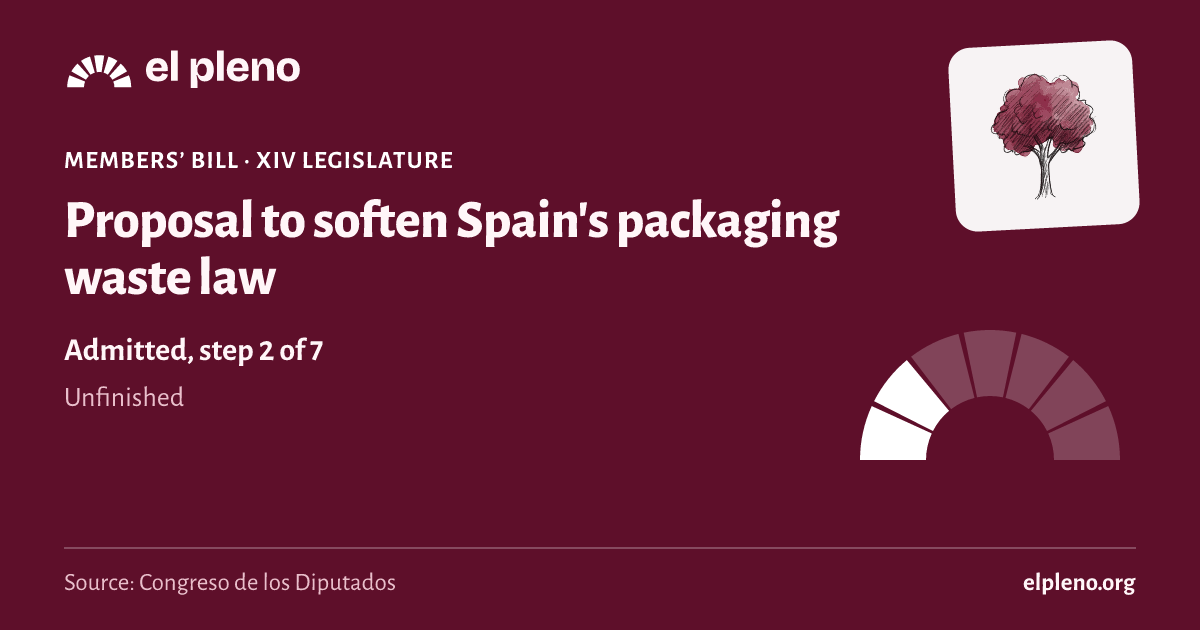
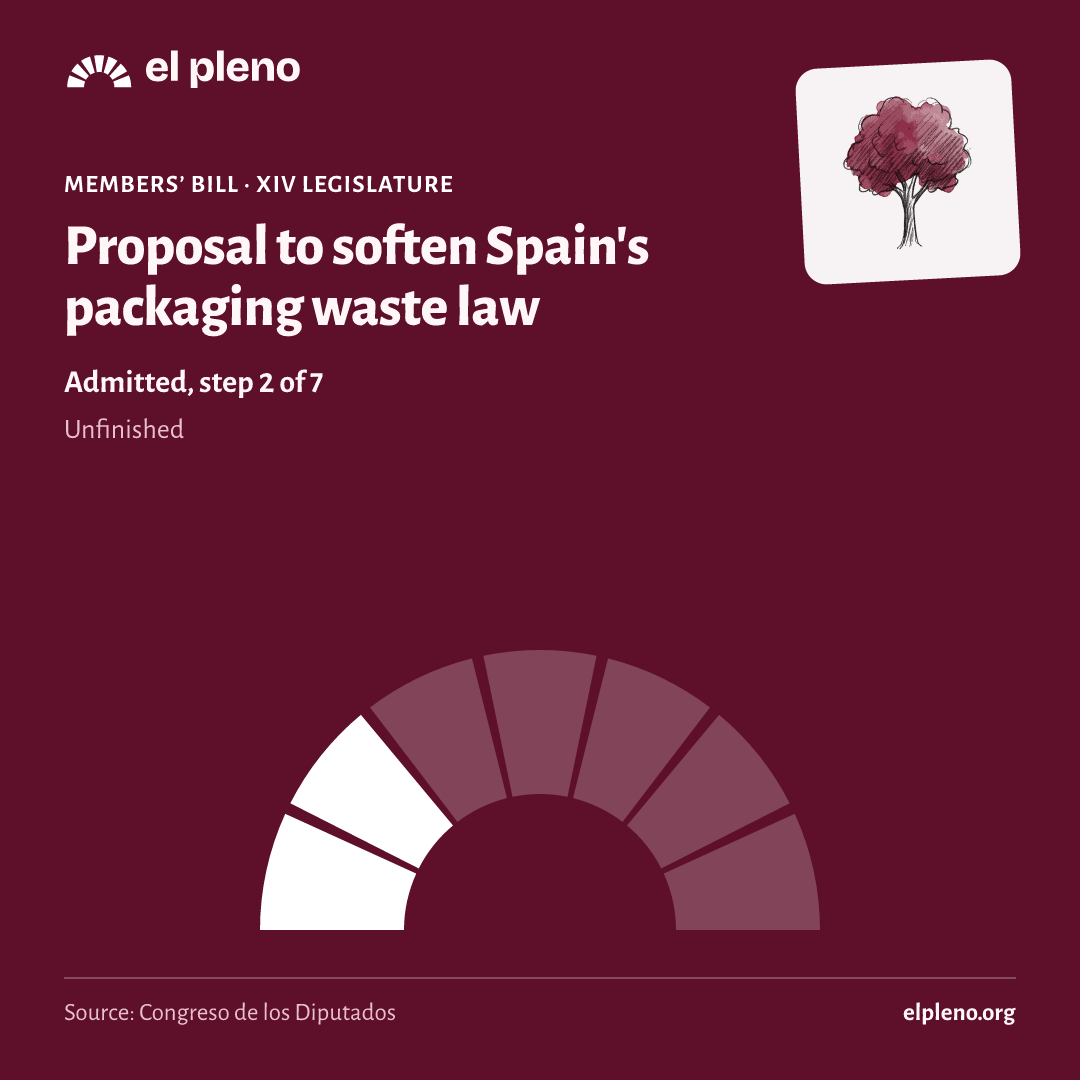
It took 2 of 7 steps. It reached Admitted, and today it is unfinished.
- Introduced12 December 2022Someone registers the text in the Congreso.
- Admitted20 December 2022The Bureau of the Congreso accepts it and, for a members’ bill, the plenary decides whether to consider it.
- Amendmentsnot reachedGroups propose changes.
- Committeenot reachedA committee goes through the text in detail.
- Plenarynot reachedAll 350 deputies vote.
- Senatenot reachedThe Senate can pass it, amend it or veto it.
- BOEnot reachedIt is published in the Official State Gazette (BOE) and comes into force.
See the 6 official steps on a timeline
Was there a plenary vote?
We have no plenary vote linked to this law in the Congreso’s data.
What happens next
What happens now?
The legislature ended before it finished. To go on, someone would have to introduce it again in the new Cortes.
It has not been presented again yet.
Sources
Where does all this come from?
- Congreso de los Diputados, file 122/000281
Official title, type, author, dates and stage.
Retrieved 11 November 2026
- The data comes from the open files of the Congreso, the Senate and the BOE, unaltered.
- Each deputy’s province is the one of their seat on the day of the vote.
- We only say “passed” or “rejected” when the majority needed is certain; otherwise we say which side had more votes.