What it is
Proposal to change visas, asylum and taxes for foreigners
It is a members’ bill. Introduced by parliamentary groups, the Senate, regional governments or citizens. It was introduced on 30 November 2022. Introduced by: Grupo Parlamentario Ciudadanos.
Official title: Private member's bill for a humane, effective, and responsible migration management.
Source: Congreso de los Diputados, file 122/000277· updated 11 Nov
Automatic summary, not yet reviewed
- The bill would create new visa types, such as a humanitarian visa for nationals of countries in conflict or humanitarian crisis, granted by the Council of Ministers, plus research, innovation and startup visas.
- It would set up a points-based visa system: applicants must meet minimum requirements for education, language and work experience, and are then scored on criteria such as a job offer or knowledge of Spanish, with a maximum of 100 points and a minimum annual score set by the Government.
- It would reform family reunification and residence and work permits: unmarried partners would be treated like spouses, initial permits would be valid nationwide, and controls on the housing and conditions of seasonal workers would be strengthened.
- On asylum, it would allow applications for international protection at Spanish embassies and consulates abroad, set a maximum three-month processing period, extendable, and provide that if six months pass due to the Administration's delay, the application is deemed approved.
- It would extend the special tax regime for workers relocated to Spain to highly qualified professionals, entrepreneurs and investors coming to start a business or make a significant investment, and would allow their spouse, registered partner and family to join the regime.
- The Government would have six months to issue the regulatory rules needed to apply the law, which would take effect the day after its publication in the Official State Gazette.
Who it affects
- Foreigners who want to come to Spain to work, start a business or do research, who would have to go through the new points-based visa system.: They would need to prove education, language skills and experience and reach the annual minimum score.
- Nationals of countries in conflict or humanitarian crisis, who could apply for the new humanitarian visa.: It would depend on a Council of Ministers decision and on having no criminal record or entry ban.
- Asylum seekers, both in Spain and abroad.: They could apply at embassies and consulates and would benefit from maximum processing deadlines.
- Foreign seasonal workers.: Controls on their housing and hygiene conditions would be strengthened.
- Foreign highly qualified professionals, entrepreneurs and investors moving to Spain.: They could opt into a special tax regime and extend it to their family.
Words worth knowing
- Reagrupación familiar (family reunification)
- Process by which a foreign resident in Spain can bring over certain family members, such as a spouse, children or parents.
- Protección internacional (international protection)
- Protection Spain grants to people fleeing their country due to persecution or serious harm; it includes asylum and subsidiary protection.
- Silencio administrativo (administrative silence)
- Situation where the Administration does not answer within the deadline; the law may then deem the application approved or denied.
- Régimen fiscal especial (special tax regime)
- Tax rules different from the general ones, here allowing certain newcomers to be taxed as non-residents for a few years.
- Situación nacional de empleo (national employment situation)
- Official analysis of which jobs are in short supply in Spain, used to decide whether a foreign worker can be hired.
It summarizes the text as it was introduced. It is written by artificial intelligence and may contain mistakes: the official text is what counts. Read the official text · How we make summaries
Where it stands
How far did it get?
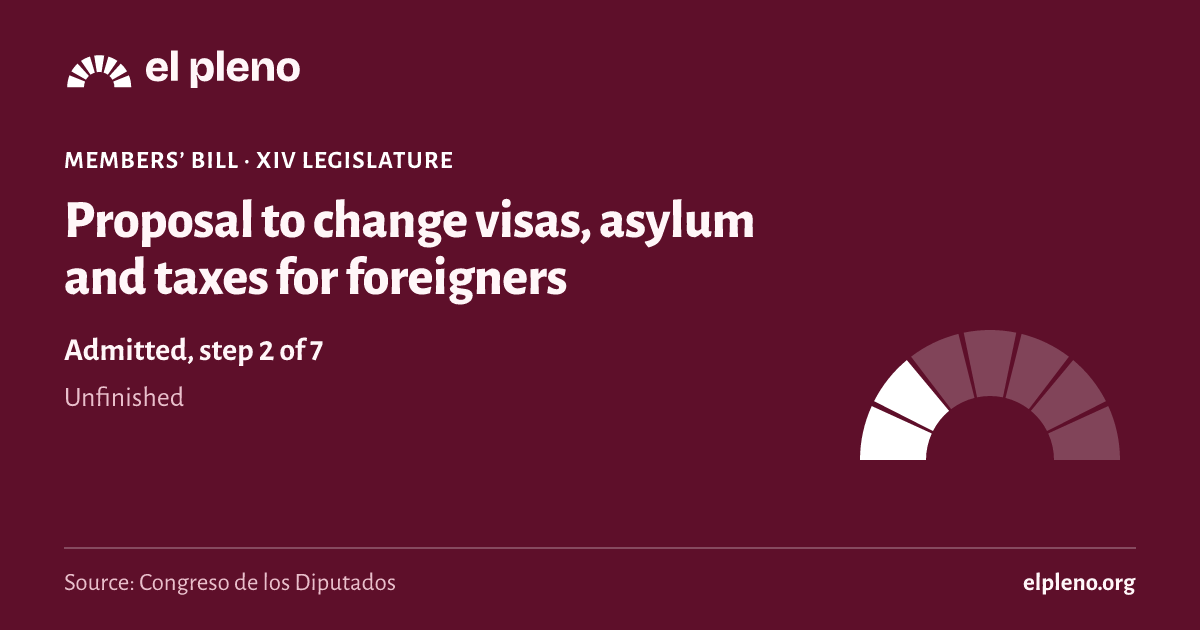
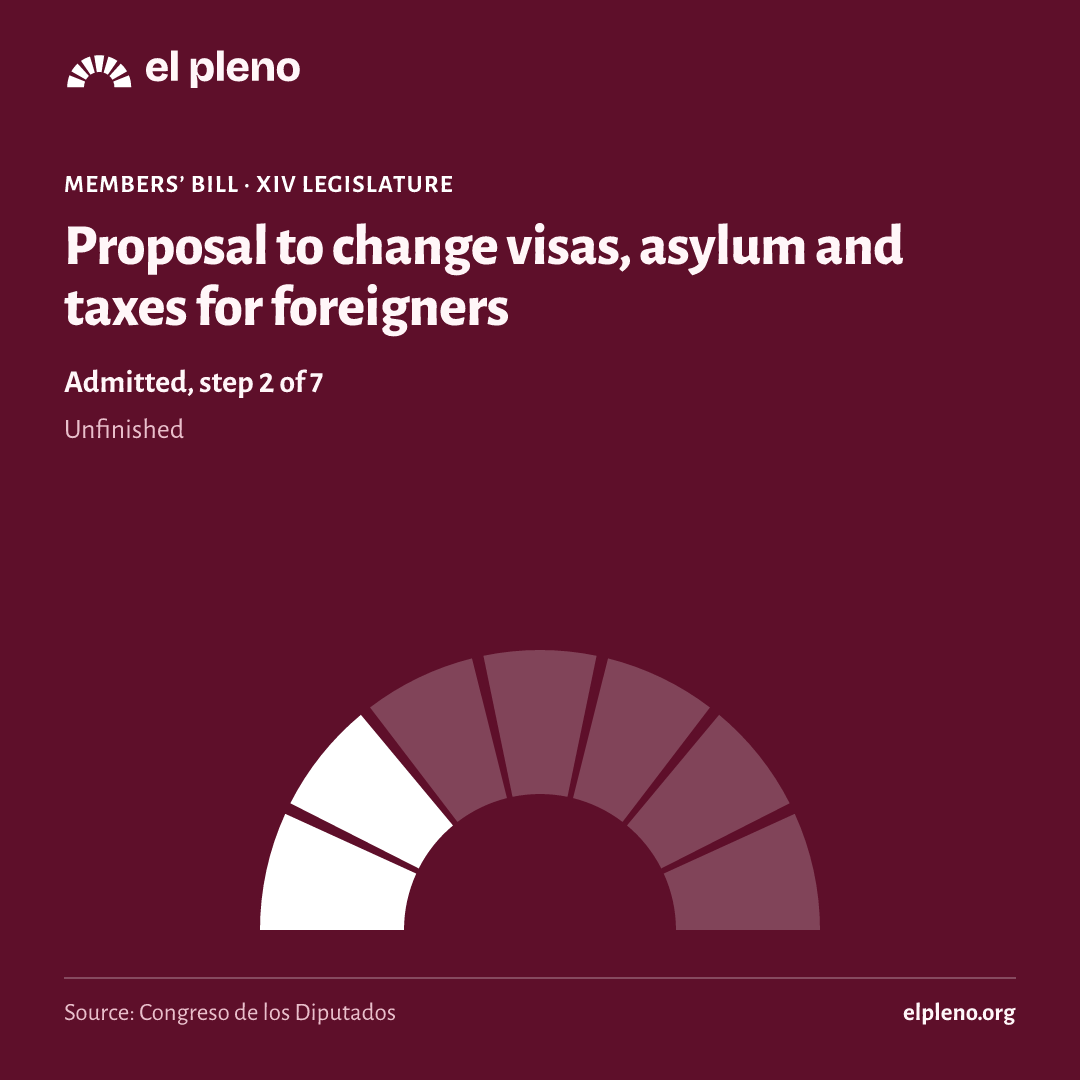
It took 2 of 7 steps. It reached Admitted, and today it is unfinished.
- Introduced30 November 2022Someone registers the text in the Congreso.
- Admitted5 December 2022The Bureau of the Congreso accepts it and, for a members’ bill, the plenary decides whether to consider it.
- Amendmentsnot reachedGroups propose changes.
- Committeenot reachedA committee goes through the text in detail.
- Plenarynot reachedAll 350 deputies vote.
- Senatenot reachedThe Senate can pass it, amend it or veto it.
- BOEnot reachedIt is published in the Official State Gazette (BOE) and comes into force.
See the 7 official steps on a timeline
Was there a plenary vote?
We have no plenary vote linked to this law in the Congreso’s data.
What happens next
What happens now?
The legislature ended before it finished. To go on, someone would have to introduce it again in the new Cortes.
It has not been presented again yet.
The same initiative in the other chamber:
- XIV Legislature, Senate Private member's bill for a humane, effective, and responsible migration management.
Sources
Where does all this come from?
- Congreso de los Diputados, file 122/000277
Official title, type, author, dates and stage.
Retrieved 11 November 2026
- The data comes from the open files of the Congreso, the Senate and the BOE, unaltered.
- Each deputy’s province is the one of their seat on the day of the vote.
- We only say “passed” or “rejected” when the majority needed is certain; otherwise we say which side had more votes.