What it is
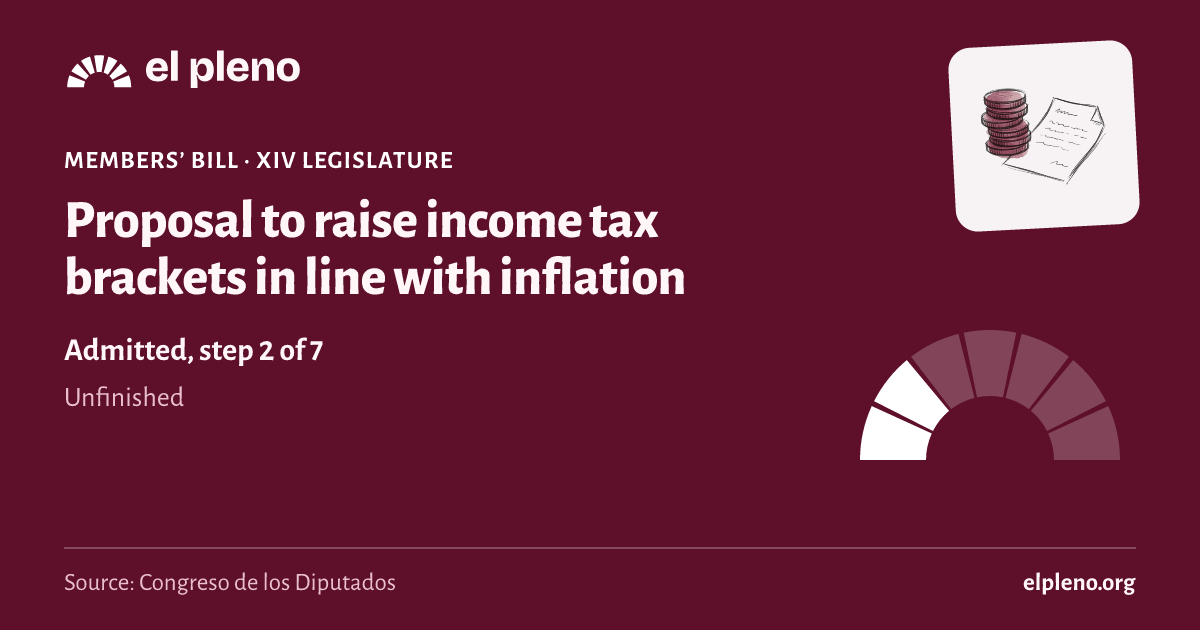
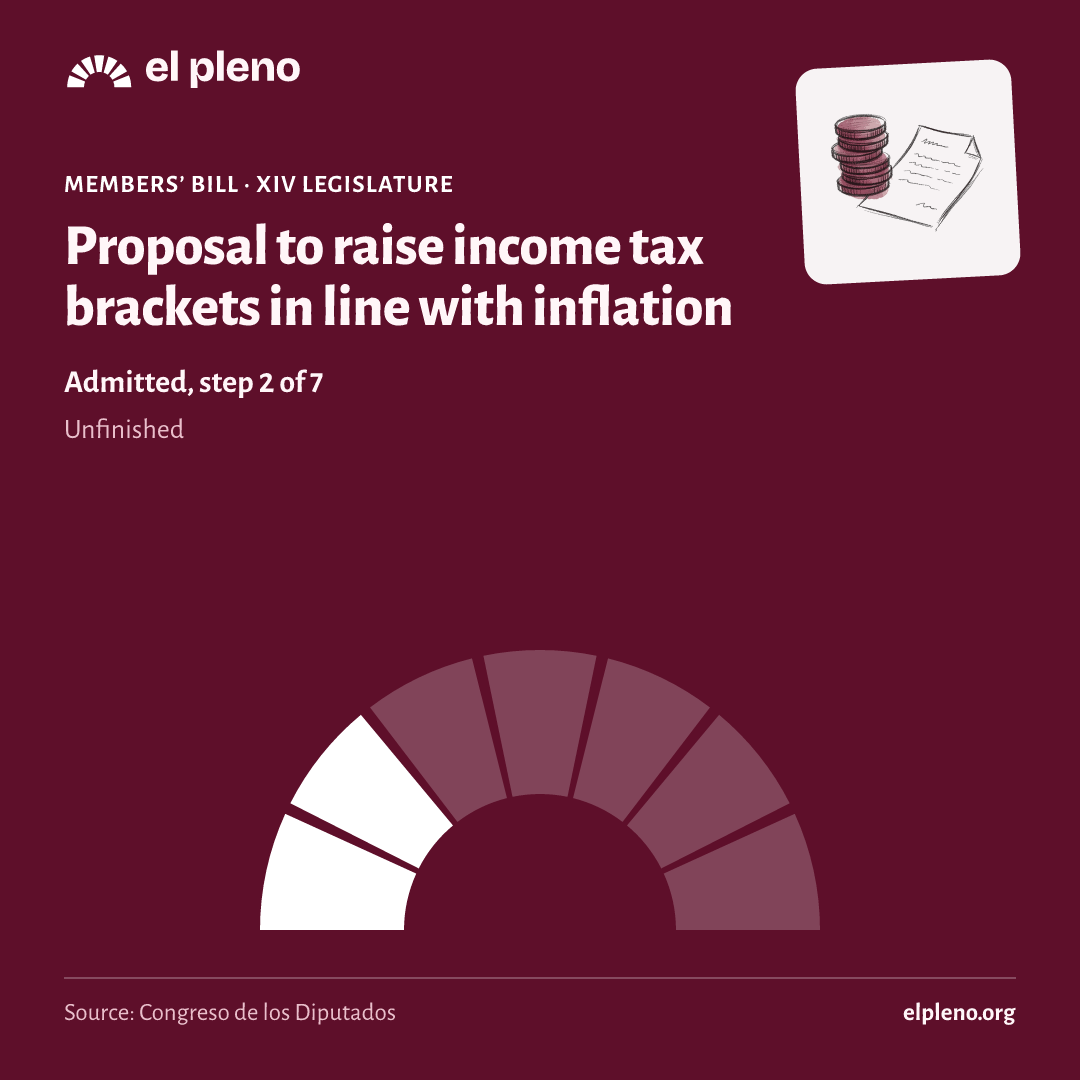
Proposal to raise income tax The personal income tax (IRPF in Spain): what people pay on what they earn from work, business or savings. brackets in line with inflation
It is a members’ bill. Introduced by parliamentary groups, the Senate, regional governments or citizens. It was introduced on 24 March 2022. Introduced by: Grupo Parlamentario Popular en el Congreso.
Official title: Private member's bill for the update of the Personal Income Tax to inflation.
Source: Congreso de los Diputados, file 122/000207· updated 11 Nov
Automatic summary, not yet reviewed
- This is a bill introduced by the Popular Party group in the Congress of Deputies, admitted for processing on March 30, 2022. It is not an approved law.
- The bill would update personal income tax (IRPF) for inflation accumulated since 2015, set at 12.8% according to the INE, so that tax revenue does not rise only because of higher prices. It adjusts reductions, minimums, brackets, deductions, filing thresholds and withholdings.
- It raises the amounts of the reductions for employment income and for self-employed activity, and updates the personal and family minimums: for children, ascendants and disability.
- It updates the tax scales: the general state scale, the one for residents abroad, the savings scale and the one used for the regional tax. It also updates the scale for the special regime for relocated workers.
- It updates deductions from the final tax (maternity, large families, dependents with disabilities) and the reductions for joint filing, which would rise to 3,835 and 2,425 euros per year depending on the family unit type.
- It raises the income thresholds that trigger the duty to file a tax return and updates the scale used to calculate withholdings. The law would take effect the day after its publication in the official state gazette, except measures with budget impact.
Who it affects
- Employees and self-employed people: Would pay less income tax, with reductions and brackets updated for inflation.
- Families with children, ascendants or dependents with disabilities: Would get higher minimums and deductions.
- People taxed on savings income: Updated brackets would apply to them.
- People who currently do not file because they are below the thresholds: The thresholds would rise, so some would no longer have to file.
Words worth knowing
- Deflactar (inflation adjustment)
- Adjusting tax figures for price increases, so inflation does not make people pay more.
- Mínimo personal y familiar (personal and family minimum)
- Part of your income that is not taxed, based on situations like having children or a disability.
- Cuota diferencial (final tax balance)
- What you still owe (or get back) on your tax return after withholdings and deductions.
- Retenciones a cuenta (withholdings)
- Money your employer or payer advances to the tax agency from each paycheck or invoice, on account of income tax.
- Tributación conjunta (joint filing)
- Filing one income tax return for the whole family unit, for example a couple and their children.
- income tax
- The personal income tax (IRPF in Spain): what people pay on what they earn from work, business or savings.
It summarizes the text as it was introduced. It is written by artificial intelligence and may contain mistakes: the official text is what counts. Read the official text · How we make summaries
Where it stands
How far did it get?
It took 2 of 7 steps. It reached Admitted, and today it is unfinished.
- Introduced24 March 2022Someone registers the text in the Congreso.
- Admitted30 March 2022The Bureau of the Congreso accepts it and, for a members’ bill, the plenary decides whether to consider it.
- Amendmentsnot reachedGroups propose changes.
- Committeenot reachedA committee goes through the text in detail.
- Plenarynot reachedAll 350 deputies vote.
- Senatenot reachedThe Senate can pass it, amend it or veto it.
- BOEnot reachedIt is published in the Official State Gazette (BOE) and comes into force.
See the 6 official steps on a timeline
Was there a plenary vote?
We have no plenary vote linked to this law in the Congreso’s data.
What happens next
What happens now?
The legislature ended before it finished. To go on, someone would have to introduce it again in the new Cortes.
It has not been presented again yet.
Sources
Where does all this come from?
- Congreso de los Diputados, file 122/000207
Official title, type, author, dates and stage.
Retrieved 11 November 2026
- The data comes from the open files of the Congreso, the Senate and the BOE, unaltered.
- Each deputy’s province is the one of their seat on the day of the vote.
- We only say “passed” or “rejected” when the majority needed is certain; otherwise we say which side had more votes.