What it is
Proposal to raise Spain's climate law targets
It is a members’ bill. Introduced by parliamentary groups, the Senate, regional governments or citizens. It was introduced on 8 March 2022. Introduced by: Grupo Parlamentario Plural.
Official title: Private member's bill regarding the amendment of Law 7/2021, of 20 May, on climate change and energy transition.
Source: Congreso de los Diputados, file 122/000202· updated 11 Nov
Automatic summary, not yet reviewed
- The bill would change Spain's minimum national targets for 2030 under Law 7/2021: cut greenhouse gas emissions by at least 55% compared to 1990, reach at least 50% renewable energy in final energy use, generate at least 90% of electricity from renewables, and cut primary energy use by at least 50%.
- It would add a new target: by 2035, all of Spain's electricity would come from renewable sources.
- It would move up the deadline to review these targets: the first review would have to start in 2022 instead of 2023.
- The authors justify the bill by pointing to the IPCC The UN panel of experts that studies climate change. Sixth Assessment Report and to Russia's invasion of Ukraine, which exposed the European Union's energy dependence on Russia.
Words worth knowing
- Proposición de ley
- A bill: a text a parliamentary group uses to propose a new law or a change to one. It is not law until passed.
- Gases de efecto invernadero
- Greenhouse gases, such as CO2, that warm the planet.
- Energías renovables
- Renewable energy sources that do not run out, like solar or wind.
- IPCC
- The UN panel of experts that studies climate change.
- Energía primaria
- Primary energy: energy as taken from nature, before it is turned into electricity or fuel.
It summarizes the text as it was introduced. It is written by artificial intelligence and may contain mistakes: the official text is what counts. Read the official text · How we make summaries
Where it stands
How far did it get?
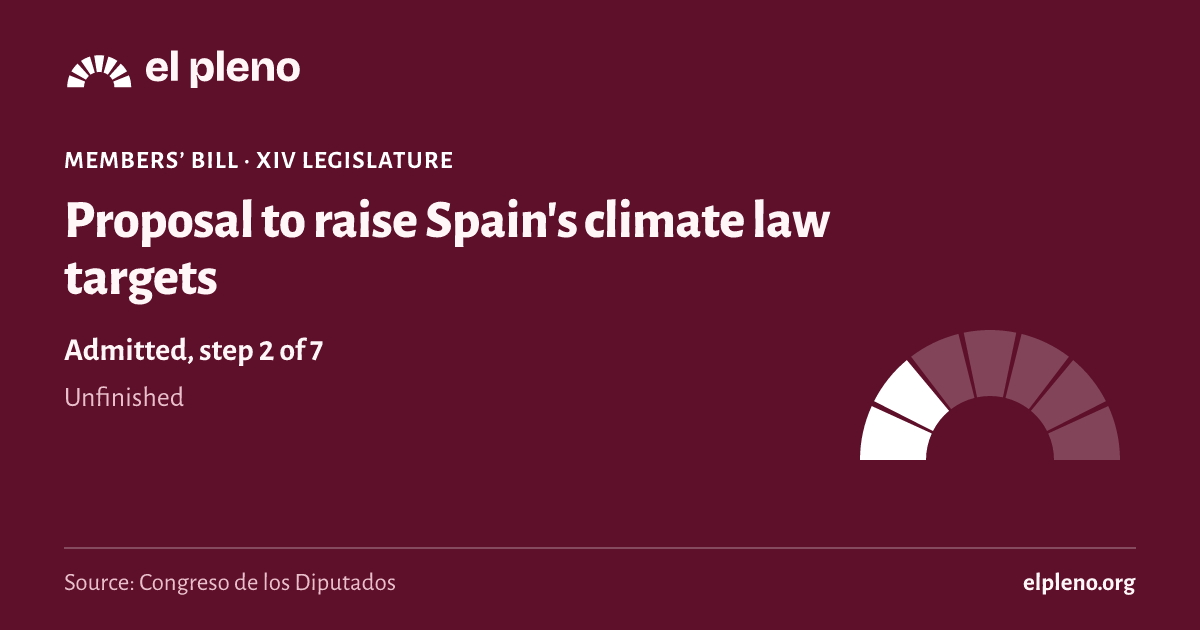
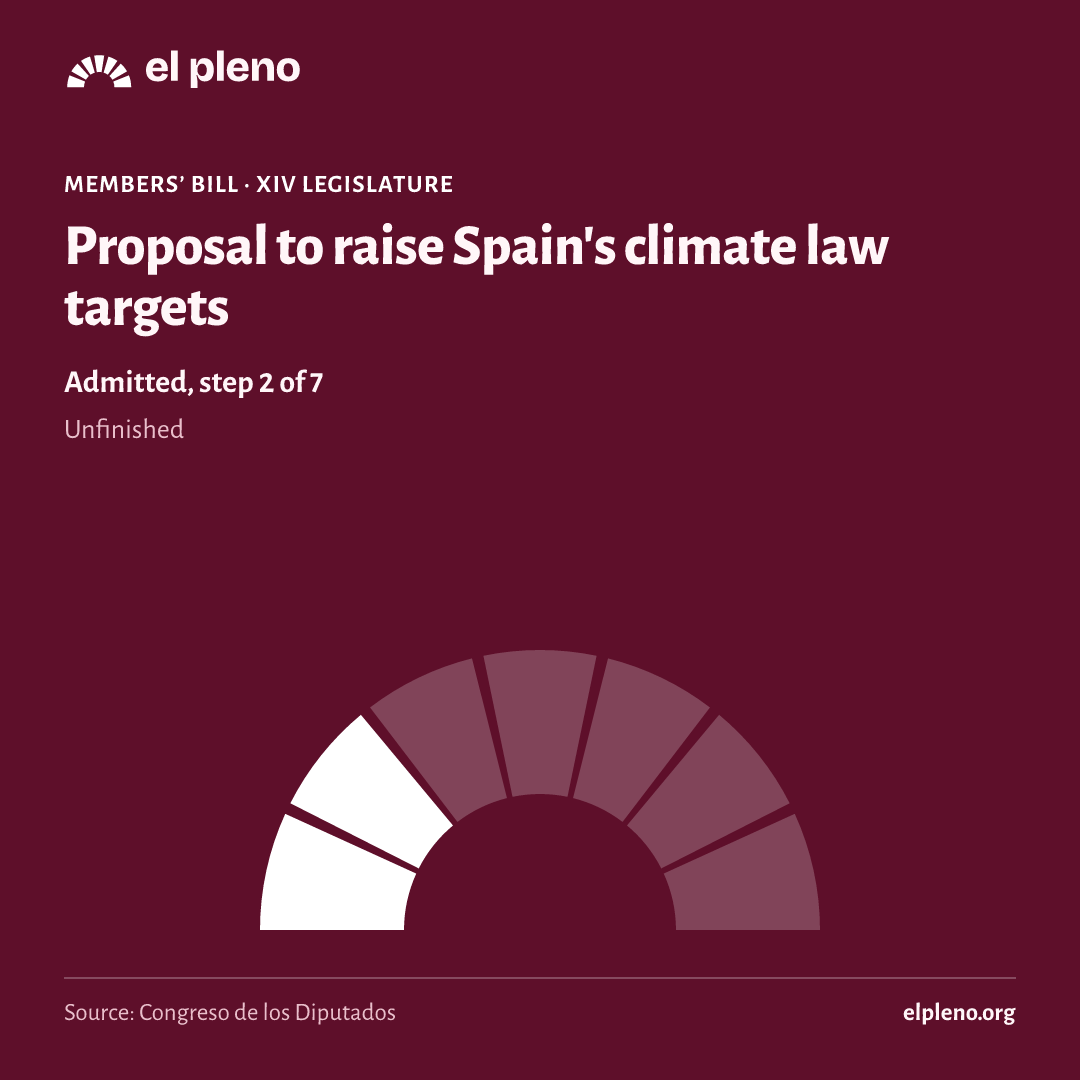
It took 2 of 7 steps. It reached Admitted, and today it is unfinished.
- Introduced8 March 2022Someone registers the text in the Congreso.
- Admitted15 March 2022The Bureau of the Congreso accepts it and, for a members’ bill, the plenary decides whether to consider it.
- Amendmentsnot reachedGroups propose changes.
- Committeenot reachedA committee goes through the text in detail.
- Plenarynot reachedAll 350 deputies vote.
- Senatenot reachedThe Senate can pass it, amend it or veto it.
- BOEnot reachedIt is published in the Official State Gazette (BOE) and comes into force.
See the 6 official steps on a timeline
Was there a plenary vote?
We have no plenary vote linked to this law in the Congreso’s data.
What happens next
What happens now?
The legislature ended before it finished. To go on, someone would have to introduce it again in the new Cortes.
It has not been presented again yet.
Sources
Where does all this come from?
- Congreso de los Diputados, file 122/000202
Official title, type, author, dates and stage.
Retrieved 11 November 2026
- The data comes from the open files of the Congreso, the Senate and the BOE, unaltered.
- Each deputy’s province is the one of their seat on the day of the vote.
- We only say “passed” or “rejected” when the majority needed is certain; otherwise we say which side had more votes.