What it is
Bill to keep Catalan as the main teaching language in Catalonia
It is a members’ bill. Introduced by parliamentary groups, the Senate, regional governments or citizens. It was introduced on 24 November 2021. Introduced by: Grupo Parlamentario Plural.
Official title: Organic Private member's bill amending Organic Law 3/2020, of December 29, which amends Organic Law 2/2006, of May 3, on Education.
Source: Congreso de los Diputados, file 122/000182· updated 11 Nov
Automatic summary, not yet reviewed
- The bill would amend the Organic Education Law so that, at the end of basic education, all students reach full and equivalent command of Spanish and, where applicable, the corresponding co-official language.
- Education authorities would have to use the verification and control tools of the education system to make sure all students reach language competence in Spanish and, where applicable, in co-official languages. They would also have to push schools to take measures to make up for any shortfalls in any of the languages.
- The subjects Spanish Language and Literature and Co-official Language and Literature would have to be taught in their corresponding languages. Also, Autonomous Communities with co-official languages only in part of their territory, or with protected non-official languages, could offer them under their own rules.
- The authors argue that the current wording invades the powers of the Generalitat de Catalunya The self-government institution of Catalonia., because it goes against Catalonia's education law, which states that Catalan is the language normally used for teaching in its education system.
Who it affects
- Basic education students: They would have to reach full and equivalent command of Spanish and, where applicable, the co-official language.
- Education authorities: They would have to verify that language competence is reached and make up for shortfalls.
- Schools: They would have to teach language subjects in their corresponding language and take corrective measures.
- Autonomous Communities with partial or protected languages: They could offer those languages under their own rules.
Words worth knowing
- Lengua vehicular
- The language mainly used to teach all other subjects at school.
- Lengua cooficial (co-official language)
- A language that, along with Spanish, is official in part of Spain, such as Catalan or Galician.
- Proposición de Ley Orgánica (Organic Law bill)
- A text filed by members of Congress to amend a law affecting fundamental rights. It is not a law until passed.
- Generalitat de Catalunya
- The self-government institution of Catalonia.
It summarizes the text as it was introduced. It is written by artificial intelligence and may contain mistakes: the official text is what counts. Read the official text · How we make summaries
Where it stands
How far did it get?
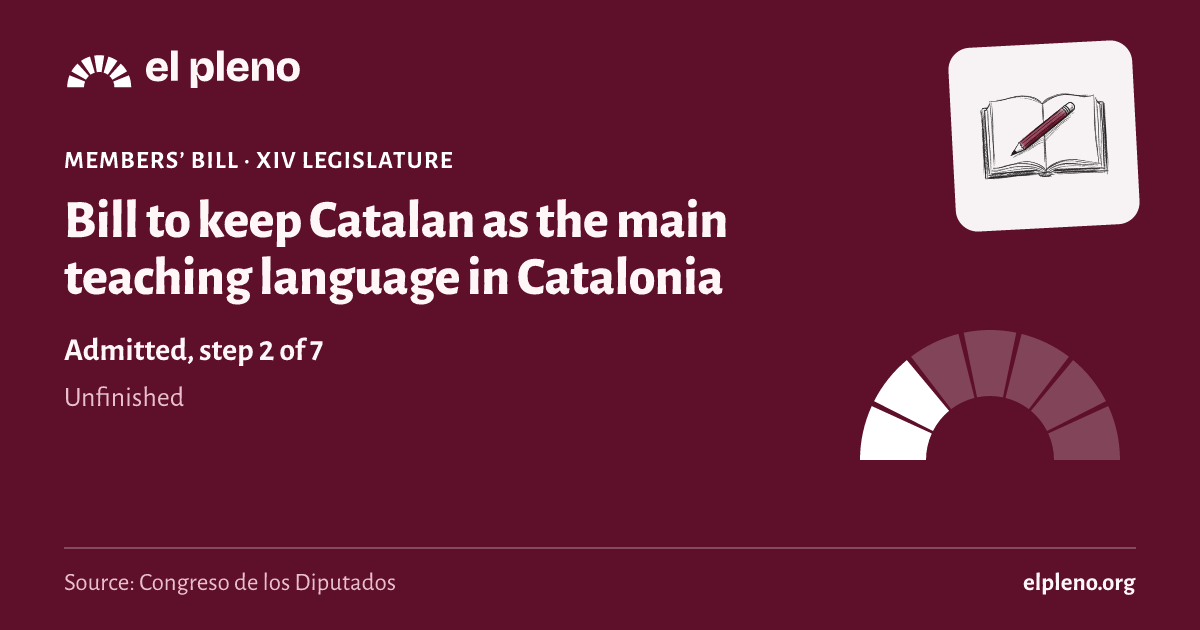
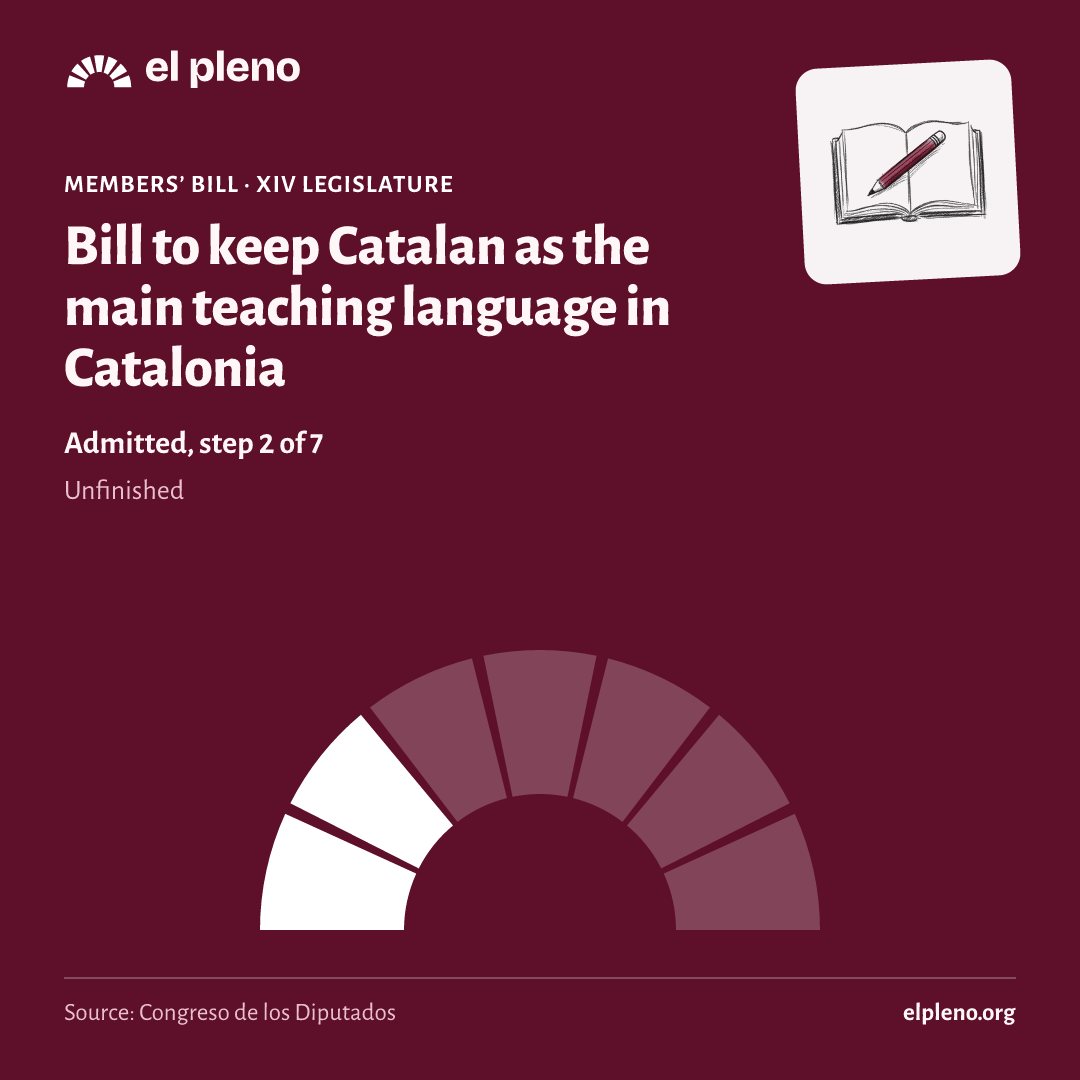
It took 2 of 7 steps. It reached Admitted, and today it is unfinished.
- Introduced24 November 2021Someone registers the text in the Congreso.
- Admitted30 November 2021The Bureau of the Congreso accepts it and, for a members’ bill, the plenary decides whether to consider it.
- Amendmentsnot reachedGroups propose changes.
- Committeenot reachedA committee goes through the text in detail.
- Plenarynot reachedAll 350 deputies vote.
- Senatenot reachedThe Senate can pass it, amend it or veto it.
- BOEnot reachedIt is published in the Official State Gazette (BOE) and comes into force.
See the 6 official steps on a timeline
Was there a plenary vote?
We have no plenary vote linked to this law in the Congreso’s data.
What happens next
What happens now?
The legislature ended before it finished. To go on, someone would have to introduce it again in the new Cortes.
It was presented again:
- XV Legislature, Congreso de los Diputados· Unfinished VOX bill would stop the closure of special education centers
Sources
Where does all this come from?
- Congreso de los Diputados, file 122/000182
Official title, type, author, dates and stage.
Retrieved 11 November 2026
- The data comes from the open files of the Congreso, the Senate and the BOE, unaltered.
- Each deputy’s province is the one of their seat on the day of the vote.
- We only say “passed” or “rejected” when the majority needed is certain; otherwise we say which side had more votes.