What it is
Bill to cut electricity bills by lowering energy taxes
It is a members’ bill. Introduced by parliamentary groups, the Senate, regional governments or citizens. It was introduced on 7 September 2021. Introduced by: Grupo Parlamentario Popular en el Congreso.
Official title: Private member's bill regarding the amendment of Law 15/2012, of December 27, on fiscal measures for energy sustainability; Law 24/2013, of December 26, on the Electricity Sector, for the reduction of electricity bills; and Law 37/1992, of December 28, on Value Added Tax, for the reduction of electricity bills.
Source: Congreso de los Diputados, file 122/000157· updated 11 Nov
Automatic summary, not yet reviewed
- The bill would lower the tax on the value of electricity production from 7% to 0%, to reduce everyone's electricity bill.
- To offset the lost revenue, it would raise to 2 billion euros the maximum amount from auctions of greenhouse gas emission allowances that can go to the electricity system.
- It would have the State budget pay 100% of the annual payments on the electricity system's debt and the extra costs of the non-peninsular territories, instead of charging them to bills.
- It would require that any change in the tax rate on the value of electricity production be reflected in the remuneration parameters within a maximum of three months.
- It would add electricity to the list of goods taxed at the reduced VAT rate.
- It would enter into force the day after its publication in the official State gazette.
Who it affects
- Electricity consumers, especially households and vulnerable consumers: Would see lower electricity bills if the bill is passed.
- Businesses and industry: Would pay less for electricity and gain competitiveness.
- Electricity producers: Would pay a 0% tax on the value of their production.
- The State budget: Would take on the electricity system's debt payments and non-peninsular extra costs.
Words worth knowing
- Impuesto sobre el valor de la producción eléctrica
- A tax paid by those who generate electricity, based on the value of what they produce.
- IVA
- Value added tax (VAT), paid when buying goods and services.
- Deuda del sistema eléctrico
- Money owed by the electricity system, paid through an annual charge included in bills.
- Extracostes no peninsulares
- Extra costs of producing electricity in the isolated systems of the islands and other non-peninsular territories.
- Derechos de emisión de CO2
- Allowances bought and sold to be allowed to emit polluting gases; their auctions bring revenue to the State.
It summarizes the text as it was introduced. It is written by artificial intelligence and may contain mistakes: the official text is what counts. Read the official text · How we make summaries
Where it stands
How far did it get?
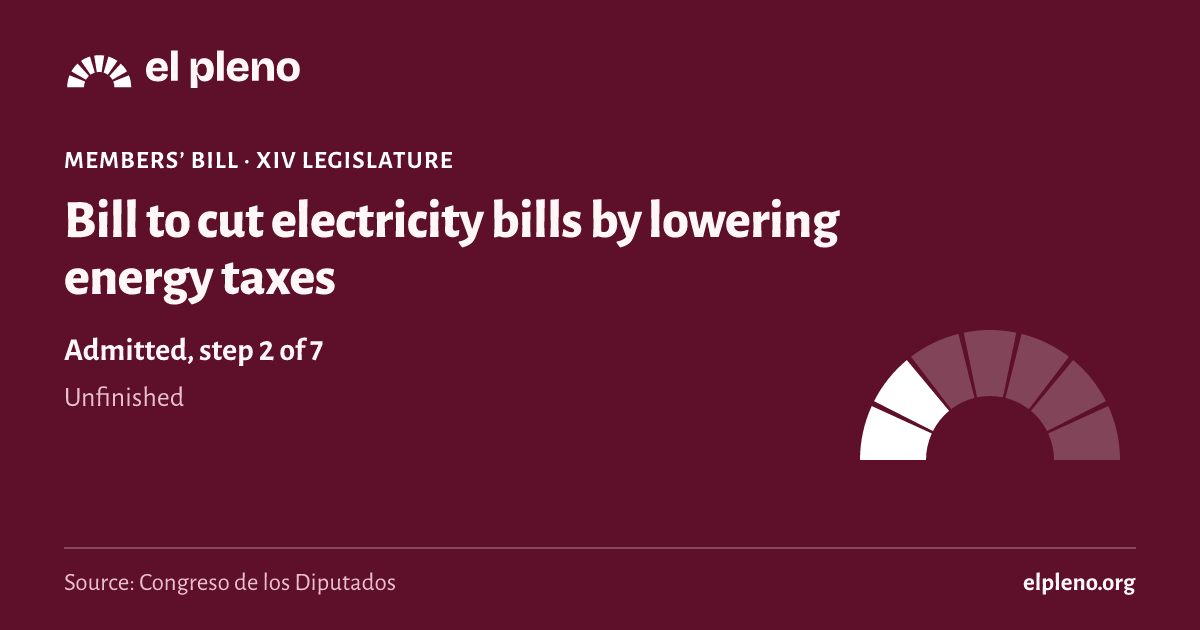
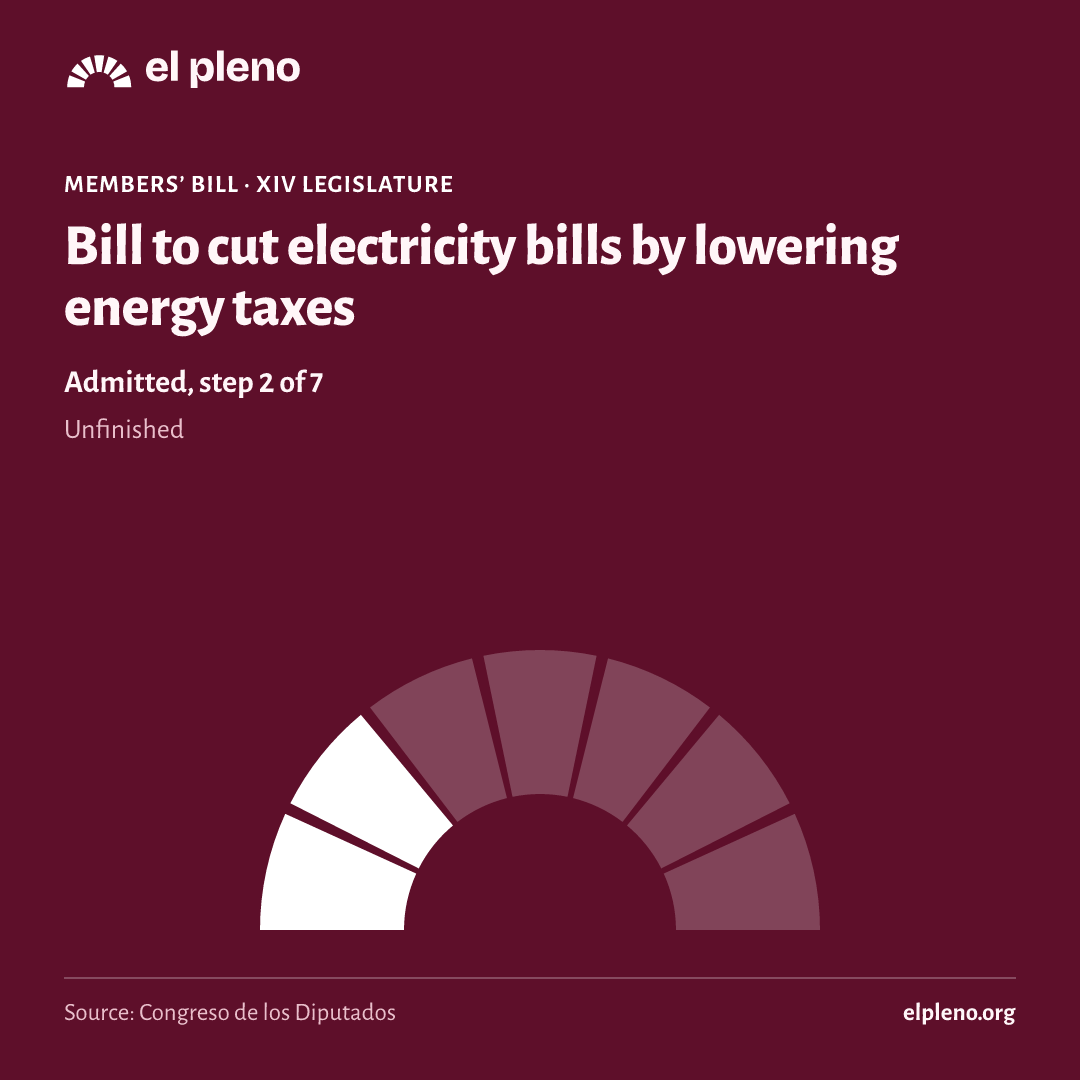
It took 2 of 7 steps. It reached Admitted, and today it is unfinished.
- Introduced7 September 2021Someone registers the text in the Congreso.
- Admitted14 September 2021The Bureau of the Congreso accepts it and, for a members’ bill, the plenary decides whether to consider it.
- Amendmentsnot reachedGroups propose changes.
- Committeenot reachedA committee goes through the text in detail.
- Plenarynot reachedAll 350 deputies vote.
- Senatenot reachedThe Senate can pass it, amend it or veto it.
- BOEnot reachedIt is published in the Official State Gazette (BOE) and comes into force.
See the 5 official steps on a timeline
Was there a plenary vote?
We have no plenary vote linked to this law in the Congreso’s data.
What happens next
What happens now?
The legislature ended before it finished. To go on, someone would have to introduce it again in the new Cortes.
It has not been presented again yet.
Sources
Where does all this come from?
- Congreso de los Diputados, file 122/000157
Official title, type, author, dates and stage.
Retrieved 11 November 2026
- The data comes from the open files of the Congreso, the Senate and the BOE, unaltered.
- Each deputy’s province is the one of their seat on the day of the vote.
- We only say “passed” or “rejected” when the majority needed is certain; otherwise we say which side had more votes.