What it is
Bill to make voting easier for Spaniards living abroad
It is a members’ bill. Introduced by parliamentary groups, the Senate, regional governments or citizens. It was introduced on 18 December 2020. Introduced by: Grupo Parlamentario Republicano.
Official title: Organic Private member's bill to amend Organic Law 5/1985, of June 19, on the General Electoral Regime, to guarantee the right to vote of citizens abroad.
Source: Congreso de los Diputados, file 122/000115· updated 11 Nov
Automatic summary, not yet reviewed
- The bill would remove the 'voto rogado', the procedure that since 2011 required residents abroad to request voting paperwork before they could vote. It would also make the whole process free of charge.
- The bill proposes that the electoral census automatically send Spaniards registered as residents abroad all the paperwork needed to vote, including self-fillable ballots, information sheets, and free websites and phone lines for help. They could vote in person at the consulate between the eighth and second day before election day, or by mail.
- Deadlines would change: electoral paperwork would be sent starting on the eighteenth day after the election is called, mail ballots must reach the consulate within set dates, and the official count would take place on the eighth day after the vote.
- Elections already called before the law takes effect would not be affected. The law would enter into force the day after its publication in the Official State Gazette (Boletín Oficial del Estado).
Who it affects
- Spaniards registered in the census of residents abroad (CERA): They would receive voting paperwork automatically, without having to request it, and could vote in person or by mail free of charge.
- Spanish consulates and embassies: They would have to set up and guard ballot boxes and process residents' votes.
- Electoral Boards (Juntas Electorales): They would count the votes of residents abroad on the eighth day after the election.
Words worth knowing
- Voto rogado (requested vote)
- A procedure requiring Spaniards abroad to first ask for the voting paperwork; the bill would abolish it.
- CERA (Censo de Electores Residentes-Ausentes)
- The list of Spaniards living abroad who are registered to vote from outside Spain.
- Escrutinio general (general count)
- The official count of votes carried out by the Electoral Board after election day.
- Ley Orgánica (Organic Law)
- A special type of Spanish law, reserved for major matters, that requires a heightened majority in Congress to pass.
It summarizes the text as it was introduced. It is written by artificial intelligence and may contain mistakes: the official text is what counts. Read the official text · How we make summaries
Where it stands
How far did it get?
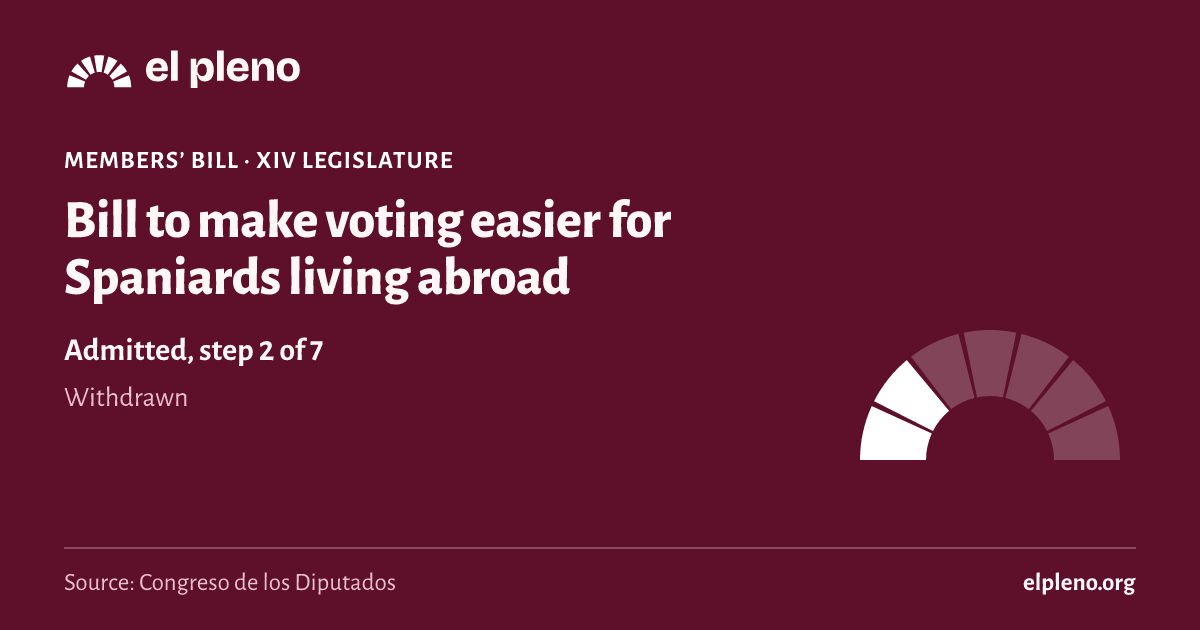
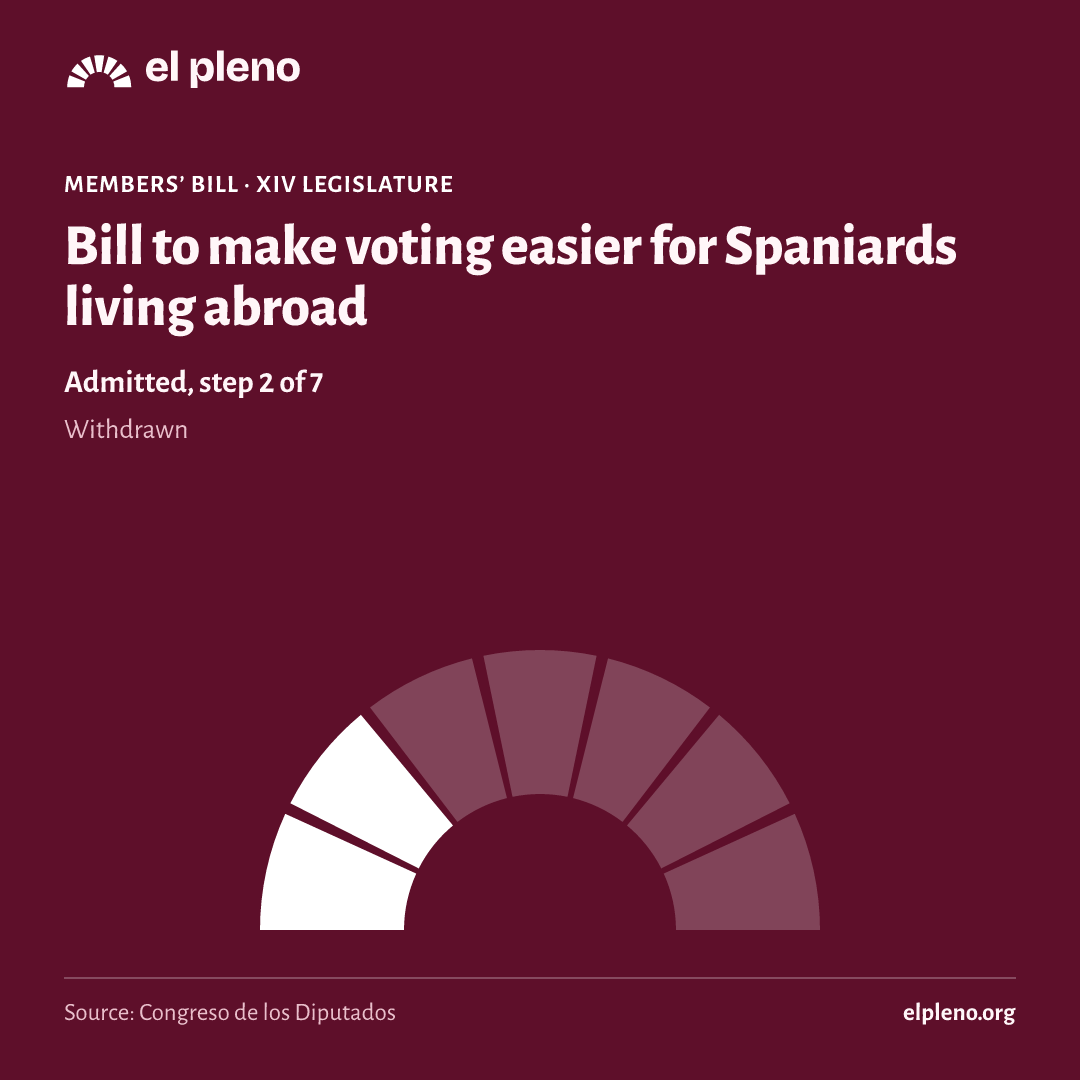
It took 2 of 7 steps. It reached Admitted, and today it is withdrawn.
- Introduced18 December 2020Someone registers the text in the Congreso.
- Admitted13 January 2021The Bureau of the Congreso accepts it and, for a members’ bill, the plenary decides whether to consider it.
- Amendmentsnot reachedGroups propose changes.
- Committeenot reachedA committee goes through the text in detail.
- Plenarynot reachedAll 350 deputies vote.
- Senatenot reachedThe Senate can pass it, amend it or veto it.
- BOEnot reachedIt is published in the Official State Gazette (BOE) and comes into force.
See the 5 official steps on a timeline
Was there a plenary vote?
We have no plenary vote linked to this law in the Congreso’s data.
What happens next
What happens now?
Whoever introduced it withdrew it, or it was merged into another one. It goes no further.
Sources
Where does all this come from?
- Congreso de los Diputados, file 122/000115
Official title, type, author, dates and stage.
Retrieved 11 November 2026
- The data comes from the open files of the Congreso, the Senate and the BOE, unaltered.
- Each deputy’s province is the one of their seat on the day of the vote.
- We only say “passed” or “rejected” when the majority needed is certain; otherwise we say which side had more votes.