What it is
Bill would allow garnishing wages below minimum wage for intentional crimes
It is a members’ bill. Introduced by parliamentary groups, the Senate, regional governments or citizens. It was introduced on 26 November 2020. Introduced by: Grupo Parlamentario VOX.
Official title: Private member's bill to reform Law 1/2000, of January 7, on Civil Procedure, to strengthen the compensation guarantees for victims of intentional crimes.
Source: Congreso de los Diputados, file 122/000107· updated 11 Nov
Automatic summary, not yet reviewed
- Current law says that a salary, wage or pension that does not exceed the minimum wage cannot be garnished. The bill explains that this rule protects people with ordinary debts, but it also benefits those held civilly liable for intentional crimes.
- The law already allows garnishing part of a salary, even below the minimum wage, when child or spousal support is owed. The bill wants victims of intentional crimes to get that same preferential treatment.
- The bill would amend Article 608 of the Civil Procedure Act. When a court orders compensation for an intentional crime, the judge would set how much can be garnished from the salary, even below the minimum wage, weighing the harm done and the victims' situation.
- If passed, the law would take effect the day after its publication in the Official State Gazette (Boletín Oficial del Estado).
Who it affects
- Victims of intentional crimes and their relatives: They would collect compensation sooner, because part of the liable person's salary could be garnished even below the minimum wage.
- People held civilly liable for an intentional crime: Part of their salary or pension could be garnished, even below the minimum wage.
- Judges and courts: They would have to set the garnishable amount in these cases, weighing the harm and the victims' situation.
Words worth knowing
- Delito doloso
- An intentional crime, committed on purpose, knowing it is illegal and wanting to do it.
- Responsabilidad civil
- Civil liability: the duty to pay the victim, by returning property, repairing damage or paying compensation.
- Inembargable
- Exempt from garnishment, meaning it cannot be taken to pay a debt.
- Salario mínimo interprofesional (SMI)
- The minimum wage set by law in Spain. In 2020 it was €950 per month over 14 payments.
- Prestación alimenticia
- Support payments one person must make for another's upkeep, for example for children after a divorce.
It summarizes the text as it was introduced. It is written by artificial intelligence and may contain mistakes: the official text is what counts. Read the official text · How we make summaries
Where it stands
How far did it get?
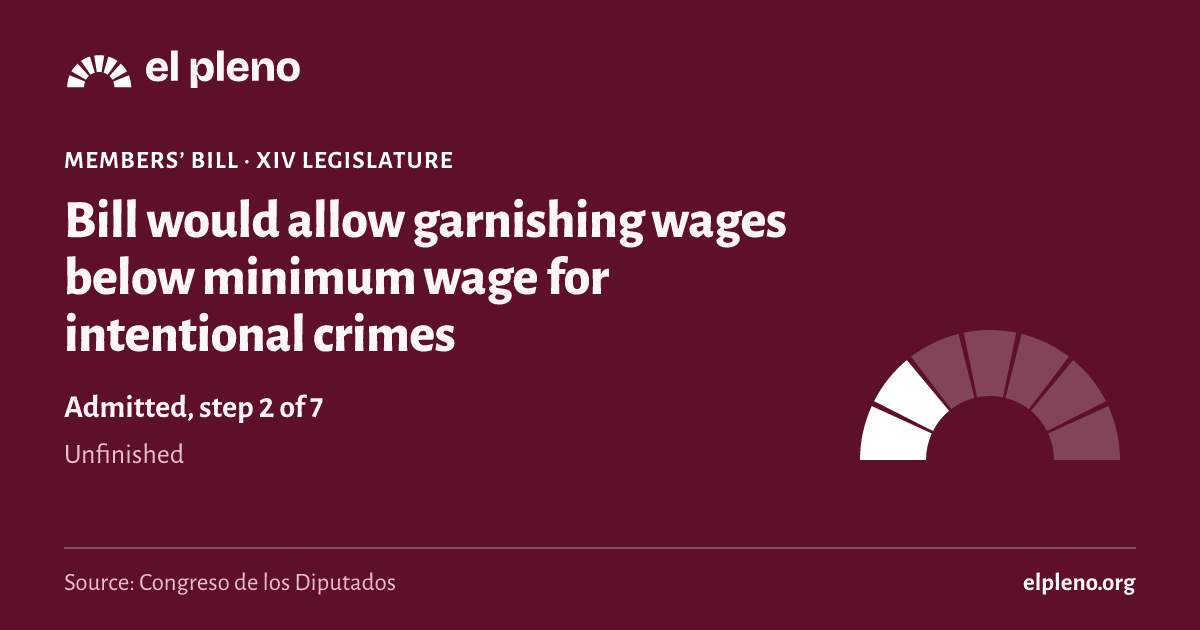
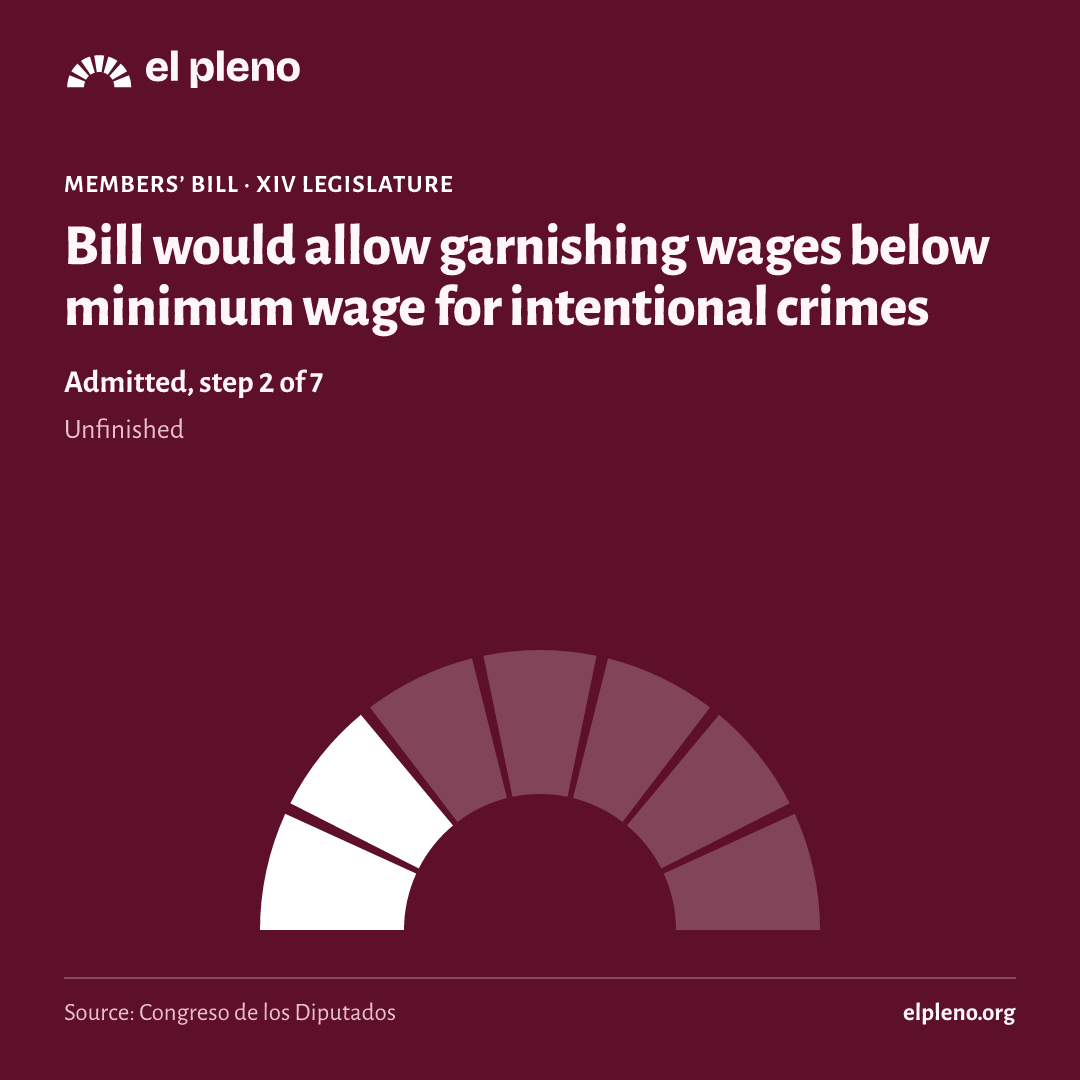
It took 2 of 7 steps. It reached Admitted, and today it is unfinished.
- Introduced26 November 2020Someone registers the text in the Congreso.
- Admitted30 November 2020The Bureau of the Congreso accepts it and, for a members’ bill, the plenary decides whether to consider it.
- Amendmentsnot reachedGroups propose changes.
- Committeenot reachedA committee goes through the text in detail.
- Plenarynot reachedAll 350 deputies vote.
- Senatenot reachedThe Senate can pass it, amend it or veto it.
- BOEnot reachedIt is published in the Official State Gazette (BOE) and comes into force.
See the 6 official steps on a timeline
Was there a plenary vote?
We have no plenary vote linked to this law in the Congreso’s data.
What happens next
What happens now?
The legislature ended before it finished. To go on, someone would have to introduce it again in the new Cortes.
It has not been presented again yet.
Sources
Where does all this come from?
- Congreso de los Diputados, file 122/000107
Official title, type, author, dates and stage.
Retrieved 11 November 2026
- The data comes from the open files of the Congreso, the Senate and the BOE, unaltered.
- Each deputy’s province is the one of their seat on the day of the vote.
- We only say “passed” or “rejected” when the majority needed is certain; otherwise we say which side had more votes.