What it is
Bill to create zone-level regulators within Spanish wine designations of origin
It is a members’ bill. Introduced by parliamentary groups, the Senate, regional governments or citizens. It was introduced on 20 July 2020. Introduced by: Grupo Parlamentario Vasco (EAJ-PNV).
Official title: Private member's bill reforming Law 6/2015, of 12 May, on Designations of Origin and Protected Geographical Indications of supra-autonomous territorial scope.
Source: Congreso de los Diputados, file 122/000072· updated 11 Nov
Automatic summary, not yet reviewed
- The bill would allow creating, within a Spanish wine designation of origin, its own management body for a smaller geographic zone recognized in the product rules. To do this, it adds a new provision to Law 6/2015.
- A zone regulator could be created if at least 60% of the operators registered in the designation who are located in that zone request it. The body would have its own legal personality and duties such as promoting and defending the product, rating each harvest and keeping records.
- Decisions of the zone regulator could be appealed to the regulator of the designation of origin, which would also approve its bylaws. Creating these zone regulators would not change the composition of the designation's regulator.
- The bill asks the Government to present, within six months, a bill so that the Autonomous Communities can control, inspect and sanction, in their territory, facilities and farms of wine designations of origin covering several regions. Today those duties are carried out by State bodies.
- If approved, the law would take effect the day after its publication in the Official State Gazette.
Who it affects
- Wineries and wine producers registered in designations of origin covering several regions: They could request and join a zone-level regulator if they gather 60% support.
- Regulators of the designations of origin: They would delegate some duties to the new zone regulators and approve their bylaws.
- Autonomous Communities: They could take over control, inspection and sanctioning in their territory.
- The State Government: It would have to present, within six months, a bill changing the current allocation of duties.
Words worth knowing
- Denominación de Origen Protegida (DOP)
- A label protecting farm or food products from a specific area, which requires meeting quality rules.
- Consejo regulador
- The public body that manages a designation of origin: it checks the product, keeps the registers and defends the name.
- Pliego de condiciones
- The document with the rules a product must follow to carry the designation of origin.
- Recurso de alzada
- A request filed with a higher body asking it to review an administrative decision you disagree with.
- Supraautonómico
- Covering the territory of several Autonomous Communities.
It summarizes the text as it was introduced. It is written by artificial intelligence and may contain mistakes: the official text is what counts. Read the official text · How we make summaries
Where it stands
How far did it get?
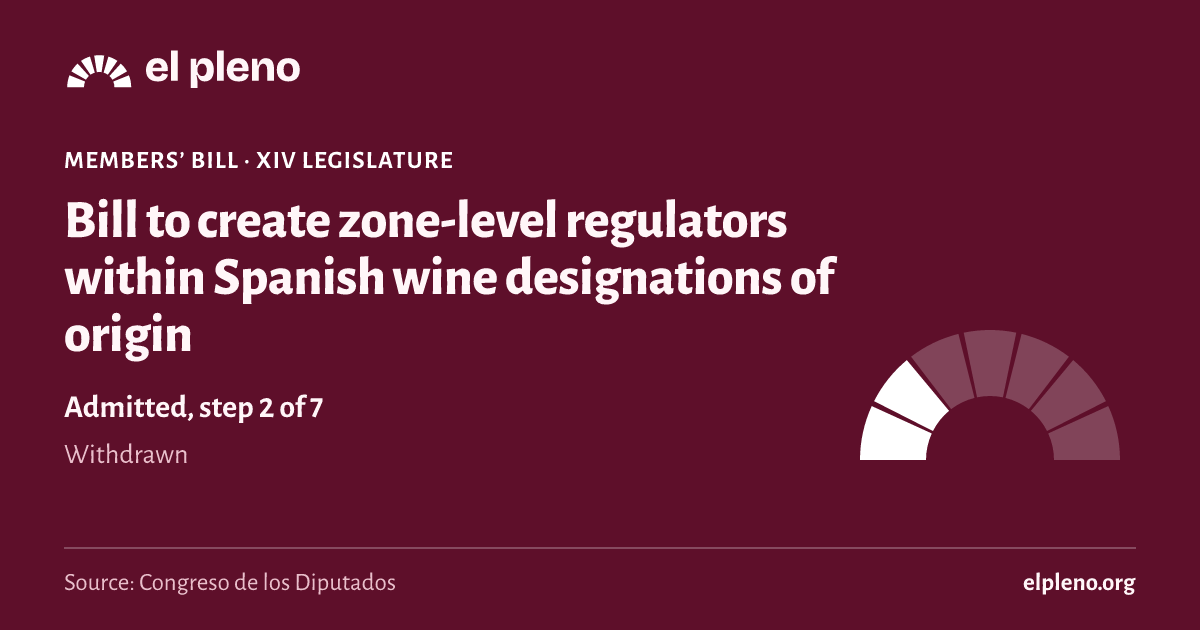
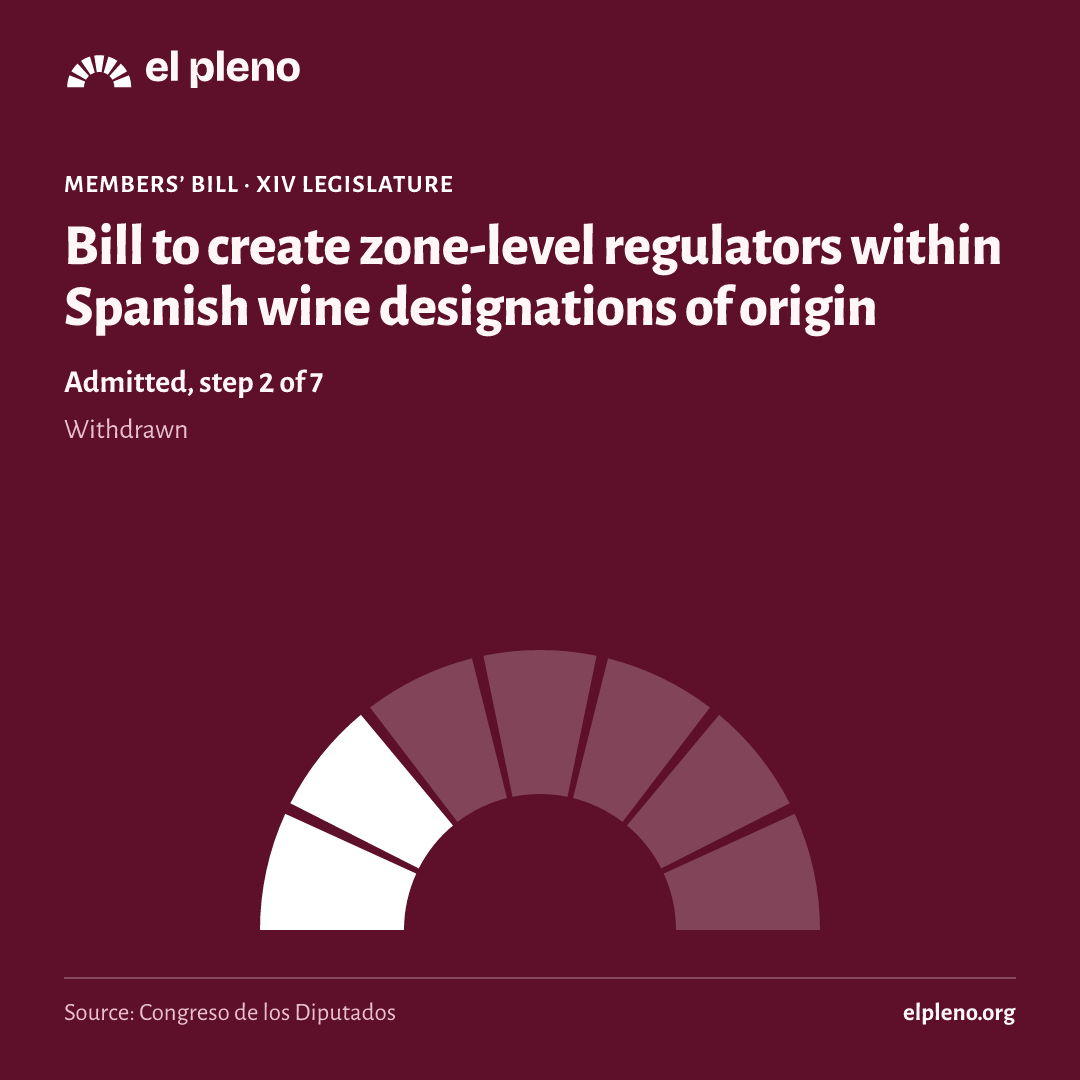
It took 2 of 7 steps. It reached Admitted, and today it is withdrawn.
- Introduced20 July 2020Someone registers the text in the Congreso.
- Admitted2 September 2020The Bureau of the Congreso accepts it and, for a members’ bill, the plenary decides whether to consider it.
- Amendmentsnot reachedGroups propose changes.
- Committeenot reachedA committee goes through the text in detail.
- Plenarynot reachedAll 350 deputies vote.
- Senatenot reachedThe Senate can pass it, amend it or veto it.
- BOEnot reachedIt is published in the Official State Gazette (BOE) and comes into force.
See the 6 official steps on a timeline
Was there a plenary vote?
We have no plenary vote linked to this law in the Congreso’s data.
What happens next
What happens now?
Whoever introduced it withdrew it, or it was merged into another one. It goes no further.
Sources
Where does all this come from?
- Congreso de los Diputados, file 122/000072
Official title, type, author, dates and stage.
Retrieved 11 November 2026
- The data comes from the open files of the Congreso, the Senate and the BOE, unaltered.
- Each deputy’s province is the one of their seat on the day of the vote.
- We only say “passed” or “rejected” when the majority needed is certain; otherwise we say which side had more votes.