What it is
Bill would bar fugitives from justice from running for office
It is a members’ bill. Introduced by parliamentary groups, the Senate, regional governments or citizens. It was introduced on 17 January 2020. Introduced by: Grupo Parlamentario Popular en el Congreso.
Official title: Private member's bill amending Organic Law 5/1985, of 19 June, on the General Electoral Regime, regarding the ineligibility of those declared rebels for having evaded the action of Justice.
Source: Congreso de los Diputados, file 122/000014· updated 11 Nov
Automatic summary, not yet reviewed
- The bill adds a new ground of ineligibility: people declared fugitives by the courts could not stand as candidates while they remain in that situation.
- The competent Electoral Board would declare this ground of ineligibility, even if it arises after the election. That means losing elected status and being unable to keep holding the office.
- The bill would also apply to people already declared fugitives before the law takes effect: they would lose their elected status within a maximum of ten days.
Who it affects
- People declared fugitives who want to stand as candidates for any representative office.: They could not take part in the electoral process while they remain fugitives.
- People already elected who are declared fugitives, or who were already fugitives when the law takes effect.: They would lose their elected status and could not keep holding the office.
- Electoral Boards (Juntas Electorales).: They would be responsible for declaring ineligibility and notifying the affected bodies.
Words worth knowing
- Inelegibilidad (ineligibility)
- The situation of someone who cannot stand as a candidate in an election or be elected.
- Rebelde (declared fugitive)
- A person a judge declares in rebellion because they fail to appear before the courts despite being summoned.
- Junta Electoral (Electoral Board)
- The body that ensures elections follow the law and rules on grounds of ineligibility.
- Ley Orgánica (Organic Law)
- A type of Spanish law reserved for major matters, such as the electoral system, which requires a special majority to pass.
It summarizes the text as it was introduced. It is written by artificial intelligence and may contain mistakes: the official text is what counts. Read the official text · How we make summaries
Where it stands
How far did it get?
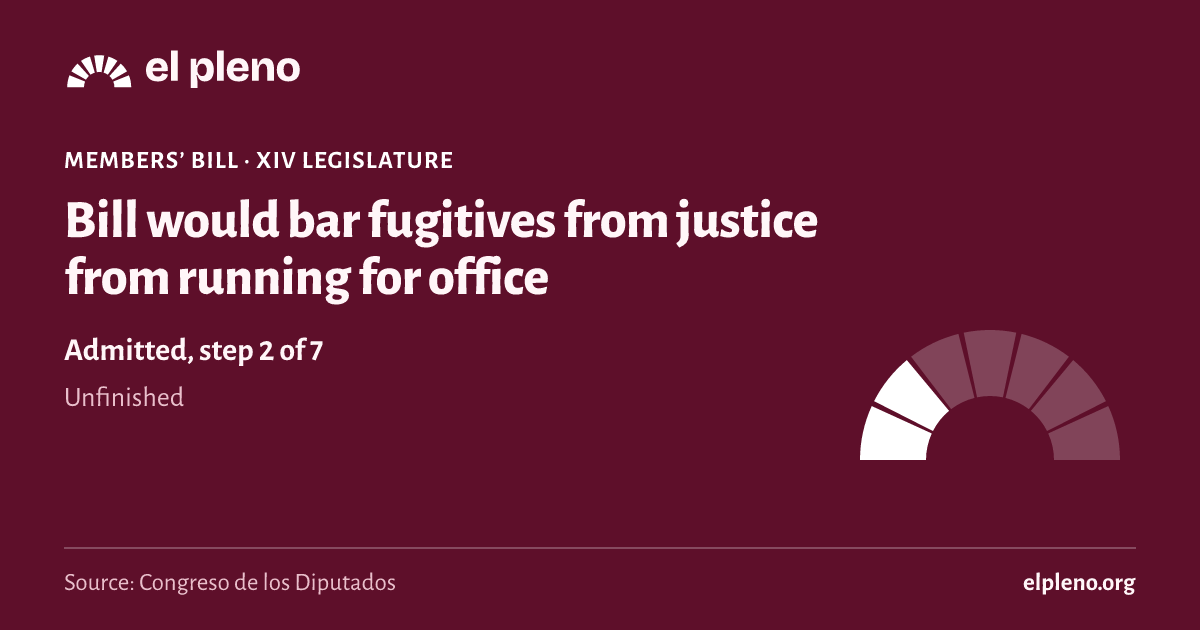
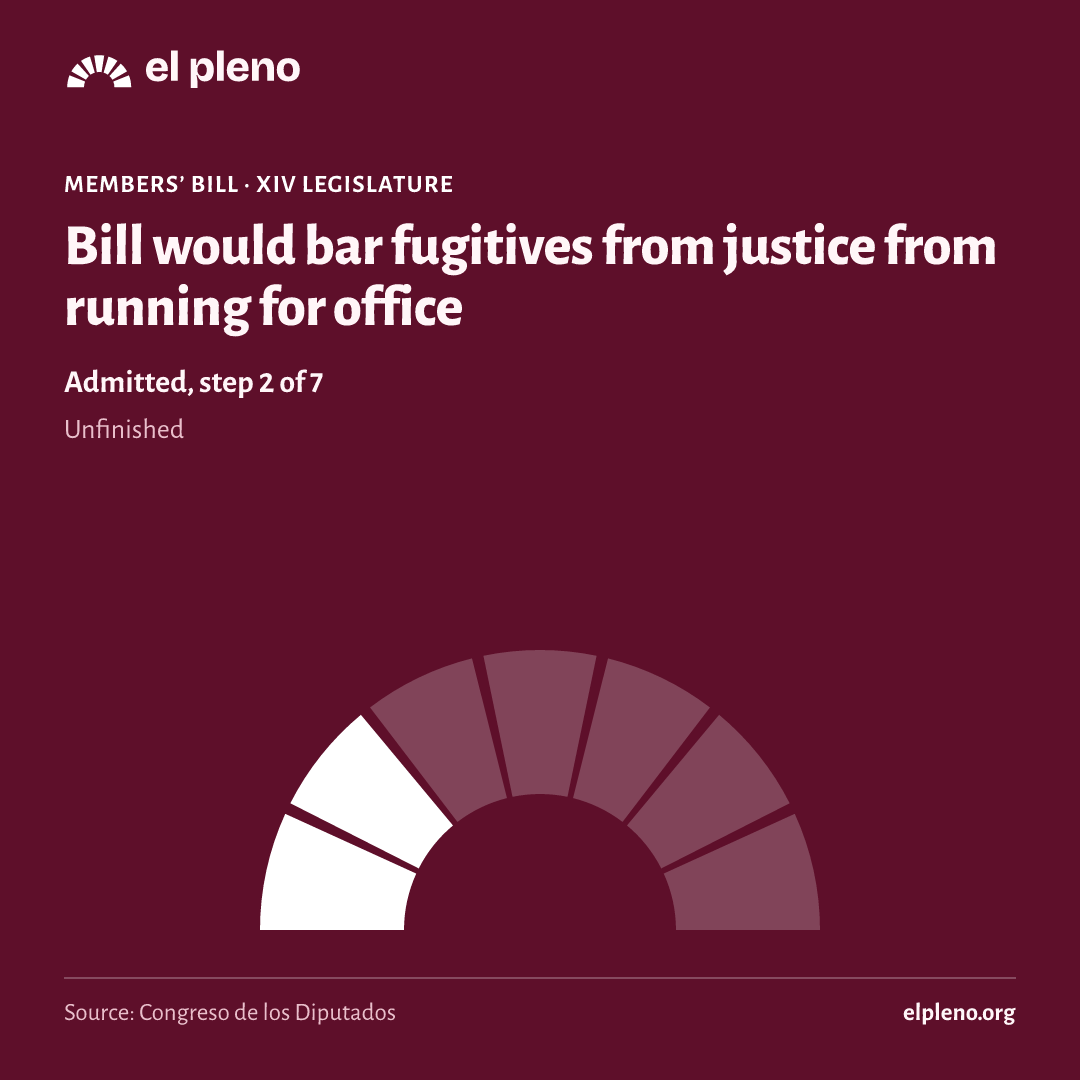
It took 2 of 7 steps. It reached Admitted, and today it is unfinished.
- Introduced17 January 2020Someone registers the text in the Congreso.
- Admitted23 January 2020The Bureau of the Congreso accepts it and, for a members’ bill, the plenary decides whether to consider it.
- Amendmentsnot reachedGroups propose changes.
- Committeenot reachedA committee goes through the text in detail.
- Plenarynot reachedAll 350 deputies vote.
- Senatenot reachedThe Senate can pass it, amend it or veto it.
- BOEnot reachedIt is published in the Official State Gazette (BOE) and comes into force.
See the 6 official steps on a timeline
Was there a plenary vote?
We have no plenary vote linked to this law in the Congreso’s data.
What happens next
What happens now?
The legislature ended before it finished. To go on, someone would have to introduce it again in the new Cortes.
It has not been presented again yet.
Sources
Where does all this come from?
- Congreso de los Diputados, file 122/000014
Official title, type, author, dates and stage.
Retrieved 11 November 2026
- The data comes from the open files of the Congreso, the Senate and the BOE, unaltered.
- Each deputy’s province is the one of their seat on the day of the vote.
- We only say “passed” or “rejected” when the majority needed is certain; otherwise we say which side had more votes.