What it is
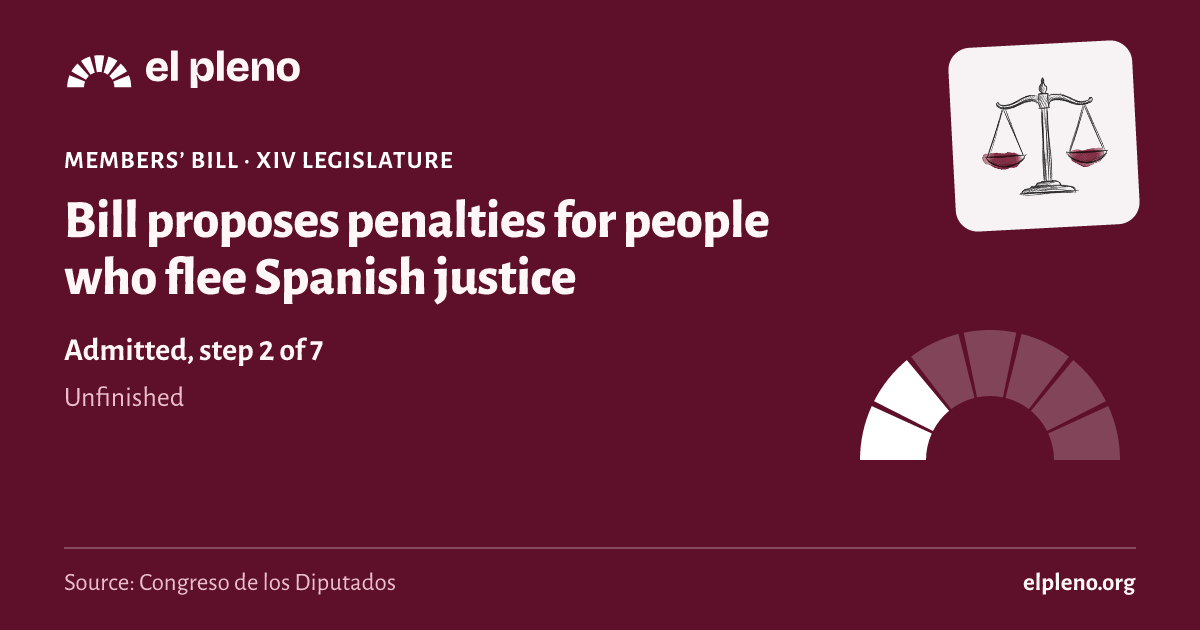
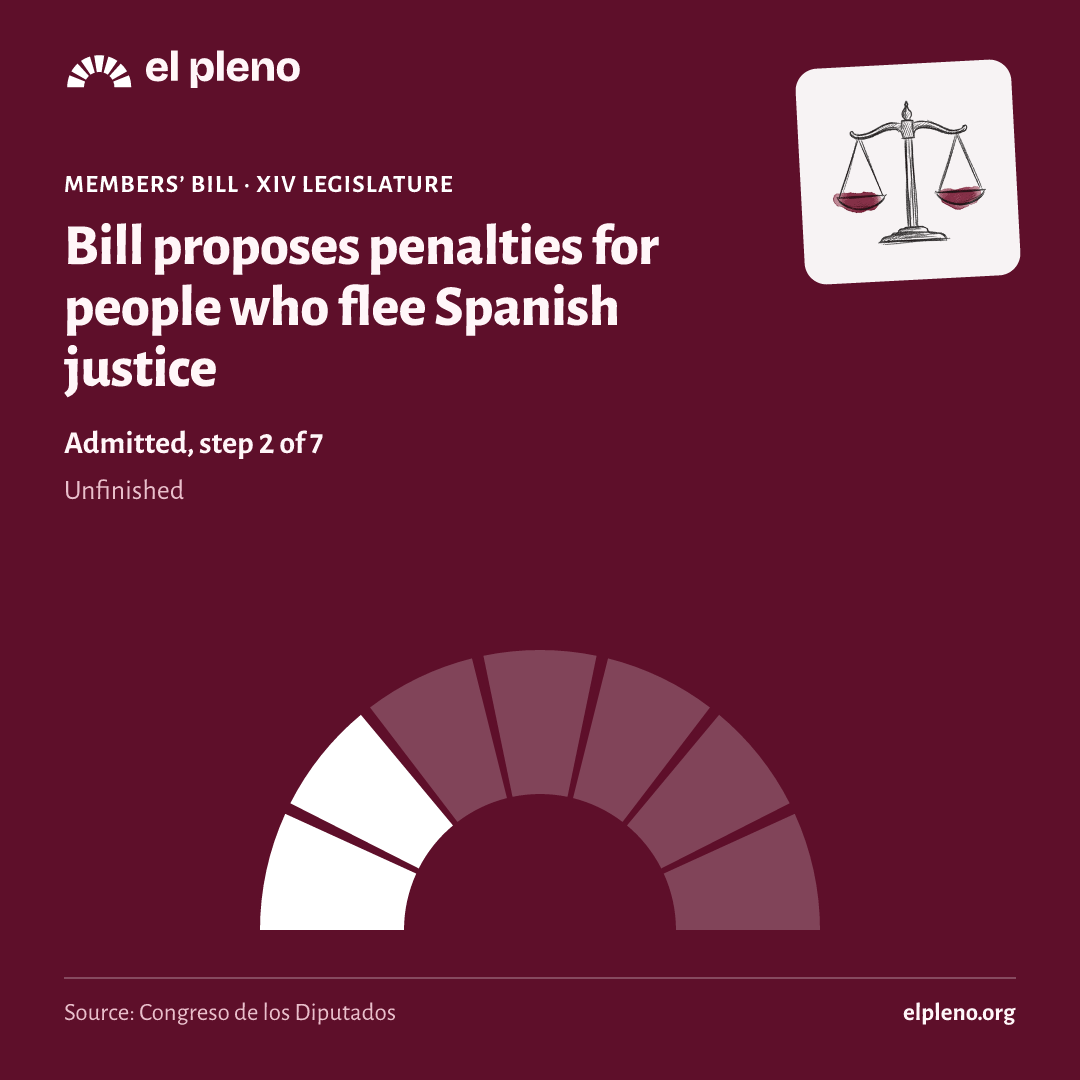
Bill proposes penalties for people who flee Spanish justice
It is a members’ bill. Introduced by parliamentary groups, the Senate, regional governments or citizens. It was introduced on 20 December 2019. Introduced by: Grupo Parlamentario Ciudadanos.
Official title: Private member's bill on measures to avoid the impunity of those fleeing from Justice.
Source: Congreso de los Diputados, file 122/000010· updated 11 Nov
Automatic summary, not yet reviewed
- The bill would amend the Criminal Procedure Act so that a declaration of procedural rebellion would carry deterrent effects: being barred from public office, banned from receiving any money from public funds, from public subsidies, from contracting with the public sector, and having assets seized, while the situation lasts.
- The general limits on seizing salary, wages or pension would not apply when seizing the assets of someone declared a rebel. In addition, a declared rebel could not run as a candidate in elections unless they surrender to justice.
- Failing to comply, by act or omission, with the orders in the rebellion ruling would become an offense for public authorities, senior officials and civil servants. Anyone who helps a fugitive evade the effects of the declaration would face six months to three years in prison.
- For people already declared rebels when the law takes effect, a judge would determine the applicable effects within a maximum of three months. The law would take effect the day after its publication in the Official State Gazette.
Who it affects
- People declared procedural rebels for fleeing justice: They would face disqualification, loss of public income, bans on subsidies and public contracts, and asset seizure.
- Candidates for elected public office: Declared rebels could not stand for election while the situation lasts.
- Public authorities, senior officials and civil servants: They would commit an offense if they fail to comply with the rebellion ruling.
- People who help a fugitive evade justice: They could face six months to three years in prison for aiding concealment.
Words worth knowing
- Rebeldía procesal (procedural rebellion)
- A situation where a judge declares someone a rebel for failing to appear or be brought in after an official search.
- Requisitoria (search warrant)
- A judicial order to search for and locate a person.
- Encubrimiento (concealment)
- The crime of helping someone who committed a crime to hide, keep the proceeds or avoid discovery.
- Sufragio pasivo (passive suffrage)
- The right to stand as a candidate in an election.
It summarizes the text as it was introduced. It is written by artificial intelligence and may contain mistakes: the official text is what counts. Read the official text · How we make summaries
Where it stands
How far did it get?
It took 2 of 7 steps. It reached Admitted, and today it is unfinished.
- Introduced20 December 2019Someone registers the text in the Congreso.
- Admitted15 January 2020The Bureau of the Congreso accepts it and, for a members’ bill, the plenary decides whether to consider it.
- Amendmentsnot reachedGroups propose changes.
- Committeenot reachedA committee goes through the text in detail.
- Plenarynot reachedAll 350 deputies vote.
- Senatenot reachedThe Senate can pass it, amend it or veto it.
- BOEnot reachedIt is published in the Official State Gazette (BOE) and comes into force.
See the 6 official steps on a timeline
Was there a plenary vote?
We have no plenary vote linked to this law in the Congreso’s data.
What happens next
What happens now?
The legislature ended before it finished. To go on, someone would have to introduce it again in the new Cortes.
It has not been presented again yet.
Sources
Where does all this come from?
- Congreso de los Diputados, file 122/000010
Official title, type, author, dates and stage.
Retrieved 11 November 2026
- The data comes from the open files of the Congreso, the Senate and the BOE, unaltered.
- Each deputy’s province is the one of their seat on the day of the vote.
- We only say “passed” or “rejected” when the majority needed is certain; otherwise we say which side had more votes.