What it is
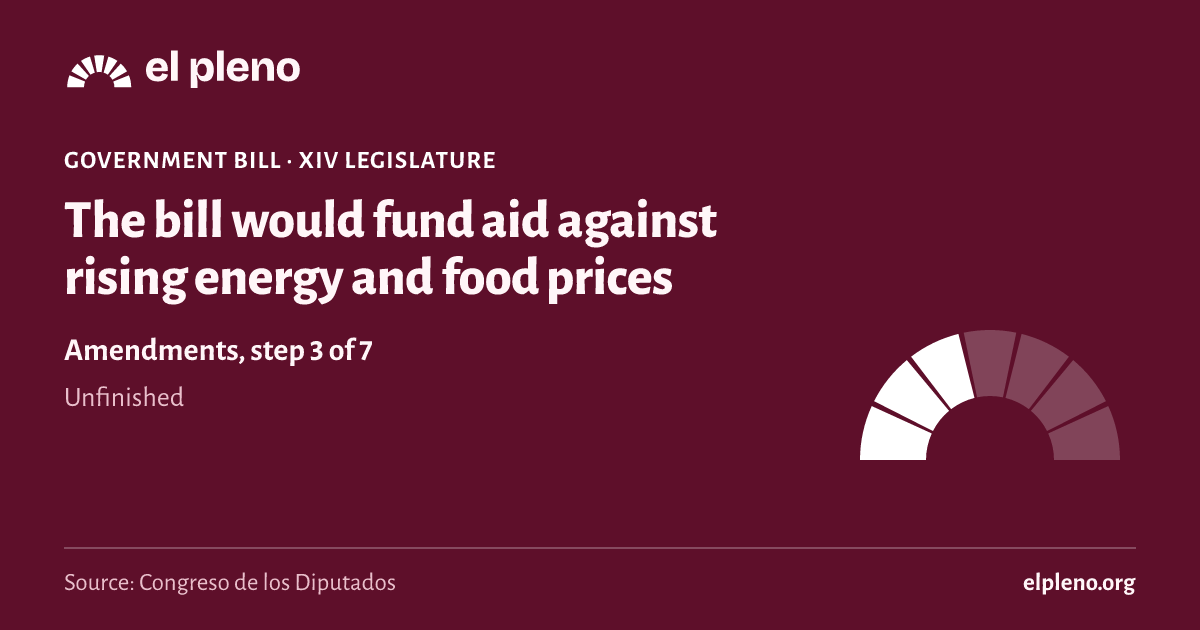
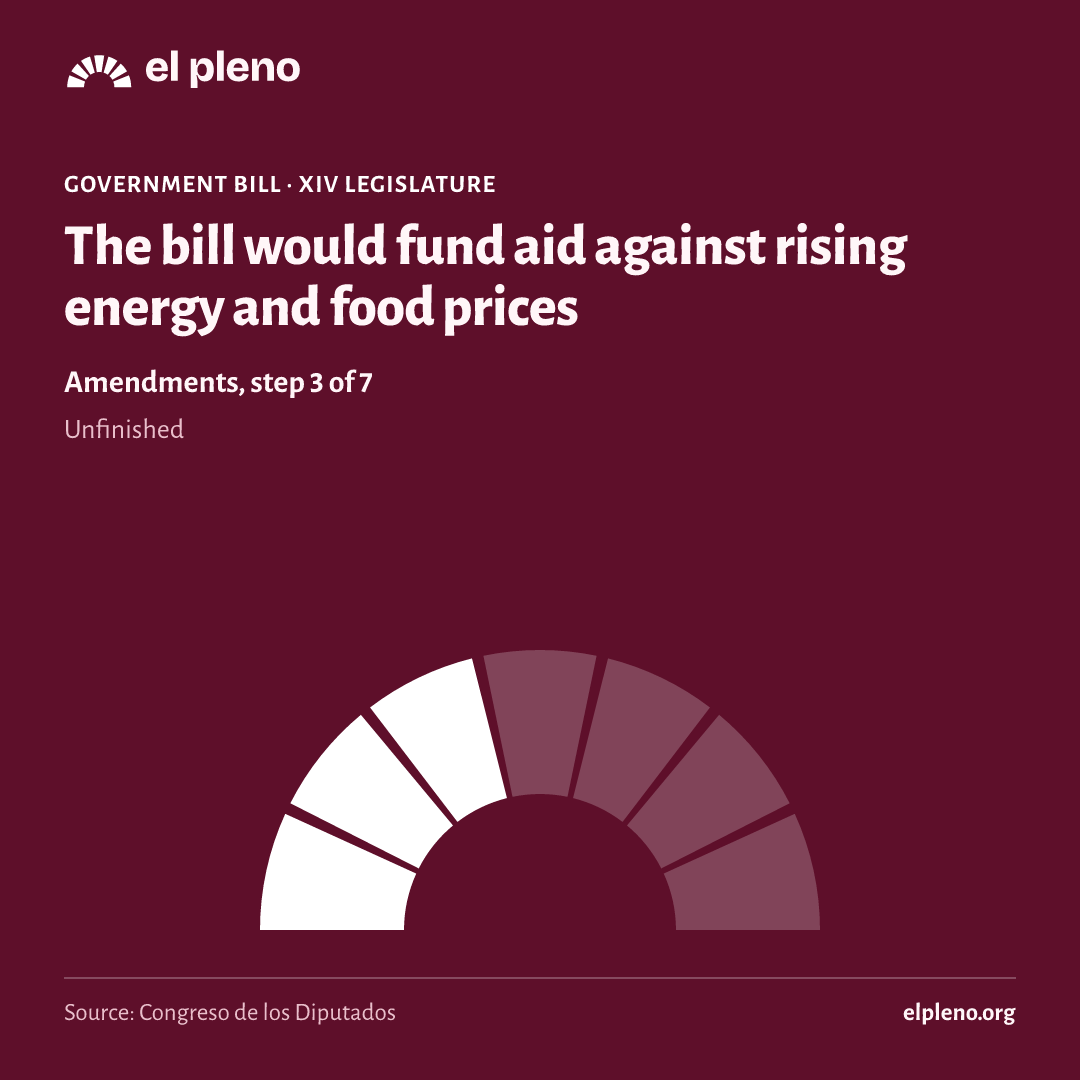
The bill would fund aid against rising energy and food prices
It is a government bill. Introduced by the Government. It was introduced on 24 January 2023. Introduced by: Gobierno.
Official title: Government bill for measures to respond to the economic and social consequences of the War in Ukraine and to support the reconstruction of La Palma island and other situations of vulnerability (originating from Royal Decree-Law 20/2022, of 27 December).
Source: Congreso de los Diputados, file 121/000140· updated 11 Nov
Automatic summary, not yet reviewed
- The bill would extend the 2023 energy tax cuts: the VAT on natural gas, briquettes and firewood stays at 5%, the rate on certain electricity supplies stays at 5%, and the Special Tax on Electricity stays at 0.5%, through December 31, 2023.
- It would keep the ban on cutting electricity, gas and water supply to vulnerable consumers, severely vulnerable consumers or those at risk of social exclusion through December 31, 2023, and cap the maximum price of the butane bottle through June 30, 2023.
- It would aid the farming and fishing sectors: 0.20 euros per liter of agricultural diesel consumed in 2022, fertilizer aid of up to 22 euros per hectare of dryland and 55 of irrigated land, and up to 120 million euros for the fishing fleet's fuel costs.
- It would extend through 2023 the free multi-ride passes on Renfe commuter (Cercanías and Rodalies) and medium-distance trains for regular users, and subsidize 30% of urban and interurban public transport, reaching 50% if regional and local governments add another 20%.
- It would cut the VAT on basic foods to 0% (bread, flour, milk, cheese, eggs, fruit and vegetables) and to 5% for oils and pasta, from January 1 to June 30, 2023, with a May review tied to underlying inflation.
- It would create a one-time 200-euro payment for people with low income and assets who worked or were unemployed in 2022, excluding those receiving pensions or the minimum vital income, with applications from February 15 to March 31, 2023.
- It would extend through December 31, 2023 the cap on annual rent updates for housing leases, so the increase cannot exceed the Índice de Garantía de Competitividad An official price index the bill would use as the cap for annual rent increases. if the parties do not agree otherwise, and extend the suspension of evictions of vulnerable households through June 30, 2023.
- It would extend by six more months the loan payment suspensions for those affected by the La Palma eruption, extend damage aid to usufruct holders of their homes, and extend self-employed workers' business cessation benefits through June 30, 2023.
Who it affects
- Households and consumers: Would keep paying less VAT on electricity and gas bills, could receive the 200-euro check if they qualify, and would see rent increases capped on housing leases.
- Farmers, livestock breeders and fishers: Could receive aid for agricultural diesel, fertilizers and fishing fuel, and defer Social Security contributions.
- Road transport companies and self-employed carriers: Could benefit from professional diesel aid or per-vehicle direct aid, and from the price review formula for freight transport contracts.
- Public transport users: Would keep discounts on their public transport passes and free multi-ride Renfe tickets.
- People affected by the La Palma eruption: Would see loan payment suspensions, business cessation benefits and damage aid extended, including for usufruct holders.
Words worth knowing
- IVA
- Impuesto sobre el Valor Añadido: Spain's VAT, a percentage added to the price of almost everything you buy.
- Ingreso Mínimo Vital
- A Social Security benefit that guarantees a minimum income to households with few resources.
- Usufructo
- Usufruct: the right to use and enjoy a home without owning it.
- Índice de Garantía de Competitividad
- An official price index the bill would use as the cap for annual rent increases.
- ERTE
- Expediente de regulación temporal de empleo: a temporary layoff scheme suspending contracts or reducing hours, with benefits for workers.
It summarizes the text as it was introduced. It is written by artificial intelligence and may contain mistakes: the official text is what counts. Read the official text · How we make summaries
Where it stands
How far did it get?
It took 3 of 7 steps. It reached Amendments, and today it is unfinished.
- Introduced24 January 2023Someone registers the text in the Congreso.
- Admitted31 January 2023The Bureau of the Congreso accepts it and, for a members’ bill, the plenary decides whether to consider it.
- Amendments3 February 2023Groups propose changes.
- Committeenot reachedA committee goes through the text in detail.
- Plenarynot reachedAll 350 deputies vote.
- Senatenot reachedThe Senate can pass it, amend it or veto it.
- BOEnot reachedIt is published in the Official State Gazette (BOE) and comes into force.
See the 5 official steps on a timeline
Was there a plenary vote?
We have no plenary vote linked to this law in the Congreso’s data.
What happens next
What happens now?
The legislature ended before it finished. To go on, someone would have to introduce it again in the new Cortes.
It has not been presented again yet.
Sources
Where does all this come from?
- Congreso de los Diputados, file 121/000140
Official title, type, author, dates and stage.
Retrieved 11 November 2026
- The data comes from the open files of the Congreso, the Senate and the BOE, unaltered.
- Each deputy’s province is the one of their seat on the day of the vote.
- We only say “passed” or “rejected” when the majority needed is certain; otherwise we say which side had more votes.