What it is
Bill would toughen penalties for payment fraud and forgery
It is a government bill. Introduced by the Government. It was introduced on 12 May 2022. Introduced by: Gobierno.
Official title: Government bill for an Organic Law amending Organic Law 10/1995, of 23 November, the Penal Code, for the transposition of directives on the fight against fraud and the falsification of non-cash means of payment and market abuse, and Organic Law 7/2014, of 12 November, on the exchange of criminal record information and the consideration of criminal judicial resolutions in the European Union.
Source: Congreso de los Diputados, file 121/000101· updated 11 Nov
Automatic summary, not yet reviewed
- The bill would punish fraud with prison sentences of six months to three years, including fraud committed by manipulating computer systems or fraudulently using cards, traveler's checks or other cashless payment instruments. It would also punish making or possessing tools to commit these frauds.
- It would raise penalties for forging credit or debit cards, traveler's checks or other payment instruments: four to eight years in prison, and two to five years for anyone who knowingly uses forged cards. It defines a payment instrument as any device or record that allows transferring money, including virtual currencies and crypto-assets used to pay.
- It would extend the penalty for market abuse offenses committed by people who obtain inside information without privileged access, so the maximum prison term exceeds the four years required by the EU directive on market abuse.
- It would reform the exchange of criminal records with other European Union countries: the exchange would be electronic through the ECRIS The European system that lets EU countries exchange their citizens' criminal records electronically. system, facial images and fingerprints would be added to the data sent, and a record in a centralized system would be created for convictions of third-country nationals.
- It would create a Central Register of Minors in the Ministry of Justice, holding sentences, precautionary measures, arrest warrants and records of failure to appear in proceedings involving minors. It would start operating within one year of the law taking effect.
- In proceedings to delete criminal records started by the person concerned, if the maximum period passes without an express reply, the request would be deemed denied. The law would take effect twenty days after publication in the Official State Gazette.
Who it affects
- People who commit fraud using cards, banking data or other digital payment methods.: New offenses and higher prison sentences.
- Consumers and holders of cards and digital payment methods, including users of virtual currencies.: Greater criminal protection against fraud and forgery.
- People dealing with inside information without privileged access to it.: Prison terms with a maximum above four years.
- Minors under investigation or convicted, and their victims, through the Central Register of Minors.: A register of sentences, precautionary measures and warrants available to the courts.
- Judges, prosecutors and the Central Register of Convicts.: New rules for exchanging criminal records with the European Union.
Words worth knowing
- Transposición
- Adapting a European directive into Spanish law through a specific statute.
- Directiva europea
- A European Union rule that sets a goal and requires each country to pass laws to meet it.
- Ley orgánica
- A special type of Spanish law, reserved for major areas such as criminal law, requiring an absolute majority in Congress to pass.
- ECRIS
- The European system that lets EU countries exchange their citizens' criminal records electronically.
- Información privilegiada
- Confidential information about a company or the market; using it to trade is the crime of market abuse.
It summarizes the text as it was introduced. It is written by artificial intelligence and may contain mistakes: the official text is what counts. Read the official text · How we make summaries
Where it stands
How far did it get?
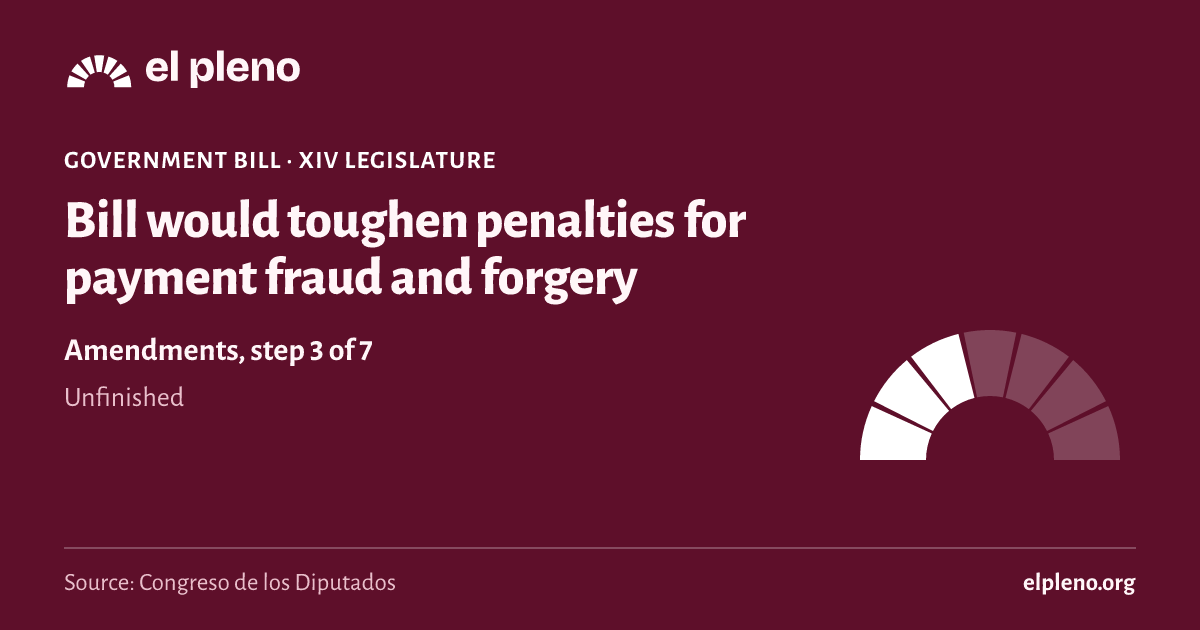
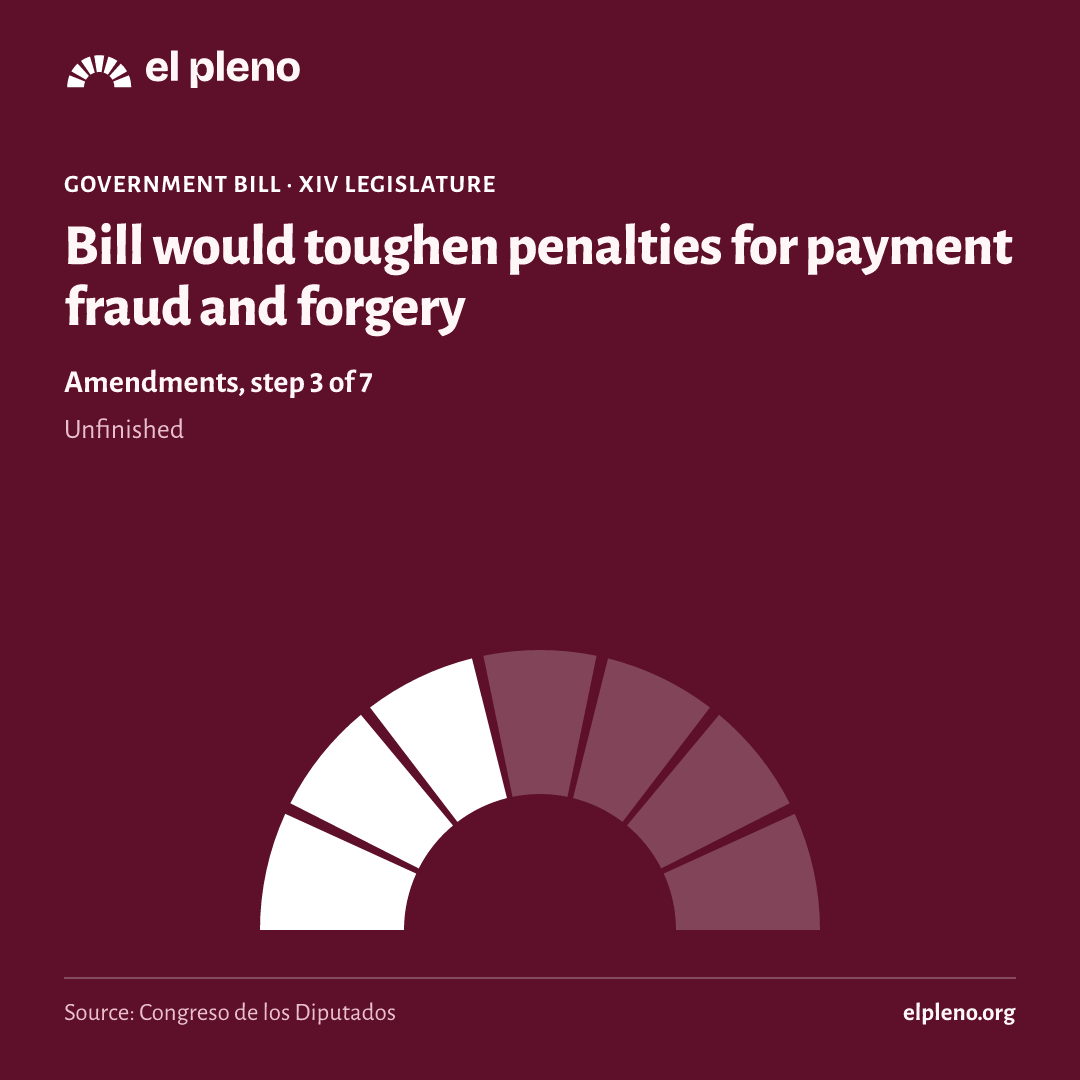
It took 3 of 7 steps. It reached Amendments, and today it is unfinished.
- Introduced12 May 2022Someone registers the text in the Congreso.
- Admitted17 May 2022The Bureau of the Congreso accepts it and, for a members’ bill, the plenary decides whether to consider it.
- Amendments20 May 2022Groups propose changes.
- Committeenot reachedA committee goes through the text in detail.
- Plenarynot reachedAll 350 deputies vote.
- Senatenot reachedThe Senate can pass it, amend it or veto it.
- BOEnot reachedIt is published in the Official State Gazette (BOE) and comes into force.
See the 5 official steps on a timeline
Was there a plenary vote?
We have no plenary vote linked to this law in the Congreso’s data.
What happens next
What happens now?
The legislature ended before it finished. To go on, someone would have to introduce it again in the new Cortes.
It has not been presented again yet.
Sources
Where does all this come from?
- Congreso de los Diputados, file 121/000101
Official title, type, author, dates and stage.
Retrieved 11 November 2026
- The data comes from the open files of the Congreso, the Senate and the BOE, unaltered.
- Each deputy’s province is the one of their seat on the day of the vote.
- We only say “passed” or “rejected” when the majority needed is certain; otherwise we say which side had more votes.