What it is
Bill would ease public debt payments and expand COVID aid
It is a government bill. Introduced by the Government. It was introduced on 13 May 2021. Introduced by: Gobierno.
Official title: Government bill to adopt complementary support measures for companies and self-employed workers affected by the COVID-19 pandemic (originating from Royal Decree-Law 6/2021, of April 20).
Source: Congreso de los Diputados, file 121/000054· updated 11 Nov
Automatic summary, not yet reviewed
- The bill would create an exceptional procedure for 2021 and 2022: the Delegaciones de Economía y Hacienda (Economy and Tax regional offices) could grant deferrals and installment plans, without requiring guarantees, for public, non-tax and non-customs debts from repaying State aid or loans, if the pandemic caused inactivity, lower sales or supply chain disruptions.
- Applicants would have to submit a justification report, certificates of their tax and Social Security debts, and a viability or business plan. If the debt exceeds €150,000, or €250,000 combined with previous requests, the plan must include a report from an auditor registered in the Official Register of Accounts Auditors.
- The deferred debt would accrue late payment interest. Debtors could request a deferral of up to two years from the due date, followed by an installment plan of up to two more years.
- The bill would amend Real Decreto-ley 5/2021 so that the autonomous communities and the cities of Ceuta and Melilla could add, within their allocation, additional sectors to those eligible for the Línea COVID direct aid program, if those sectors were especially affected in their territory.
- It would also exceptionally allow aid for viable companies that reported negative results in 2019 in personal income tax The personal income tax (IRPF in Spain): what people pay on what they earn from work, business or savings., corporate tax or non-resident income tax due to exceptional, duly justified circumstances.
- No direct aid under the Línea COVID could be granted after December 31, 2021, and the rule would take effect the day after its publication in the Official State Gazette (Boletín Oficial del Estado).
Who it affects
- Companies and self-employed workers repaying State aid or loans: They could request deferrals or installment plans without providing guarantees, during 2021 and 2022.
- Self-employed workers and companies in sectors hit hard by the pandemic: They could receive direct aid under the Línea COVID, even if their sector was not on the national list but was affected in their region.
- Viable companies with negative results in 2019: They could access aid exceptionally if the negative result was due to exceptional circumstances.
- Autonomous communities and the cities of Ceuta and Melilla: They would gain flexibility to expand eligible sectors and set aid criteria in their territory.
Words worth knowing
- Aplazamiento y fraccionamiento
- Deferral and installment plan: paying a debt later or splitting it into payments.
- Dispensa de garantía
- Waiver of guarantee: granting the deferral without requiring a guarantor or other payment security.
- Deudas no tributarias ni aduaneras
- Debts to the government that are not taxes or customs duties, such as repaying public aid or loans.
- Plan de viabilidad
- Viability plan: a document explaining how the company will overcome its difficulties and pay in the future.
- Intereses de demora
- Late payment interest: an extra amount paid for delaying a debt.
- income tax
- The personal income tax (IRPF in Spain): what people pay on what they earn from work, business or savings.
It summarizes the text as it was introduced. It is written by artificial intelligence and may contain mistakes: the official text is what counts. Read the official text · How we make summaries
Where it stands
How far did it get?
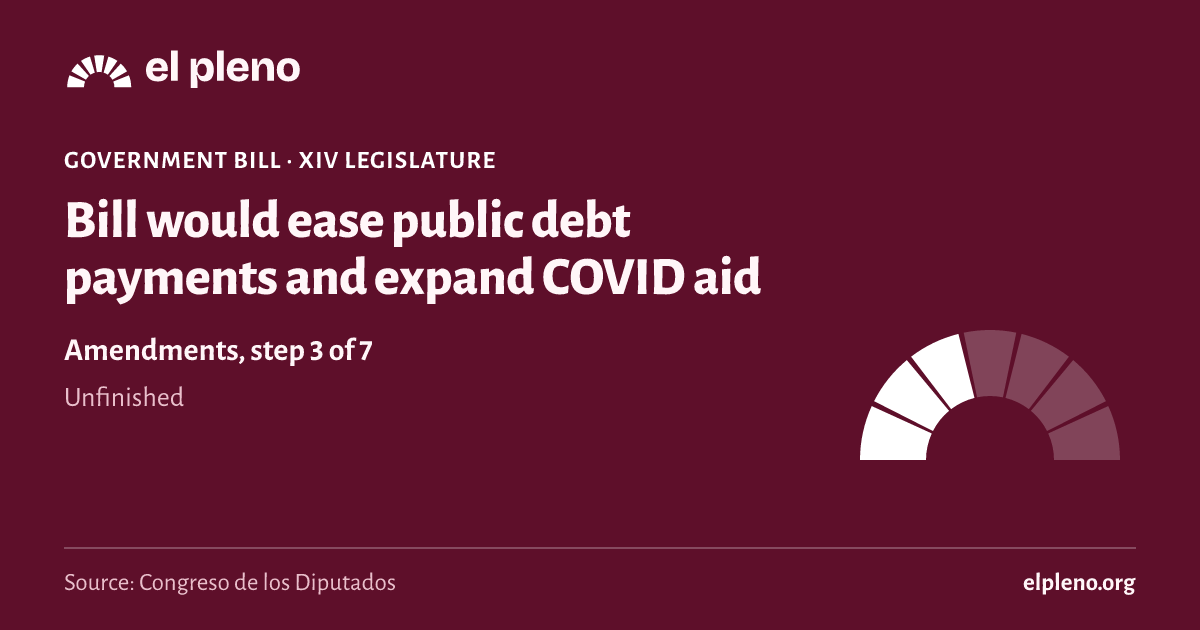
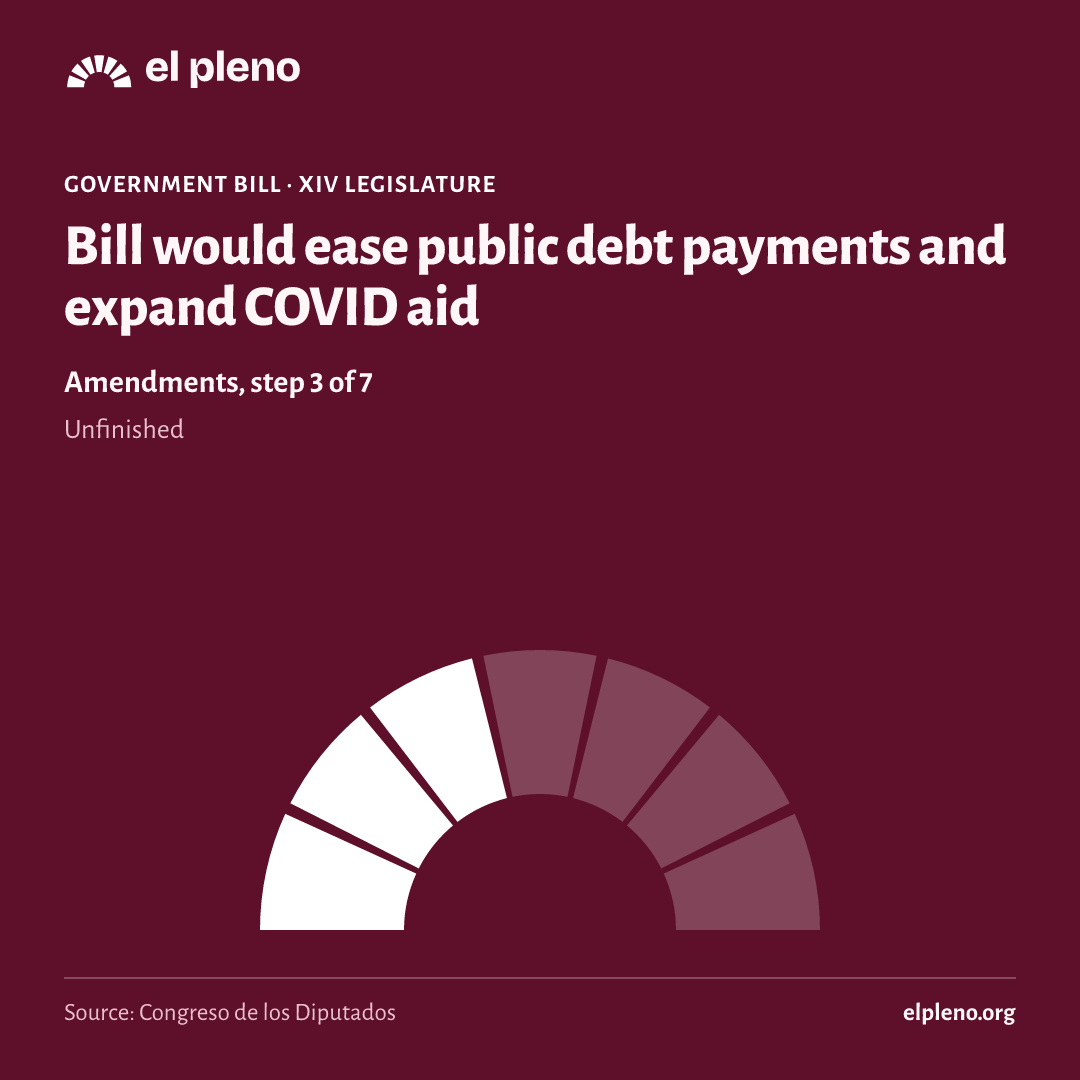
It took 3 of 7 steps. It reached Amendments, and today it is unfinished.
- Introduced13 May 2021Someone registers the text in the Congreso.
- Admitted18 May 2021The Bureau of the Congreso accepts it and, for a members’ bill, the plenary decides whether to consider it.
- Amendments21 May 2021Groups propose changes.
- Committeenot reachedA committee goes through the text in detail.
- Plenarynot reachedAll 350 deputies vote.
- Senatenot reachedThe Senate can pass it, amend it or veto it.
- BOEnot reachedIt is published in the Official State Gazette (BOE) and comes into force.
See the 5 official steps on a timeline
Was there a plenary vote?
We have no plenary vote linked to this law in the Congreso’s data.
What happens next
What happens now?
The legislature ended before it finished. To go on, someone would have to introduce it again in the new Cortes.
It has not been presented again yet.
Sources
Where does all this come from?
- Congreso de los Diputados, file 121/000054
Official title, type, author, dates and stage.
Retrieved 11 November 2026
- The data comes from the open files of the Congreso, the Senate and the BOE, unaltered.
- Each deputy’s province is the one of their seat on the day of the vote.
- We only say “passed” or “rejected” when the majority needed is certain; otherwise we say which side had more votes.