What it is
The bill would make it easier to hire seasonal farm workers during the COVID-19 crisis
It is a government bill. Introduced by the Government. It was introduced on 22 April 2020. Introduced by: Gobierno.
Official title: Government bill adopting certain urgent measures in agricultural employment (originating from Royal Decree-Law 13/2020, of 7 April).
Source: Congreso de los Diputados, file 121/000014· updated 11 Nov
Automatic summary, not yet reviewed
- The bill would create extraordinary measures to encourage temporary hiring of farm workers during the state of alarm, in force until June 30, 2020. It would cover temporary contracts on farms signed and ended within that period.
- Those eligible would include people who are unemployed or have stopped their activity, workers whose contracts were suspended due to temporary closures, migrants whose work permits expire between the start of the state of alarm and June 30, 2020, and foreign young people aged 18 to 21 with regular status. They must also live near the workplace: in the same municipality or a neighboring one.
- Wages from these jobs would be compatible with unemployment subsidies, the farm income benefit and other social benefits. However, they would be incompatible with temporary disability benefits, risk during pregnancy or breastfeeding benefits, and contributive permanent disability pensions, with some exceptions.
- Employers would have to have COVID-19 prevention measures in place, and wages would be paid by bank transfer, with a minimum set by the collective agreement or the minimum wage. Job offers would be reported to regional public employment services, which would give priority to people receiving no benefits or only non-contributive ones.
- Since offices are closed under the state of alarm, Social Security and the State Public Employment Service could provisionally decide benefit applications without an electronic certificate, accepting alternative documents or sworn statements. They would later review all these provisional decisions.
- The bill would also amend other rules: COVID-19 isolation or infection periods would be treated as equivalent to a workplace accident for temporary disability purposes; the extraordinary benefit for self-employed people who stop their activity would be rewritten; and interest-free six-month deferrals of Social Security contributions could be granted.
Who it affects
- People who are unemployed or have stopped their activity: They could work on farms without losing their unemployment subsidy or other benefits.
- Workers with contracts suspended due to temporary closures: They could combine their benefit with a temporary farm contract.
- Farmers and livestock breeders: They would have more seasonal labor for harvest campaigns.
- Migrant workers and foreign young people aged 18 to 21: They could extend or obtain work permits to work on farms.
- Self-employed workers: Their extraordinary benefit for stopping activity would be rewritten and they could request six-month deferrals of contributions.
Words worth knowing
- Prestación por desempleo
- Money paid by the State to people who are unemployed, commonly known as 'el paro'.
- Subsidio
- A smaller benefit than regular unemployment pay, for those who no longer qualify for it.
- Prestación contributiva y no contributiva
- A contributive benefit requires prior contributions; a non-contributive one is granted without that requirement.
- Incapacidad temporal
- A situation in which you cannot work due to illness or accident and receive a benefit, known as being 'on sick leave'.
- Declaración responsable
- A document where you state that you meet certain requirements, under your own responsibility, without providing proof at that moment.
It summarizes the text as it was introduced. It is written by artificial intelligence and may contain mistakes: the official text is what counts. Read the official text · How we make summaries
Where it stands
How far did it get?
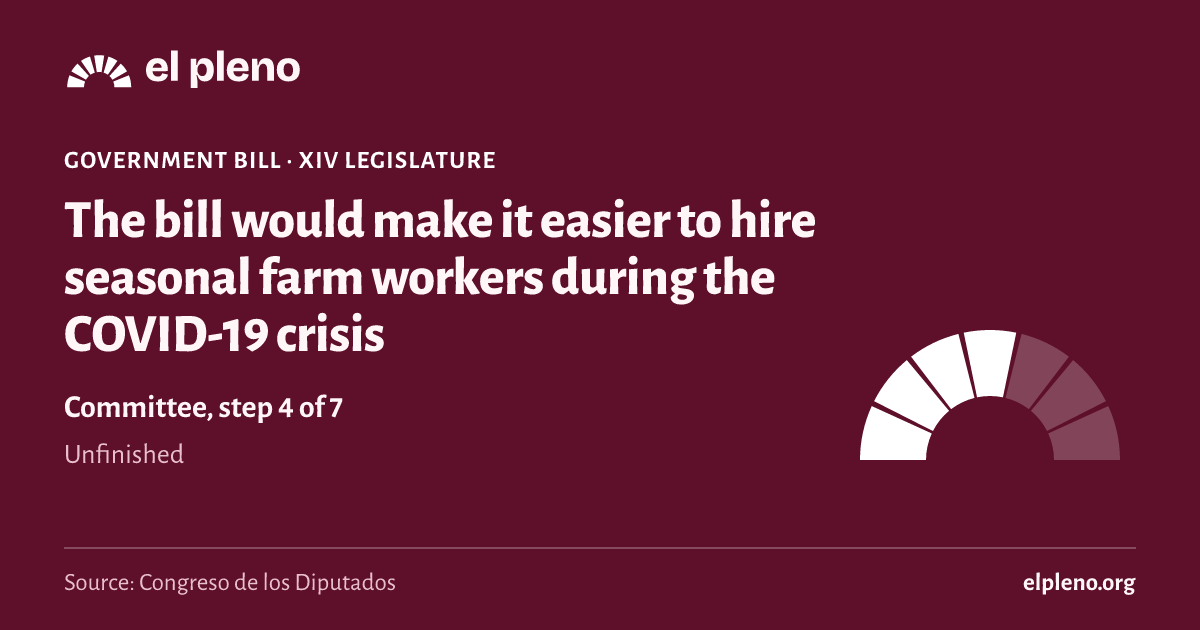
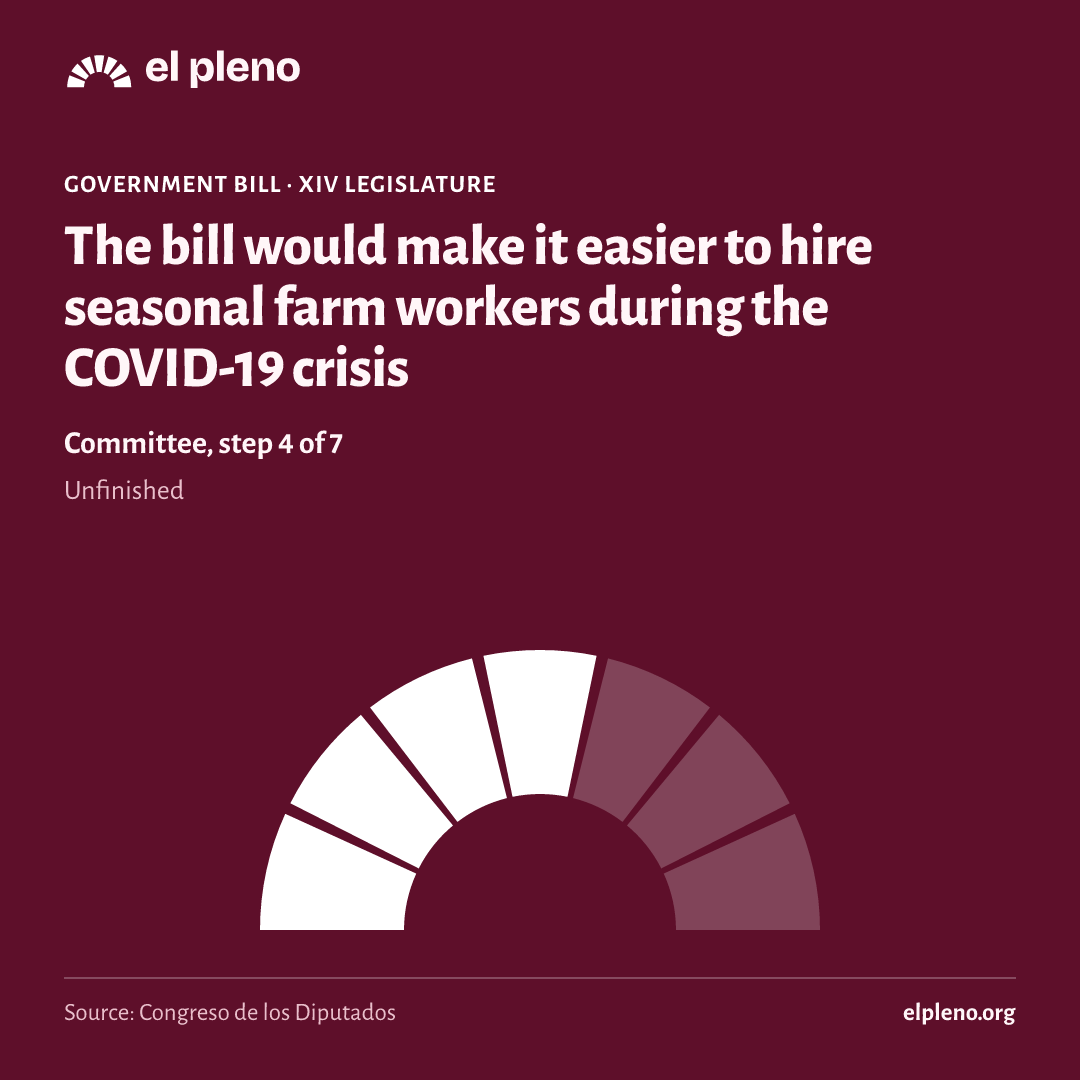
It took 4 of 7 steps. It reached Committee, and today it is unfinished.
- Introduced22 April 2020Someone registers the text in the Congreso.
- Admitted28 April 2020The Bureau of the Congreso accepts it and, for a members’ bill, the plenary decides whether to consider it.
- Amendments30 April 2020Groups propose changes.
- Committee8 October 2020A committee goes through the text in detail.
- Plenarynot reachedAll 350 deputies vote.
- Senatenot reachedThe Senate can pass it, amend it or veto it.
- BOEnot reachedIt is published in the Official State Gazette (BOE) and comes into force.
See the 6 official steps on a timeline
Was there a plenary vote?
We have no plenary vote linked to this law in the Congreso’s data.
What happens next
What happens now?
The legislature ended before it finished. To go on, someone would have to introduce it again in the new Cortes.
It has not been presented again yet.
Sources
Where does all this come from?
- Congreso de los Diputados, file 121/000014
Official title, type, author, dates and stage.
Retrieved 11 November 2026
- The data comes from the open files of the Congreso, the Senate and the BOE, unaltered.
- Each deputy’s province is the one of their seat on the day of the vote.
- We only say “passed” or “rejected” when the majority needed is certain; otherwise we say which side had more votes.