What it is
Bill so people with reduced mobility would not pay tolls
It is a members’ bill. Introduced by parliamentary groups, the Senate, regional governments or citizens. It was introduced on 13 September 2018. Introduced by: Senado.
Official title: Private member's bill to amend Law 37/2015, of 29 September, on roads, to exempt people with reduced mobility from paying tolls when using them for their travel.
Source: Congreso de los Diputados, file 124/000006· updated 11 Nov
Automatic summary, not yet reviewed
- The bill would amend the Roads Act so that people with a disability and officially recognized reduced mobility would be exempt from paying tolls on highways, when they drive the vehicle themselves or use it for their transport.
- The proposal keeps the existing toll exemptions for vehicles of the Armed Forces, law enforcement agencies, firefighters, courts, emergency services, Civil Protection, ambulances and road operation services.
- According to the explanatory statement, the measure would not mean a direct cost for public funds, because it could be included in the highway concession contracts.
- If passed, the law would enter into force the day after its publication in the Official State Gazette.
Who it affects
- People with a disability and officially recognized reduced mobility: They would no longer pay tolls when driving or using their vehicle.
- Highway concession companies: They would have to apply the exemption under their contracts with the State.
- Bodies such as the Armed Forces, law enforcement, firefighters or ambulances: They would keep the toll exemption they already have.
Words worth knowing
- Peaje (toll)
- Money you pay to drive on a toll highway.
- Concesión (concession)
- A contract under which a private company runs and charges for a highway on behalf of the State.
- Proposición de ley (bill)
- A text proposed as a law, but not yet passed or in force.
It summarizes the text as it was introduced. It is written by artificial intelligence and may contain mistakes: the official text is what counts. Read the official text · How we make summaries
Where it stands
How far did it get?
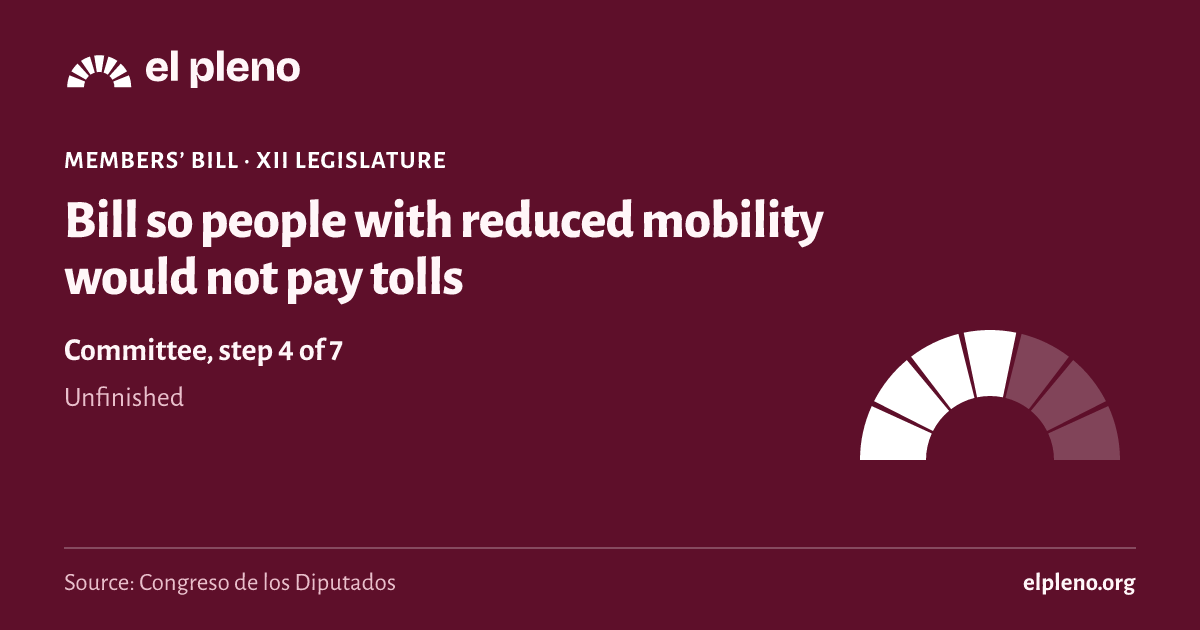
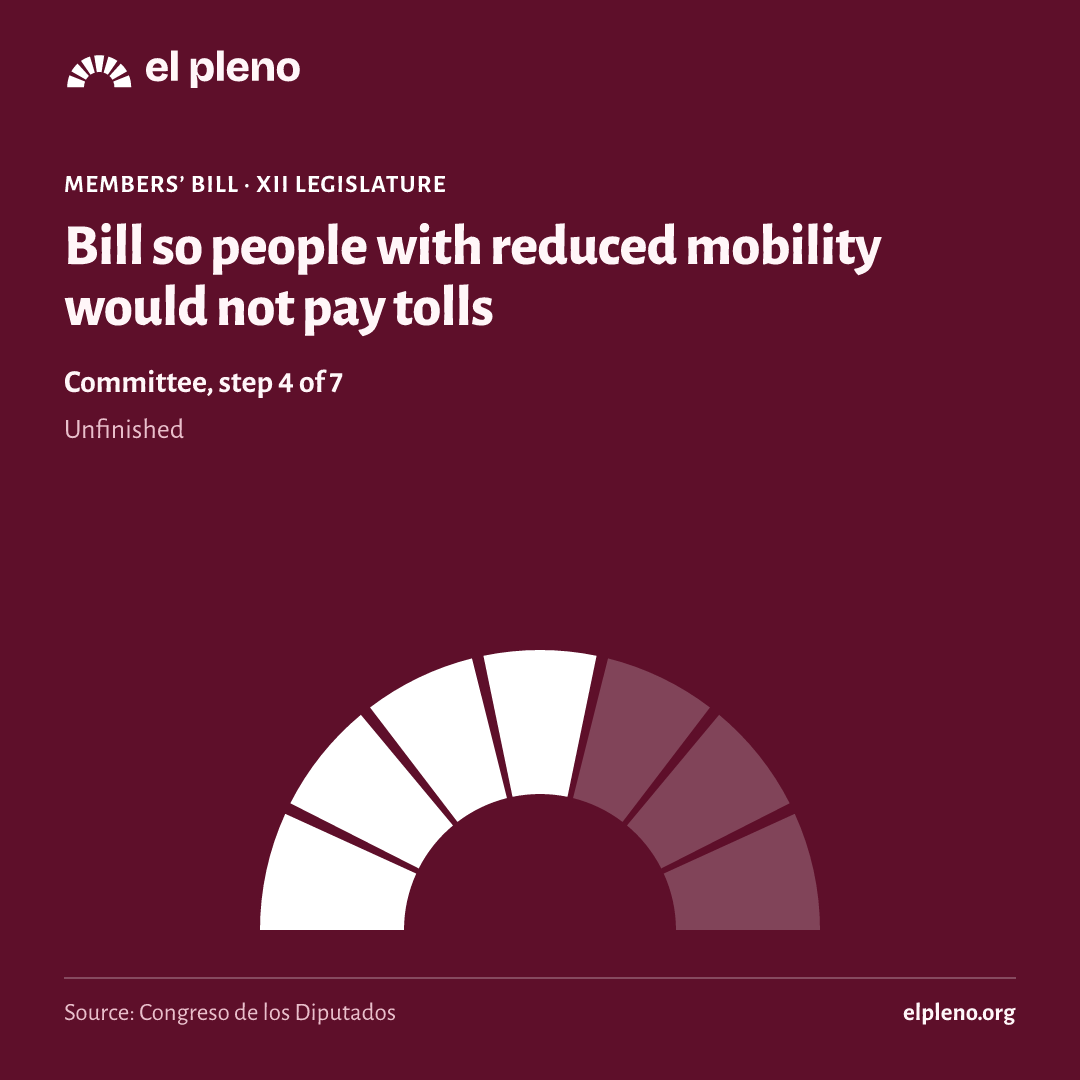
It took 4 of 7 steps. It reached Committee, and today it is unfinished.
- Introduced13 September 2018Someone registers the text in the Congreso.
- Admitted18 September 2018The Bureau of the Congreso accepts it and, for a members’ bill, the plenary decides whether to consider it.
- Amendments21 September 2018Groups propose changes.
- Committee21 November 2018A committee goes through the text in detail.
- Plenarynot reachedAll 350 deputies vote.
- Senatenot reachedThe Senate can pass it, amend it or veto it.
- BOEnot reachedIt is published in the Official State Gazette (BOE) and comes into force.
See the 6 official steps on a timeline
Was there a plenary vote?
We have no plenary vote linked to this law in the Congreso’s data.
What happens next
What happens now?
The legislature ended before it finished. To go on, someone would have to introduce it again in the new Cortes.
It has not been presented again yet.
The same initiative in the other chamber:
Sources
Where does all this come from?
- Congreso de los Diputados, file 124/000006
Official title, type, author, dates and stage.
Retrieved 11 November 2026
- The data comes from the open files of the Congreso, the Senate and the BOE, unaltered.
- Each deputy’s province is the one of their seat on the day of the vote.
- We only say “passed” or “rejected” when the majority needed is certain; otherwise we say which side had more votes.