What it is
Proposal to cut red tape for Spanish science and innovation
It is a members’ bill. Introduced by parliamentary groups, the Senate, regional governments or citizens. It was introduced on 7 November 2018. Introduced by: Grupo Parlamentario Ciudadanos.
Official title: Private member's bill on urgent measures to improve the competitiveness of the Spanish Science, Technology, and Innovation System.
Source: Congreso de los Diputados, file 122/000300· updated 11 Nov
Automatic summary, not yet reviewed
- The bill would make collaboration agreements easier for public research bodies, universities and other players, allowing them to last up to ten years and removing the need for prior approval from the Ministry of Finance.
- It would change the financial oversight of Public Research Organizations: internal control would move to permanent financial control and public audit, instead of the current prior intervention system that stalls procedures.
- It would formally recognize strategic consortia for science, technology and innovation as executing agents of the system, with their own rules on staff and agreements.
- It would restore the previous rules for service and supply contracts signed by public agents of the science system, as long as they are part of R&D projects and not for general or infrastructure services.
- It would exempt researchers and technicians hired for R&D projects from the limits in the budget law, and adjust grant rules: three quotes would only be required above 50,000 euros for public agents of the system, 40,000 for technology centers and 25,000 for R&D subcontracting.
- It would remove the requirement of Council of Ministers approval for contributions to international research organizations and programs, when paid from the body's own funds. This would also apply to agreements already in force.
Who it affects
- Public Research Organizations (Organismos Públicos de Investigación): They would face less prior administrative control and more flexibility to sign agreements and hire staff.
- Public universities and research foundations: They could sign agreements of up to ten years and hire with fewer obstacles for R&D projects.
- Technology centers and innovation support centers: They would have lower thresholds for requesting three quotes when justifying subsidized expenses.
- Research and technical staff: Their hiring for projects would be exempt from the limits in the budget law.
Words worth knowing
- OPIs (Organismos Públicos de Investigación)
- Public bodies dedicated to scientific research, such as the CSIC.
- I+D+i
- Spanish acronym for research, development and innovation (R&D).
- Intervención previa
- Prior intervention: an administrative check that reviews and approves spending before it happens, which can stall procedures.
- IGAE
- Intervención General de la Administración del Estado, the body that oversees public spending.
- Concurrencia competitiva
- A grant award system where applicants compete and the best proposals are selected.
It summarizes the text as it was introduced. It is written by artificial intelligence and may contain mistakes: the official text is what counts. Read the official text · How we make summaries
Where it stands
How far did it get?
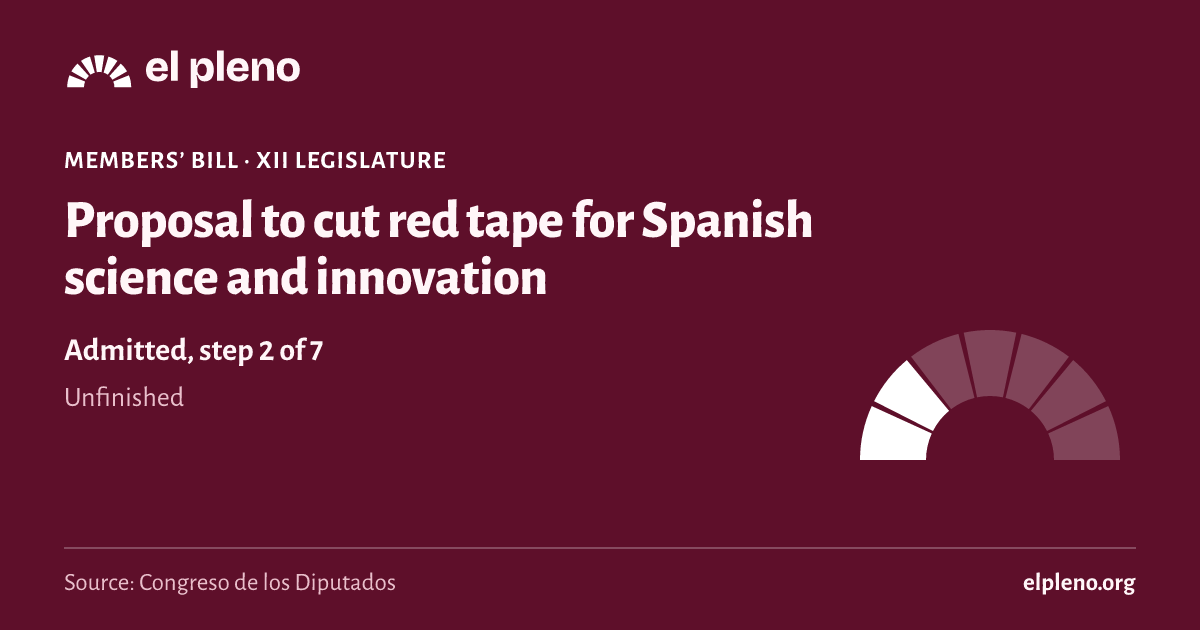
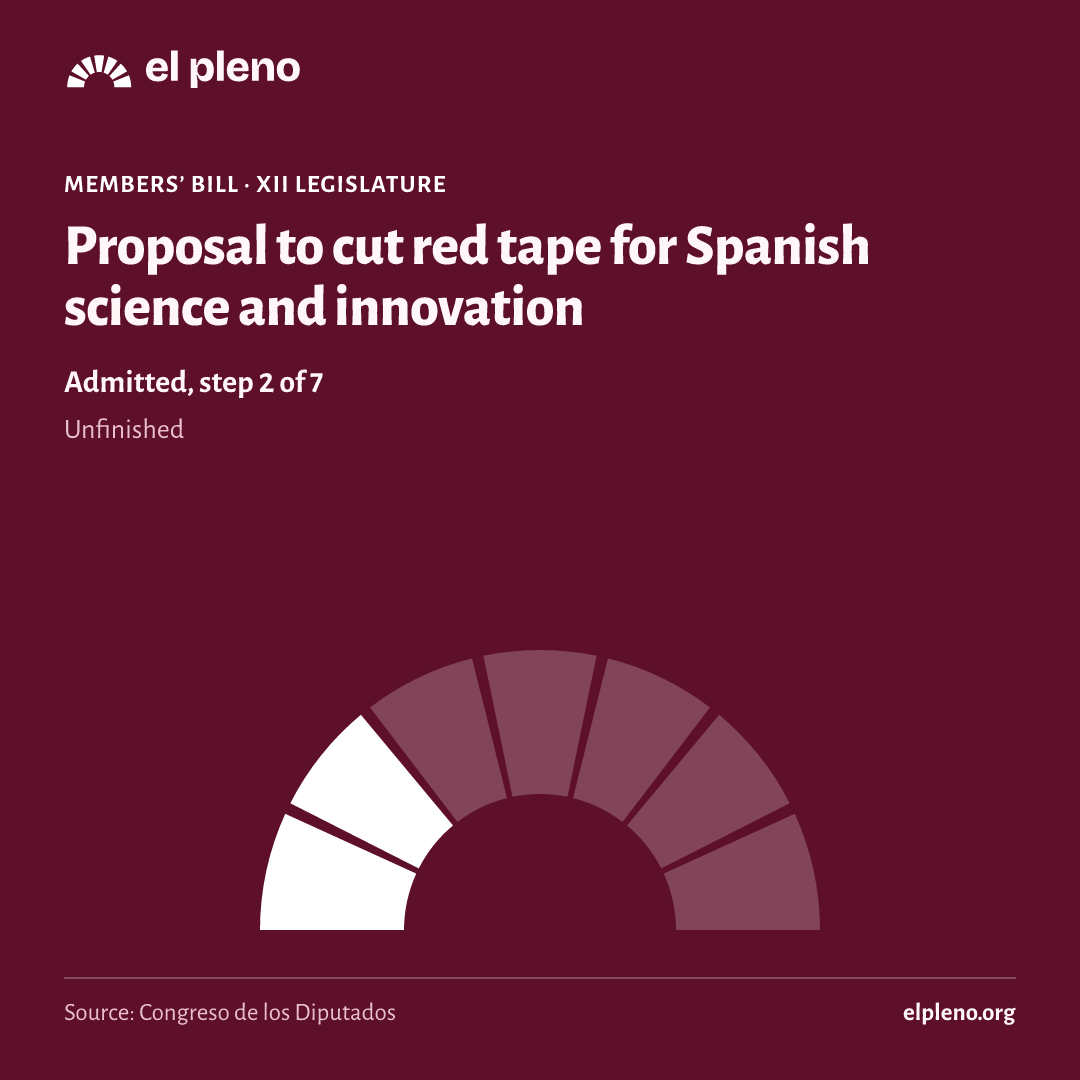
It took 2 of 7 steps. It reached Admitted, and today it is unfinished.
- Introduced7 November 2018Someone registers the text in the Congreso.
- Admitted13 November 2018The Bureau of the Congreso accepts it and, for a members’ bill, the plenary decides whether to consider it.
- Amendmentsnot reachedGroups propose changes.
- Committeenot reachedA committee goes through the text in detail.
- Plenarynot reachedAll 350 deputies vote.
- Senatenot reachedThe Senate can pass it, amend it or veto it.
- BOEnot reachedIt is published in the Official State Gazette (BOE) and comes into force.
See the 6 official steps on a timeline
Was there a plenary vote?
We have no plenary vote linked to this law in the Congreso’s data.
What happens next
What happens now?
The legislature ended before it finished. To go on, someone would have to introduce it again in the new Cortes.
It has not been presented again yet.
Sources
Where does all this come from?
- Congreso de los Diputados, file 122/000300
Official title, type, author, dates and stage.
Retrieved 11 November 2026
- The data comes from the open files of the Congreso, the Senate and the BOE, unaltered.
- Each deputy’s province is the one of their seat on the day of the vote.
- We only say “passed” or “rejected” when the majority needed is certain; otherwise we say which side had more votes.